
Water

River Clean Up Activities by students of Universitas Teknokrat Indonesia

Students of Universitas Teknokrat Indonesia (UTI) have demonstrated their commitment to environmental sustainability through a river cleanup event held last weekend. With great enthusiasm, they took action by cleaning up the nearby river, collecting trash, and tidying up the surrounding area. This initiative is not just a social activity, but a real effort to protect the river ecosystem, which is increasingly threatened by pollution. The event was attended by hundreds of students from various programs, all working together to ensure the river remains clean and healthy. Additionally, the cleanup served as an educational opportunity for the local community, raising awareness about the importance of maintaining a clean environment and preventing pollution that can harm the ecosystem. By taking direct action, UTI students aim to foster collective awareness about the significance of environmental sustainability. Through this event, Universitas Teknokrat Indonesia demonstrates that young generations play a crucial role in preserving and protecting the environment. The river cleanup, though a small step, is a meaningful effort to safeguard the ecosystems that support life. It is hoped that this spirit will continue to inspire others to actively participate in protecting the cleanliness and sustainability of our rivers. The university’s strong support for such student-led initiatives reflects its broader commitment to fostering environmental responsibility as part of its Green Campus vision. In collaboration with local authorities and environmental organizations, UTI plans to expand these efforts through ongoing river monitoring programs, environmental education campaigns, and sustainable waste management initiatives. By embedding these values into campus culture, Universitas Teknokrat Indonesia not only empowers students to lead change but also sets a powerful example of how academic institutions can contribute to solving environmental challenges at both local and global levels.

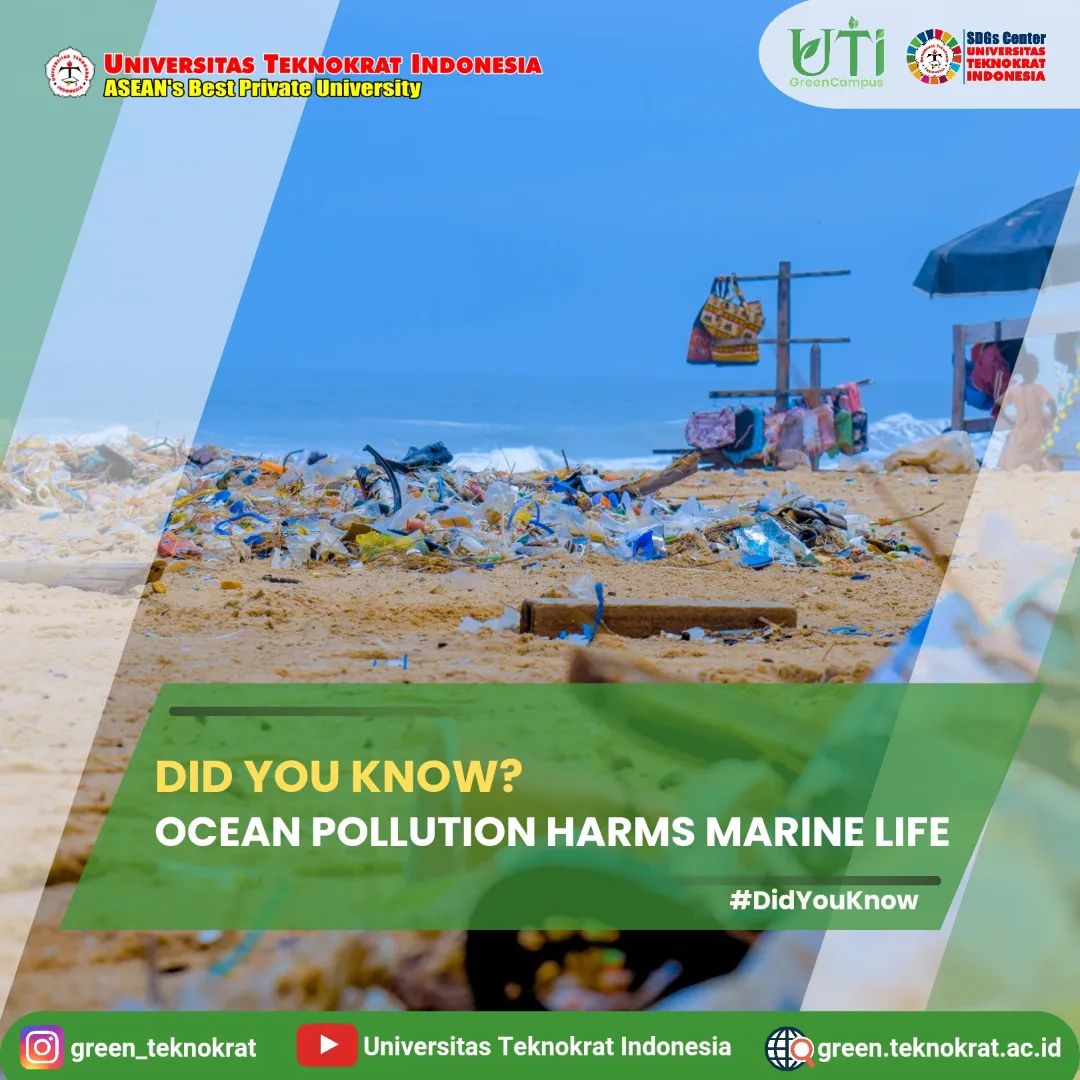
Did You Know? Ocean Pollution Harms Marine Life

Plastic waste is one of the most prevalent pollutants in our oceans, with an estimated 8 million tons of plastic entering the sea each year. Wastewater pollution also harms coral reefs, which are vital ecosystems for various marine species. To protect our oceans and marine life, we can all take steps to reduce pollution. Here are some actions you can take: By working together, we can make a real impact!

The Role of Renewable Energy in Marine Ecosystem Conservation

Marine ecosystems, often referred to as the lungs of the Earth, play a crucial role in maintaining global climate balance. However, human activities such as offshore oil drilling, industrial waste disposal, and the use of fossil fuels have threatened the survival of marine ecosystems. In efforts to preserve the oceans, renewable energy has emerged as an environmentally friendly solution. Negative Impacts of Conventional Energy on Marine Ecosystems Renewable Energy as a Solution Renewable energy provides a cleaner and more sustainable alternative to conventional energy. Several types of renewable energy that can be used to protect marine ecosystems include: Benefits of Renewable Energy for Marine Ecosystems Challenges and Opportunities Despite its many benefits, the development of renewable energy in the marine sector still faces some challenges, such as: Renewable energy holds great potential as a solution to the environmental challenges faced by marine ecosystems. With continued research and technological development, as well as the support of appropriate policies, we can create a more sustainable future for the oceans and future generations. Sumber : Ocean Panel: Apa Peran Energi Laut Terbarukan dan Mineral Dasar Laut Dalam pada Masa Depan yang Berkelanjutan? [https://oceanpanel.org/wp-content/uploads/2022/05/Ocean-Energy-and-Deep-Sea-Minerals-Summary-Indonesian.pdf]

The Potential of Renewable Energy in the Open Seas: The Future of Clean Energy

The energy crisis and climate change are driving the world to transition to cleaner, more sustainable energy sources. One promising source is renewable energy derived from the open seas. The open ocean has vast energy potential, especially in the form of wind, wave, and ocean thermal energy. Offshore Wind Energy Offshore wind energy has gained significant attention in the development of marine renewable energy. Wind over the ocean is generally more consistent and stronger than on land, allowing offshore wind turbines to generate a larger and more stable supply of electricity. Key advantages of offshore wind energy include: Wave Energy Wave energy also has significant potential as a renewable resource. Several technologies have been developed to convert wave energy into electricity, such as: Ocean Thermal Energy Ocean Thermal Energy Conversion (OTEC) uses the temperature difference between warm surface water and deep cold water to generate electricity. Although OTEC technology is still in development, it has considerable potential, particularly in tropical regions. Challenges and Opportunities Despite its vast potential, developing renewable energy in the open seas still faces several challenges: However, with advancing technology and growing awareness of the importance of clean energy, the potential of offshore renewable energy is expanding. Some opportunities that can be leveraged include: Renewable energy in the open seas offers a promising solution to meet the world’s growing energy needs. By addressing existing challenges and taking advantage of emerging opportunities, ocean-based renewable energy can become a cornerstone in the transition to a more sustainable future. Sumber : https://journal.untar.ac.id/index.php/JSSTK/article/view/32060

Hydrogen from Seawater: The Future of Clean and Renewable Energy

The global energy crisis and climate change are pushing us to seek clean and sustainable alternative energy sources. One promising candidate is hydrogen, often referred to as the “fuel of the future.” Hydrogen can be produced from various sources, one of which is seawater. Converting seawater into hydrogen offers great potential to meet the world’s growing energy demands. Why Hydrogen from Seawater? Abundant Source:Seawater covers most of the Earth’s surface, providing an almost limitless source of hydrogen. Zero Emissions:When burned, hydrogen only produces water vapor, making it a clean fuel with no harmful greenhouse gas emissions. High Energy Density:Hydrogen has a high energy density, making it efficient for storage and transportation. Versatile:Hydrogen can be used in various applications, ranging from power generation to transportation. The Process of Converting Seawater into Hydrogen The main process for converting seawater into hydrogen is electrolysis. In this process, an electric current is passed through seawater, splitting water molecules (H₂O) into hydrogen (H₂) and oxygen (O₂). The chemical reaction that takes place is:2H2O→2H2+O22H₂O → 2H₂ + O₂2H2​O→2H2​+O2​ Challenges and Solutions Despite its potential, converting seawater into hydrogen faces several challenges: Corrosion:The salt in seawater can cause corrosion on electrodes, reducing the efficiency of the process. Energy Consumption:Electrolysis requires significant electrical energy, which can limit its cost-effectiveness. Purification:Seawater contains various salts and minerals that need to be removed before the electrolysis process. Researchers and scientists are continuously working to overcome these challenges. Some of the solutions being developed include: Potential and Applications Hydrogen produced from seawater has immense potential for various applications, including: Converting seawater into hydrogen is a promising solution to address energy and environmental challenges. Although there are still several hurdles to overcome, the potential offered by this technology is vast. With continued research and development, hydrogen from seawater could become a major energy source in the future. Sumber : https://ojs.serambimekkah.ac.id/jse/article/download/5575/4117

The Potential of Ocean Energy for Small Islands: A Sustainable Energy Solution

Small islands often face challenges in meeting their energy needs. Limited access to main power grids and reliance on costly fossil fuels are major obstacles. However, nature provides a highly promising solution: ocean energy. Understanding Ocean Energy Ocean energy is derived from various movements in the sea, such as: The Potential of Ocean Energy for Small Islands Challenges and Solutions While ocean energy has great potential, several challenges must be addressed, such as: Addressing these challenges requires collaborative efforts among government, private sectors, and local communities. Potential solutions include: Conclusion Ocean energy offers great potential to meet the energy needs of small islands. With the right policy support and sustainable technological advancements, ocean energy can become a clean, sustainable, and independent energy solution. Sumber : Jurnal Ilmiah Kelautan dan Perikanan: POTENSI ENERGI ARUS LAUT UNTUK PEMBANGKIT TENAGA LISTRIK DI PULAU-PULAU KECIL (Studi :Pulau Mantang di Bintan, Pulau Abang di Batam, dan Pulau Sugi di Karimun, Propinsi Kepulauan Riau)

The Use of Renewable Energy in the Tourism Sector: Moving Towards More Sustainable Destinations

Tourism, as one of the fastest-growing sectors, has a significant impact on the environment. With increasing awareness of the importance of sustainability, the tourism sector is shifting towards more eco-friendly practices. A crucial step in this direction is the adoption of renewable energy. Why is Renewable Energy Important in the Tourism Sector? Examples of Renewable Energy Use in Tourist Destinations Challenges and Solutions Solutions: The use of renewable energy in the tourism sector is a crucial step toward a more sustainable future. With its many benefits, renewable energy is not only good for the environment but can also enhance the appeal of tourist destinations. Sumber : Solarkita.com: Energi Terbarukan di Sektor Pariwisata: Menuju Destinasi Ramah Lingkungan

Energy Storage Systems for Marine Energy: The Future of Sustainable Power

Marine energy, with its immense potential, has become a primary focus in the development of renewable energy. However, one of the main challenges in utilizing marine energy is its production fluctuations. To address this, efficient energy storage systems are essential. This article will explore various types of energy storage systems that can be applied to marine energy, as well as the associated challenges and opportunities. Why is Energy Storage Needed for Marine Energy? Marine energy, such as wave and tidal energy, is intermittent. This means its production is not constant and can vary depending on weather conditions and tides. To ensure a stable and reliable energy supply, energy storage systems are needed to store excess energy when production is high and release it when production is low. Types of Energy Storage Systems for Marine Energy Challenges and Opportunities On the other hand, the development of marine energy storage systems also presents significant opportunities, including: Energy storage systems are a crucial component in the sustainable development of marine energy. With ongoing research and development, it is expected that the costs of storage systems will continue to decrease, and efficiency will improve. This will pave the way for broader and more sustainable use of marine energy in the future. Source : https://warstek.com/surplus/

Tidal Energy Costs and Efficiency: A Review

Tidal energy, as a renewable energy source, offers promising potential to meet the world’s growing energy demands. However, its utilization still faces several challenges, one of which is the relatively high development and operational costs. Understanding Tidal Energy Costs The high costs associated with tidal energy development are influenced by several factors: Tidal Energy Efficiency Despite the high initial costs, tidal energy offers several advantages in terms of efficiency: Future Potential and Challenges While still facing challenges, tidal energy holds significant potential. With ongoing technological advancements and increasing awareness of the importance of clean energy, the costs of building tidal power plants are expected to continue to decrease. The key challenges that need to be addressed include: Promising Potential: Tidal energy offers great potential as a clean and renewable energy source. Although it still faces some challenges, particularly regarding costs and environmental impacts, the continued development of technology and supportive policies are expected to drive broader adoption of tidal energy in the future. Source : (https://id.wikipedia.org/wiki/Energi_pasang_surut)

Design and Structure of Marine Energy Generation: Exploring the Potential of the Oceans

Marine energy, in all its forms—ranging from waves and tides to ocean currents—holds tremendous potential as an energy source. As awareness of the importance of clean and sustainable energy grows, the use of marine energy has become a focal point for scientists and technologists. This article will provide an in-depth discussion of the design and structure of various marine energy generation technologies. Potential of Marine Energy Marine energy offers several advantages compared to other energy sources: Types of Marine Energy Generation Technologies Several types of technologies have been developed to harness marine energy, including: Design and Structure of Marine Energy Power Plants (MEPP) The design and structure of MEPPs vary widely depending on the type of technology used and the local environmental conditions. Several key factors need to be considered in the design of MEPPs: Challenges and Prospects Despite its great potential, the development of MEPPs still faces several challenges, including: Nevertheless, with continued research and development, MEPPs are expected to become one of the main sources of energy in the future. Source : https://repository.its.ac.id/47670/1/4113100072-Undergraduate_Thesis.pdf

Scroll to top