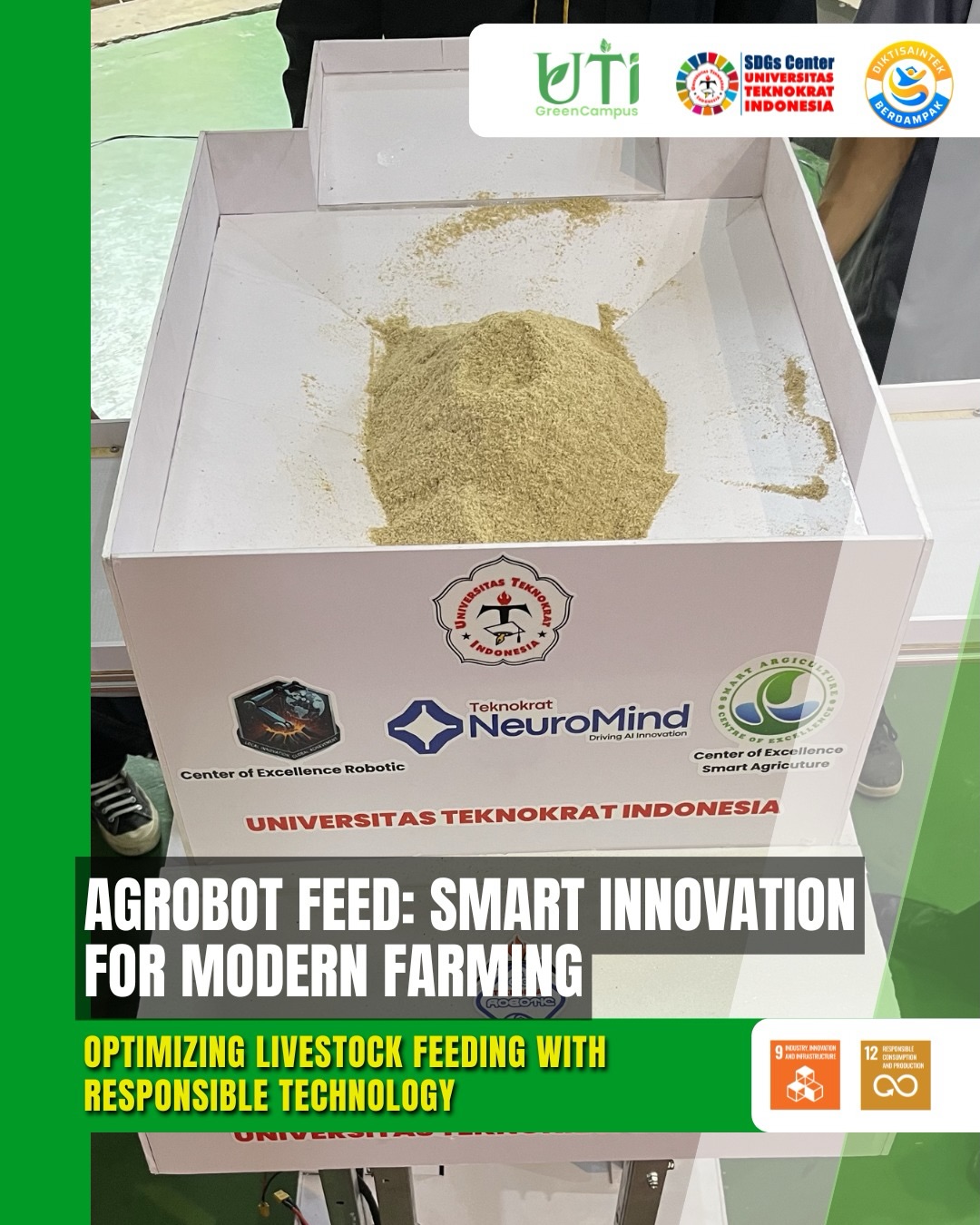
Universitas Teknokrat Indonesia Students Unveil AgroBot Feed, an AI-Powered Smart Collar System Transforming Livestock Farming
Bandar Lampung – Universitas Teknokrat Indonesia (UTI) continues to strengthen its reputation as a center of innovation and technological excellence through the development of AgroBot Feed Digital Smart Collar System, a groundbreaking agritech innovation created by its students. Designed to automate cattle feeding processes, the smart system combines robotics, artificial intelligence (AI), and digital agriculture technologies to help livestock farmers improve productivity, optimize resource management, and support sustainable farming practices. Read More: Universitas Teknokrat Indonesia Accelerates Green Campus Transformation Through Solar Energy Initiative The innovation was recently showcased as one of the outstanding student projects highlighting how technology can address real-world challenges in the agricultural sector. AgroBot Feed demonstrates the university’s commitment to encouraging students to create practical, future-oriented solutions that contribute directly to community welfare and national development. By integrating intelligent feeding automation into livestock management, the system enables farmers to provide accurate feed portions at predetermined schedules, ensuring consistent nutrition while reducing manual labor and operational inefficiencies. “AgroBot Feed was developed to help farmers manage livestock feeding more effectively and efficiently. Through automation and smart technology, we aim to improve productivity while supporting sustainable agricultural practices,” explained members of the student innovation team. Revolutionizing Livestock Management Through Smart Technology The agricultural sector is increasingly embracing digital transformation to address challenges related to productivity, labor shortages, and resource efficiency. Recognizing these challenges, Universitas Teknokrat Indonesia students designed AgroBot Feed as a technology-driven solution capable of modernizing traditional livestock farming practices. The system utilizes a smart collar mechanism integrated with sensors, automated feeding controls, and artificial intelligence algorithms. These technologies work together to monitor feeding schedules and deliver feed in precise quantities according to livestock needs. By ensuring consistent and controlled feeding, the innovation helps maintain animal health and nutrition while minimizing the risk of overfeeding or feed shortages. The automated system also reduces the workload of farmers, allowing them to focus on other aspects of livestock management. The application of robotics and AI within the livestock sector highlights the growing potential of smart farming technologies to increase efficiency and improve agricultural sustainability. Supporting Industry, Innovation, and Infrastructure The AgroBot Feed Digital Smart Collar System directly contributes to Sustainable Development Goal (SDG) 9: Industry, Innovation, and Infrastructure, which emphasizes the importance of fostering innovation, developing resilient infrastructure, and promoting sustainable industrialization. The innovation demonstrates how emerging technologies can be applied to traditional sectors such as agriculture and livestock farming. By integrating digital systems into farming operations, AgroBot Feed helps bridge the gap between conventional agricultural methods and modern technological advancements. This project also showcases the role of higher education institutions in producing innovative technologies capable of supporting economic growth and industrial transformation. Through research-based learning and technological experimentation, students are encouraged to become innovators who contribute to solving contemporary challenges. The development of AgroBot Feed reflects Universitas Teknokrat Indonesia’s commitment to fostering a culture of innovation where students are empowered to transform ideas into impactful solutions. Read More: Universitas Teknokrat Indonesia Electrical Engineering Students Develop Solar-Powered Fly Trap to Support Sustainable Livestock Farming in West Lampung Promoting Responsible Consumption and Production In addition to advancing technological innovation, AgroBot Feed aligns strongly with Sustainable Development Goal (SDG) 12: Responsible Consumption and Production, particularly through its efficient feed management system. Feed is one of the largest operational costs in livestock farming, and inefficient feeding practices often lead to unnecessary waste. By delivering feed according to predetermined requirements, the system helps farmers optimize resource utilization and minimize feed losses. This approach contributes to more sustainable production systems while improving economic efficiency for farmers. The ability to manage resources more effectively supports environmental sustainability and encourages responsible agricultural practices. The innovation demonstrates that technological advancement can play a significant role in reducing waste and promoting sustainable consumption patterns across the agricultural sector. Bridging Education and Real-World Solutions The AgroBot Feed project exemplifies Universitas Teknokrat Indonesia’s commitment to experiential and project-based learning. Rather than focusing solely on classroom theory, students are encouraged to identify real-world problems and develop practical solutions through research, experimentation, and technological innovation. Through the development process, students gained valuable experience in robotics engineering, artificial intelligence, sensor integration, programming, and agricultural technology applications. This multidisciplinary approach strengthens their technical competencies while enhancing critical thinking, creativity, and problem-solving skills. The project also reflects the university’s vision of producing graduates who are not only academically accomplished but also capable of contributing meaningful innovations that address societal and industrial needs. Vice Rector Praises Students’ Innovative Achievement The Vice Rector of Universitas Teknokrat Indonesia expressed appreciation for the students’ achievement and highlighted the importance of technological innovation in supporting sustainable agricultural development. “AgroBot Feed is a remarkable example of how our students are leveraging advanced technologies such as artificial intelligence and robotics to solve real challenges faced by the agricultural sector. This innovation demonstrates the quality of education at Universitas Teknokrat Indonesia and our commitment to preparing future innovators who can contribute to national development,” the Vice Rector stated. He further emphasized that the university remains committed to supporting student creativity and innovation through research-driven learning environments. “We are proud to see our students developing solutions that have the potential to transform traditional farming practices. AgroBot Feed illustrates how technology can improve efficiency, reduce waste, and create sustainable value for society. This is exactly the kind of innovation needed to support the future of agriculture in Indonesia and beyond,” he added. Building the Future of Smart Agriculture The AgroBot Feed Digital Smart Collar System represents more than a technological prototype; it symbolizes the future of intelligent and sustainable agriculture. By combining artificial intelligence, robotics, and digital monitoring systems, the innovation provides a glimpse into how smart technologies can reshape livestock management and improve food production systems. As global demand for efficient and sustainable agricultural solutions continues to grow, innovations such as AgroBot Feed highlight the crucial role of young innovators in driving technological transformation. The project demonstrates that the future of agriculture lies not only in increasing productivity but also in adopting smarter and more