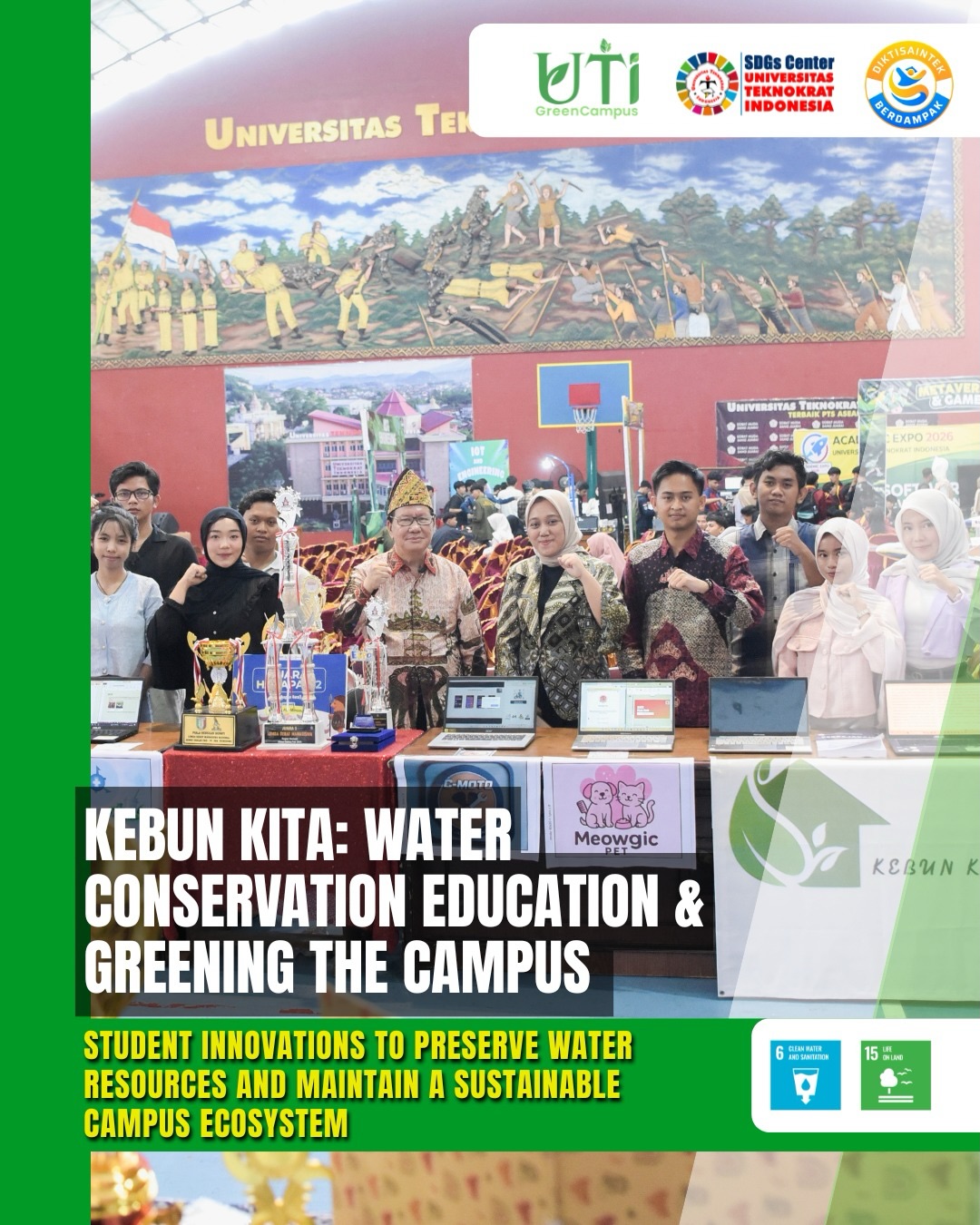
Universitas Teknokrat Indonesia Promotes Environmental Sustainability Through “Kebun Kita” Application
Bandar Lampung – Universitas Teknokrat Indonesia (UTI) continues to strengthen its commitment to sustainability through innovative student-led initiatives that combine technology, education, and environmental stewardship. One of the latest innovations attracting attention is the Kebun Kita Application, a digital platform designed to encourage water conservation practices and support campus greening efforts while fostering environmental awareness among students.
Developed as part of the university’s commitment to sustainable development, the application serves as an educational and interactive tool that empowers students to participate directly in environmental conservation activities. Through gardening-based learning experiences and digital monitoring features, users are encouraged to understand the importance of responsible water management while contributing to the creation of a healthier and greener campus environment.
The initiative demonstrates how technology can be utilized not only to solve practical challenges but also to cultivate environmental responsibility among younger generations.
“Kebun Kita was created to encourage students to become active participants in sustainability efforts. Through simple yet meaningful activities, we want to help build awareness about water conservation, environmental protection, and the importance of creating greener living spaces,” explained members of the student development team.
Integrating Technology and Environmental Education
As environmental challenges become increasingly complex, educational institutions are expected to play a greater role in promoting sustainability awareness and responsible environmental practices. Recognizing this need, Universitas Teknokrat Indonesia encourages students to develop innovations that create positive environmental impact while providing practical learning experiences.
The Kebun Kita Application combines digital technology with hands-on environmental activities. Through interactive gardening programs, students are introduced to sustainable cultivation methods and efficient water management practices. The application serves as a guide and monitoring tool, helping users understand how their actions contribute to environmental preservation.
By integrating technology into environmental education, the initiative creates an engaging learning experience that encourages active participation and long-term behavioral change.
The project also reflects the university’s vision of preparing students not only as technology users but also as innovators who can leverage digital solutions to address environmental and societal challenges.
Supporting Clean Water and Sustainable Resource Management
One of the primary objectives of the Kebun Kita Application is to promote responsible water usage and increase awareness of water conservation practices.
The initiative directly contributes to Sustainable Development Goal (SDG) 6: Clean Water and Sanitation, which emphasizes the sustainable management of water resources and the importance of ensuring water availability for future generations.
Through educational features and gardening activities, students learn how efficient irrigation methods and responsible water consumption can reduce waste and support environmental sustainability. The application encourages users to adopt practical habits that help conserve water while maintaining healthy plant growth.
As concerns regarding water scarcity and resource management continue to grow worldwide, initiatives such as Kebun Kita demonstrate the important role educational institutions can play in promoting sustainable water practices.
Enhancing Biodiversity and Green Spaces on Campus
Beyond water conservation, the project also aligns closely with Sustainable Development Goal (SDG) 15: Life on Land, which focuses on protecting ecosystems, preserving biodiversity, and promoting sustainable land use.
The greening activities supported by the application contribute to the enhancement of campus green spaces, creating a more environmentally friendly and ecologically balanced university environment. By encouraging students to participate in planting and maintaining vegetation, the initiative helps increase biodiversity while improving the aesthetic and environmental quality of the campus.
Green spaces are increasingly recognized for their positive impact on environmental health and human well-being. They contribute to improved air quality, support local ecosystems, reduce urban heat effects, and create more pleasant learning environments.
The Kebun Kita initiative therefore serves as both an educational program and a practical environmental conservation effort that generates benefits for the entire academic community.
Cultivating Environmental Responsibility Among Students
One of the most significant impacts of the Kebun Kita Application is its ability to inspire environmental awareness among students. By involving users directly in sustainability activities, the initiative encourages a deeper understanding of ecological issues and the importance of individual responsibility in environmental protection.
The project highlights how digital innovation can become a catalyst for positive social and environmental change. Through regular participation in gardening and conservation activities, students develop habits and values that contribute to a more sustainable lifestyle.
The initiative also supports Universitas Teknokrat Indonesia’s broader mission of producing graduates who are not only academically accomplished but also socially responsible and environmentally conscious.
Vice Rector Commends Student Innovation
The Vice Rector of Universitas Teknokrat Indonesia praised the students behind the Kebun Kita Application and emphasized the importance of integrating sustainability principles into technological innovation.
“Kebun Kita is an inspiring example of how our students are using technology to promote environmental responsibility and sustainable development. This innovation demonstrates that digital solutions can play a significant role in educating communities and encouraging positive environmental action,” the Vice Rector stated.
He further highlighted the university’s commitment to fostering innovations that generate meaningful societal impact.
“We are proud of our students for developing a platform that supports water conservation, environmental awareness, and campus greening efforts. Through initiatives like Kebun Kita, Universitas Teknokrat Indonesia continues to nurture future leaders who are capable of combining technological expertise with a strong commitment to sustainability,” he added.
Building a Greener and More Sustainable Future
The development of the Kebun Kita Application reflects Universitas Teknokrat Indonesia’s vision of creating a campus culture that values innovation, sustainability, and community engagement. By encouraging students to participate actively in environmental conservation, the university strengthens its role as a catalyst for positive change and sustainable development.
More than just a digital platform, Kebun Kita serves as a symbol of how education and technology can work together to address environmental challenges and inspire responsible behavior. The initiative demonstrates that meaningful sustainability efforts begin with small, consistent actions that collectively create lasting impact.
As Universitas Teknokrat Indonesia continues to advance its sustainability agenda, innovations such as Kebun Kita showcase the potential of student creativity to contribute to environmental protection and community well-being. The project stands as a testament to the university’s commitment to producing graduates who are not only innovative and technologically proficient but also dedicated to building a greener, healthier, and more sustainable future for society.
Through the successful implementation of Kebun Kita, Universitas Teknokrat Indonesia once again proves that innovation, education, and environmental stewardship can work hand in hand to create meaningful change for future generations.