environmental

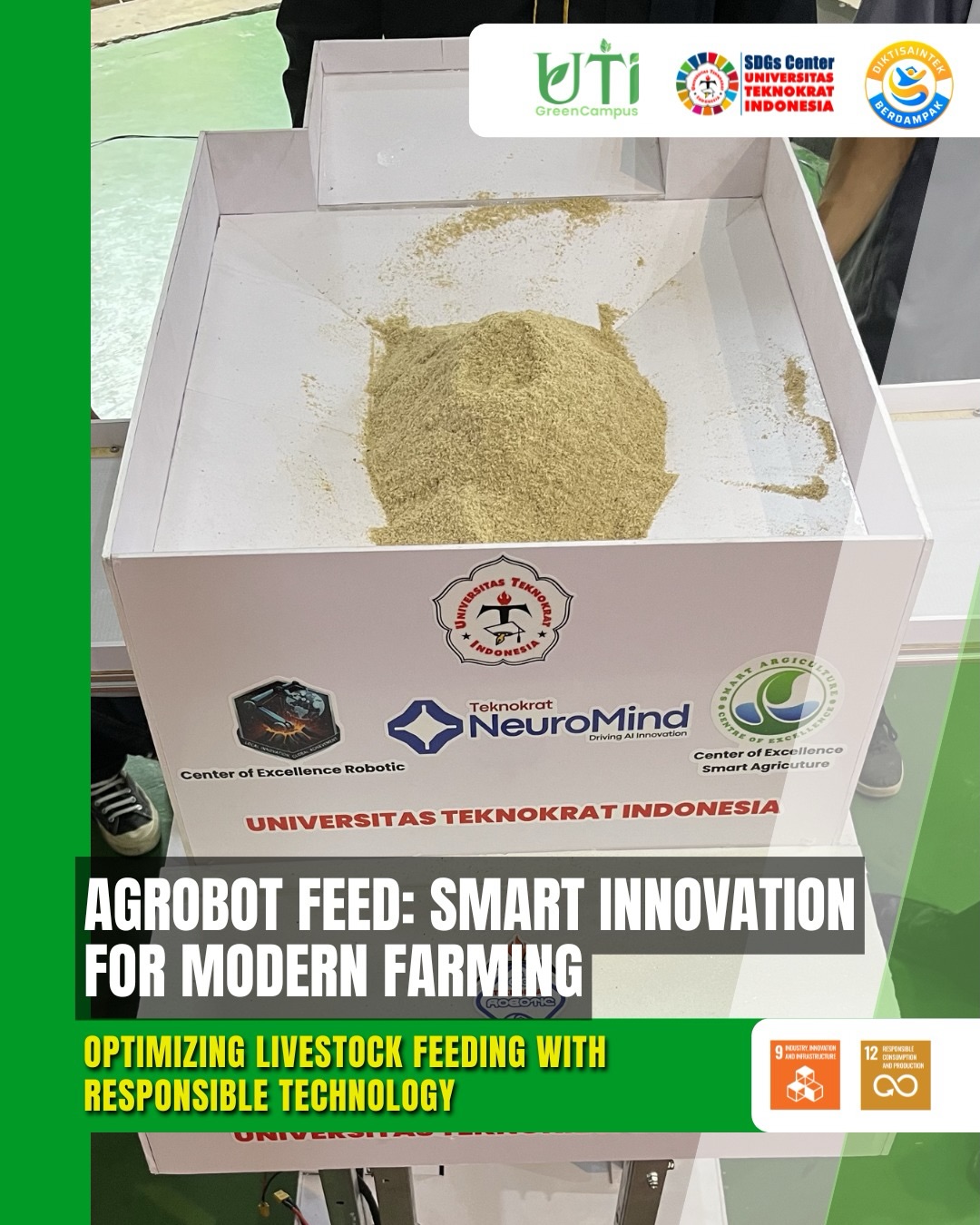
AgroBot Feed Innovation by Universitas Teknokrat Indonesia Students Advances Smart Livestock Technology

Bandar Lampung – Students of Universitas Teknokrat Indonesia (UTI) have once again demonstrated their innovative excellence by developing AgroBot Feed, a cutting-edge automatic cattle feeding robot designed to modernize livestock management. This breakthrough innovation marks another significant milestone in the university’s commitment to producing impactful, technology-driven solutions for real-world challenges. Read More : Universitas Teknokrat Indonesia Academic Expo Showcases “Nutriscane” Innovation Supporting SDGs The development of AgroBot Feed reflects the successful implementation of Sustainable Development Goal (SDG) 4: Quality Education, where Universitas Teknokrat Indonesia continues to position itself as a center for transformative learning. Through a combination of Artificial Intelligence (AI), robotics, and smart agriculture systems, students are not only gaining theoretical knowledge but also applying it directly in practical and meaningful ways. Developed within the university’s Center of Excellence, AgroBot Feed is the result of close collaboration between students and faculty members. This hands-on learning approach ensures that students are equipped with future-ready skills, enabling them to become innovators capable of responding to the demands of the rapidly evolving digital era. AgroBot Feed is designed with a smart control system that can automatically regulate feeding schedules and portions with high accuracy. This feature allows livestock farmers to maintain consistency in animal nutrition while significantly reducing manual labor. The system also minimizes the risk of overfeeding or underfeeding, contributing to improved livestock health and productivity. The innovation strongly aligns with SDG 9: Industry, Innovation, and Infrastructure, as it promotes the adoption of advanced technology in the agricultural and livestock sectors. By introducing automation into daily farming activities, AgroBot Feed helps build a more efficient and sustainable agricultural ecosystem. This transformation is particularly important in supporting local farmers to adapt to the challenges of the Industry 4.0 era, where digital integration is becoming essential. According to the student development team, the idea behind AgroBot Feed originated from the challenges faced by traditional livestock farmers, including time-consuming feeding processes and inconsistent feeding schedules. By leveraging modern technology, the team aims to create a solution that is not only efficient but also accessible and scalable for wider use. “AgroBot Feed is designed to simplify farmers’ daily activities while improving productivity. We hope this innovation can contribute to the advancement of smart farming in Indonesia,” said one of the student developers during the presentation. The robot was officially showcased at the 2026 Academic Expo, one of Universitas Teknokrat Indonesia’s flagship events that highlights student innovation and creativity. The exhibition attracted significant attention from visitors, academics, and industry observers, who recognized the potential of AgroBot Feed to transform the livestock sector. University representatives emphasized that innovations like AgroBot Feed demonstrate the institution’s strong commitment to encouraging research-based learning and technological development. By integrating academic knowledge with practical implementation, the university continues to produce graduates who are not only skilled but also capable of driving innovation at both national and global levels. “AgroBot Feed is more than just a technological product—it represents our students’ dedication to creating solutions that benefit society. This is a clear example of how education, research, and innovation can work together to support sustainable development,” a university official stated. Beyond its technical advantages, AgroBot Feed also reflects a broader commitment to improving livestock welfare and supporting national food security. By ensuring efficient and precise feeding, the system contributes to healthier livestock, which ultimately benefits the entire agricultural supply chain. Looking forward, Universitas Teknokrat Indonesia aims to further develop and refine this innovation, with the potential for commercialization and wider adoption across Indonesia’s agricultural sector. The university also encourages continuous collaboration with industry partners to ensure that such innovations can reach and benefit local communities. AgroBot Feed stands as a powerful symbol of how student innovation, when supported by quality education and strong institutional guidance, can create meaningful contributions to sustainable development and national progress. Read More: Innovative Learning at Universitas Teknokrat Indonesia: Civil Engineering Students Develop Soil Layer and Hydrological Process Scale Model Support SDGs:

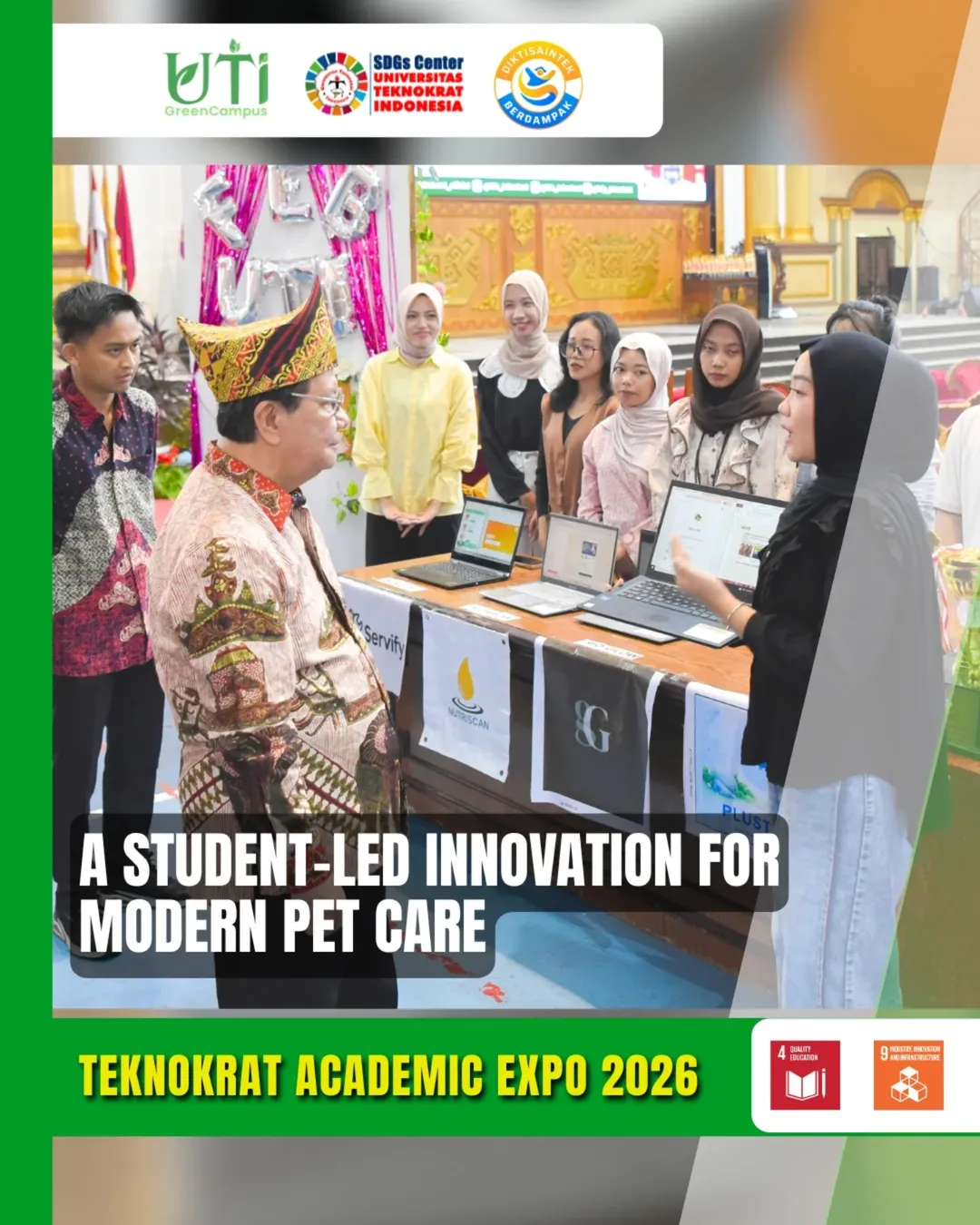
Universitas Teknokrat Indonesia Academic Expo Showcases “Nutriscane” Innovation Supporting SDGs

Bandar Lampung – The Academic Expo held by Universitas Teknokrat Indonesia (UTI) once again highlights the university’s strong commitment to fostering innovation and supporting global development goals. This annual event serves as a dynamic platform for students to present their creative works, bridging academic knowledge with real-world applications. Read More : Universitas Teknokrat Indonesia Develops Third-Generation Digital Smart Collar to Advance Smart Livestock Technology More than just an exhibition, the Academic Expo reflects UTI’s dedication to advancing Sustainable Development Goal (SDG) 4: Quality Education, by encouraging students to go beyond theoretical learning. Through this initiative, students are challenged to develop innovative solutions that address contemporary societal issues, particularly in the era of rapid digital transformation. One of the standout innovations presented at this year’s expo is “Nutriscane,” a digital application designed to promote healthier lifestyles through technology. The app introduces a practical barcode scanning feature that enables users to instantly access detailed nutritional information of packaged food products, including calorie count, sugar levels, and fat content. This innovation directly supports SDG 3: Good Health and Well-being, as it empowers individuals to make more informed dietary decisions. In today’s fast-paced lifestyle, where processed and packaged foods are increasingly consumed, Nutriscane provides a smart and accessible solution to help users better manage their daily nutritional intake. The developers of Nutriscane explained that the idea emerged from growing public concern about health issues related to poor dietary habits. By integrating technology with health awareness, the application aims to educate consumers and encourage healthier consumption patterns. “Through Nutriscane, we want to help people become more aware of what they consume every day. Small decisions, such as choosing healthier food options, can have a significant impact on long-term well-being,” said one of the student developers during the expo. The presence of innovations like Nutriscane demonstrates how Universitas Teknokrat Indonesia continues to nurture a generation of students who are not only academically competent but also socially responsive and solution-oriented. The university actively promotes interdisciplinary collaboration, enabling students to combine knowledge from technology, health, and social sciences. Furthermore, the Academic Expo strengthens the synergy between education and innovation by creating an ecosystem where ideas can grow into impactful solutions. It also serves as a stepping stone for students to prepare for future challenges in both national and global contexts. University representatives emphasized that such initiatives are part of UTI’s long-term vision to produce graduates who are ready to contribute meaningfully to society. By aligning student projects with the SDGs, the university ensures that innovation is not only creative but also purposeful. “Nutriscane is more than just a technological product—it represents the spirit of young innovators who care about public health and are eager to make a difference,” a university official stated. Looking ahead, Universitas Teknokrat Indonesia remains committed to supporting student-driven innovations that address real-world problems. The success of Nutriscane serves as an inspiring example of how higher education institutions can play a vital role in shaping a healthier, smarter, and more sustainable society. With continued support and collaboration, innovations like Nutriscane are expected to contribute significantly to public awareness, healthier lifestyles, and national progress in the digital era. Read More: Innovative Learning at Universitas Teknokrat Indonesia: Civil Engineering Students Develop Soil Layer and Hydrological Process Scale Model Support SDGs :

Universitas Teknokrat Indonesia Develops Third-Generation Digital Smart Collar to Advance Smart Livestock Technology

Bandar Lampung – Universitas Teknokrat Indonesia continues to demonstrate its commitment to innovation, research excellence, and societal impact through the development of a third-generation Digital Smart Collar, an Internet of Things (IoT)–based wearable device designed to monitor livestock health in real time. The innovation is developed through the Center of Excellence (CoE) Smart Agriculture, where students and faculty collaborate in applied research aimed at addressing real challenges in the agricultural and livestock sectors. Other News: Innovative Learning at Universitas Teknokrat Indonesia: Civil Engineering Students Develop Soil Layer and Hydrological Process Scale Model The project involves students from the Computer Engineering program, who work closely with faculty mentors to design, test, and refine the technology. This hands-on research initiative reflects the university’s vision of preparing graduates who are not only academically capable but also equipped with practical skills to solve complex problems in the field. The Digital Smart Collar represents the latest evolution of previous prototypes developed at Universitas Teknokrat Indonesia. In its third generation, the device integrates advanced sensors, wireless communication systems, and data analytics platforms to provide continuous monitoring of livestock health conditions. Using IoT technology, the collar collects important physiological and behavioral data from animals, such as body movement, temperature indicators, and activity patterns. The information is then transmitted to a digital platform that allows farmers to monitor livestock conditions through smartphones or computer dashboards. This innovation enables farmers to detect early signs of disease, monitor animal activity, and manage livestock more efficiently. By accessing real-time data, farmers can make faster and more accurate decisions related to feeding patterns, health treatments, and overall livestock management. According to the research team, the development of the Digital Smart Collar is part of Universitas Teknokrat Indonesia’s broader strategy to strengthen its Center of Excellence programs, which aim to bridge academic research with industry applications and commercialization opportunities. The research initiative has received support from the Ministry of Higher Education, Science, and Technology (Kemendiktisaintek) through the SINERGI research funding scheme, highlighting the national importance of this technological innovation. With this support, the Digital Smart Collar is no longer positioned merely as an experimental prototype but is being prepared as a commercial-ready technology that can be implemented in Indonesia’s livestock industry. The development of this wearable device is expected to play a significant role in accelerating the digital transformation of the livestock sector in Indonesia. By integrating smart monitoring technology into traditional farming practices, farmers can improve productivity, reduce livestock mortality, and optimize resource management. Researchers involved in the project explained that one of the main goals of the technology is to empower farmers with accessible and affordable digital tools. “Through the Digital Smart Collar, farmers can monitor the health of their livestock in real time. Early detection of disease risks allows them to take preventive measures quickly, which ultimately improves livestock productivity and reduces economic losses,” explained one of the faculty mentors involved in the research. The project also serves as an important learning platform for students. By participating directly in applied research, students gain valuable experience in hardware development, sensor integration, IoT networking, and data analytics, skills that are highly relevant to the rapidly evolving digital technology sector. Through the Center of Excellence Smart Agriculture, Universitas Teknokrat Indonesia continues to encourage interdisciplinary collaboration between engineering, agriculture, and information technology to produce solutions that can benefit society at large. In addition to strengthening research capacity, the university also aims to ensure that technological innovations produced on campus can generate tangible economic and social impact, particularly for rural communities and farmers. Contribution to the Sustainable Development Goals (SDGs) The development of the Digital Smart Collar by Universitas Teknokrat Indonesia aligns closely with several key targets within the United Nations Sustainable Development Goals (SDGs). First, the initiative strongly supports SDG 4: Quality Education. By engaging students directly in applied research projects, the university provides a learning environment that combines academic knowledge with real-world problem solving. Students gain practical experience in technological innovation while contributing to solutions that address national development challenges. Second, the innovation contributes to SDG 9: Industry, Innovation, and Infrastructure. The Digital Smart Collar represents a form of technological advancement that strengthens Indonesia’s digital infrastructure in the agricultural sector. The integration of IoT, sensor technology, and data analytics helps modernize traditional livestock farming practices and promotes innovation in agricultural technology. Third, the project also contributes indirectly to SDG 2: Zero Hunger by supporting the development of more efficient livestock management systems. By improving animal health monitoring and productivity, the technology can help increase food production capacity and support food security. Finally, the collaboration between the university, government research funding programs, and the agricultural sector reflects the spirit of SDG 17: Partnerships for the Goals. The synergy between academia, government institutions, and farmers demonstrates how multi-stakeholder collaboration can accelerate technological progress and sustainable development. Through initiatives such as the Digital Smart Collar, Universitas Teknokrat Indonesia continues to position itself as a hub of innovation and applied research, ensuring that academic knowledge is transformed into practical technologies that contribute to national development, technological independence, and the long-term welfare of Indonesian farmers. Other News: Teknokrat Electrical Engineering Students Develop Eco-Friendly Micro-Hydro Power Plant for Rural Energy Solutions

Civil Engineering Students of Universitas Teknokrat Indonesia Showcase Dam Scale Model at Academic Expo 2026

Bandar Lampung – Civil Engineering students from Universitas Teknokrat Indonesia (UTI) once again demonstrated their academic excellence and engineering capabilities at the Academic Expo 2026 by presenting a detailed dam scale model. The project represents the successful integration of theoretical knowledge and practical application gained through the Advanced Water Structures course. Baca Juga: River Clean Up Activities by students of Universitas Teknokrat Indonesia The scale model, designed as a concrete gravity dam, features essential structural components, including a spillway and diversion channels. This project reflects the students’ ability to translate classroom concepts into tangible engineering solutions, highlighting both technical competence and creativity in civil engineering design. The model serves not only as an exhibition piece but also as a practical learning outcome. Through this hands-on project, students gained deeper insights into hydrology, structural stability, and water flow management. They learned how dam systems function in real-world conditions, including their critical roles in flood control, irrigation systems, and hydroelectric power generation. “This project allowed us to directly apply the theories we studied in class into a realistic engineering model. We were able to better understand structural stability, water flow mechanisms, and the importance of each dam component,” said one of the participating Civil Engineering students during the exhibition. Academic Expo is an annual event organized by Universitas Teknokrat Indonesia to showcase student innovation, academic achievements, and creative works. The event provides a platform for students to present their projects to the academic community and the public, while also enhancing their communication, presentation, and problem-solving skills. In addition to its academic value, the dam scale model also serves as an educational tool for visitors. It helps increase public awareness about the importance of water infrastructure in supporting sustainable development and improving quality of life. Infrastructure such as dams plays a vital role in water resource management, agricultural productivity, and renewable energy production. A lecturer of the Advanced Water Structures course emphasized that the project is designed to encourage students to think critically, creatively, and practically. According to the lecturer, the ability to design and visualize infrastructure systems is an essential competency for future civil engineers. “Students are expected not only to understand engineering theory but also to apply it through design and visualization. This project reflects our commitment to preparing graduates who are ready to contribute professionally to infrastructure development,” the lecturer stated. The participation of Civil Engineering students in Academic Expo 2026 demonstrates Universitas Teknokrat Indonesia’s strong commitment to producing competent, innovative, and competitive graduates. The university continues to uphold its “Sang Juara” (Champion) spirit by encouraging students to create meaningful innovations that address real-world construction and infrastructure challenges. Through initiatives like this, Universitas Teknokrat Indonesia aims to empower students to become future engineers who are capable of contributing to sustainable national infrastructure development and advancing the engineering profession. Baca Juga: Maintaining the campus as a comfortable and beautiful learning environtment Support for SDGS:

Scroll to top