Universitas Teknokrat Indonesia Civil Engineering Students Transform Waste into Sustainable Infrastructure Through “Tekno Plasting” Innovation
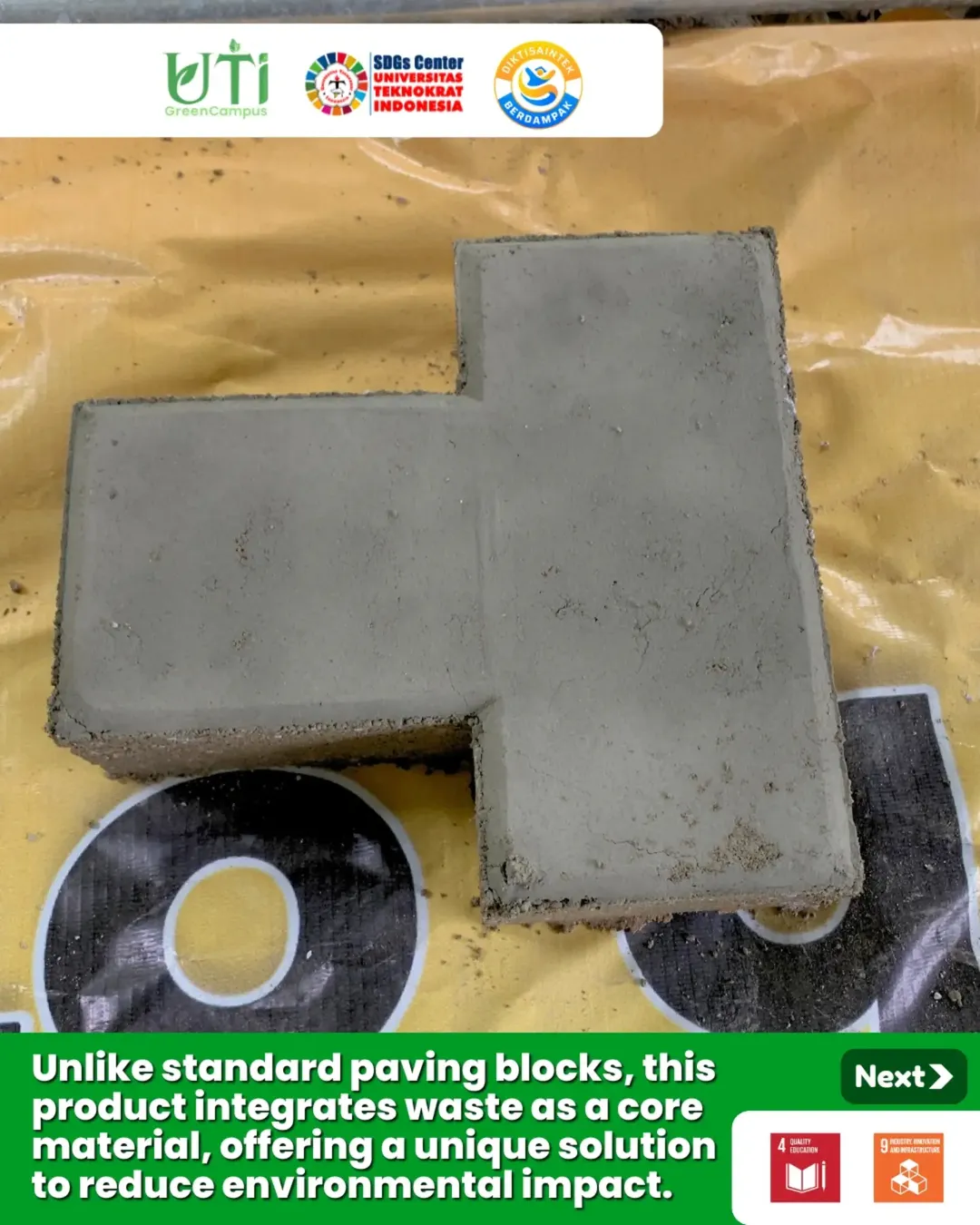
Bandar Lampung – Universitas Teknokrat Indonesia (UTI) continues to strengthen its reputation as a hub for innovation and sustainable education through the development of Tekno Plasting, an environmentally friendly infrastructure product created by Civil Engineering students. Developed through a project-based learning approach under the supervision of Dr. Ir. Lilik Ariyanto, the innovation transforms plastic waste, paper waste, and construction debris into durable “T-shaped” paving blocks designed to support sustainable infrastructure development.
The project reflects the university’s commitment to equipping students with practical skills that extend beyond classroom learning. By directly engaging in research, experimentation, and field-based problem-solving, students are encouraged to apply engineering theories to real-world environmental and infrastructure challenges.
Developed by a team consisting of Selvia, Danang, and Erwin, Tekno Plasting demonstrates how academic knowledge, creativity, and environmental awareness can be combined to produce innovative solutions with tangible societal benefits.
“Through Tekno Plasting, we wanted to show that waste materials still have significant value when managed creatively and scientifically. Our goal is not only to develop an alternative construction material but also to contribute to environmental sustainability by reducing waste accumulation,” explained the student team.
Turning Environmental Challenges into Engineering Opportunities
As urbanization and industrial activities continue to increase, waste management has become one of the most pressing environmental concerns worldwide. Plastic waste, discarded paper, and construction debris often end up in landfills, creating environmental burdens and contributing to pollution.
Recognizing this challenge, the Civil Engineering students sought to develop a practical solution that addresses both waste management and infrastructure needs simultaneously. Through extensive experimentation and material testing, they successfully transformed various waste materials into paving blocks that can be utilized for pedestrian pathways, public spaces, and other infrastructure applications.
The distinctive “T-shaped” design of the paving blocks enhances their functionality while demonstrating the team’s commitment to combining engineering principles with innovative product development.
The project illustrates how engineering innovation can contribute to a circular economy, where waste materials are repurposed into valuable products rather than discarded as environmental liabilities.
Bringing Education Beyond the Classroom
The development of Tekno Plasting represents a strong example of project-based learning, an educational approach that encourages students to actively participate in solving real-world problems through research, collaboration, and innovation.
Under the mentorship of Dr. Ir. Lilik Ariyanto, students were given opportunities to conduct field observations, test materials, analyze engineering performance, and evaluate the environmental impact of their innovation. This hands-on learning experience enabled them to gain practical knowledge while strengthening critical thinking and technical problem-solving skills.
The initiative demonstrates Universitas Teknokrat Indonesia’s commitment to Sustainable Development Goal (SDG) 4: Quality Education, which emphasizes providing relevant, practical, and future-oriented learning opportunities.
Rather than limiting education to theoretical instruction, the university encourages students to engage directly with societal challenges and develop solutions that create meaningful impact. Through projects such as Tekno Plasting, students gain valuable experience that prepares them to become competent professionals and future innovators.
Supporting Sustainable Industry and Infrastructure
Beyond its educational significance, Tekno Plasting aligns closely with Sustainable Development Goal (SDG) 9: Industry, Innovation, and Infrastructure, which promotes resilient infrastructure, sustainable industrialization, and technological innovation.
The innovation demonstrates how environmentally friendly technologies can support infrastructure development while reducing the environmental footprint of construction activities. By utilizing recycled materials, the paving blocks contribute to resource efficiency and encourage the adoption of sustainable practices within the construction sector.
As governments and industries increasingly seek green alternatives to conventional building materials, innovations such as Tekno Plasting offer promising opportunities for the future of sustainable infrastructure development.
The project also highlights the important role universities can play in supporting industrial modernization through research-driven innovation and the commercialization of student-generated technologies.
Advancing Environmental Sustainability
In addition to supporting SDG 4 and SDG 9, Tekno Plasting contributes significantly to environmental sustainability by promoting responsible waste management practices. The innovation helps reduce the volume of waste entering landfills while creating economic and functional value from materials that would otherwise be discarded.
The initiative reflects growing global efforts to transition toward sustainable production and consumption patterns. By transforming waste into useful construction products, the students demonstrate how innovation can simultaneously address environmental, economic, and social challenges.
Experts increasingly emphasize the importance of integrating sustainability principles into engineering education, and Tekno Plasting serves as an excellent example of how future engineers can contribute to environmental stewardship through practical innovation.
Vice Rector Commends Student Innovation
The Vice Rector of Universitas Teknokrat Indonesia praised the students’ achievement and emphasized the importance of innovation-driven education in addressing global sustainability challenges.
“Tekno Plasting is a remarkable example of how our students are applying engineering knowledge to solve real-world environmental problems. This innovation reflects not only technical competence but also creativity, responsibility, and a strong commitment to sustainable development,” the Vice Rector stated.
He further noted that the university remains dedicated to creating an educational ecosystem that encourages students to become innovators and change-makers.
“We are proud of Selvia, Danang, and Erwin for demonstrating that quality education can produce solutions with meaningful societal impact. Through projects like Tekno Plasting, our students are proving that innovation can support environmental protection, infrastructure development, and economic sustainability simultaneously,” he added.
Inspiring a More Sustainable Future
discarded materials into valuable infrastructure products, the students have shown that sustainable innovation is not merely a concept but a practical pathway toward positive change.
As Universitas Teknokrat Indonesia continues to promote research, innovation, and community engagement, initiatives such as Tekno Plasting reaffirm the university’s role in preparing future leaders capable of addressing the complex challenges of the modern world.
The innovation stands as a powerful testament to the idea that quality education inspires meaningful action, and that the solutions to tomorrow’s challenges can emerge from the creativity and determination of today’s students. Through Tekno Plasting, Universitas Teknokrat Indonesia once again demonstrates its commitment to producing graduates who are not only academically excellent but also dedicated to creating a more sustainable and prosperous future for society.