Universitas Teknokrat Indonesia Electrical Engineering Students Develop Solar-Powered Fly Trap to Support Sustainable Livestock Farming in West Lampung
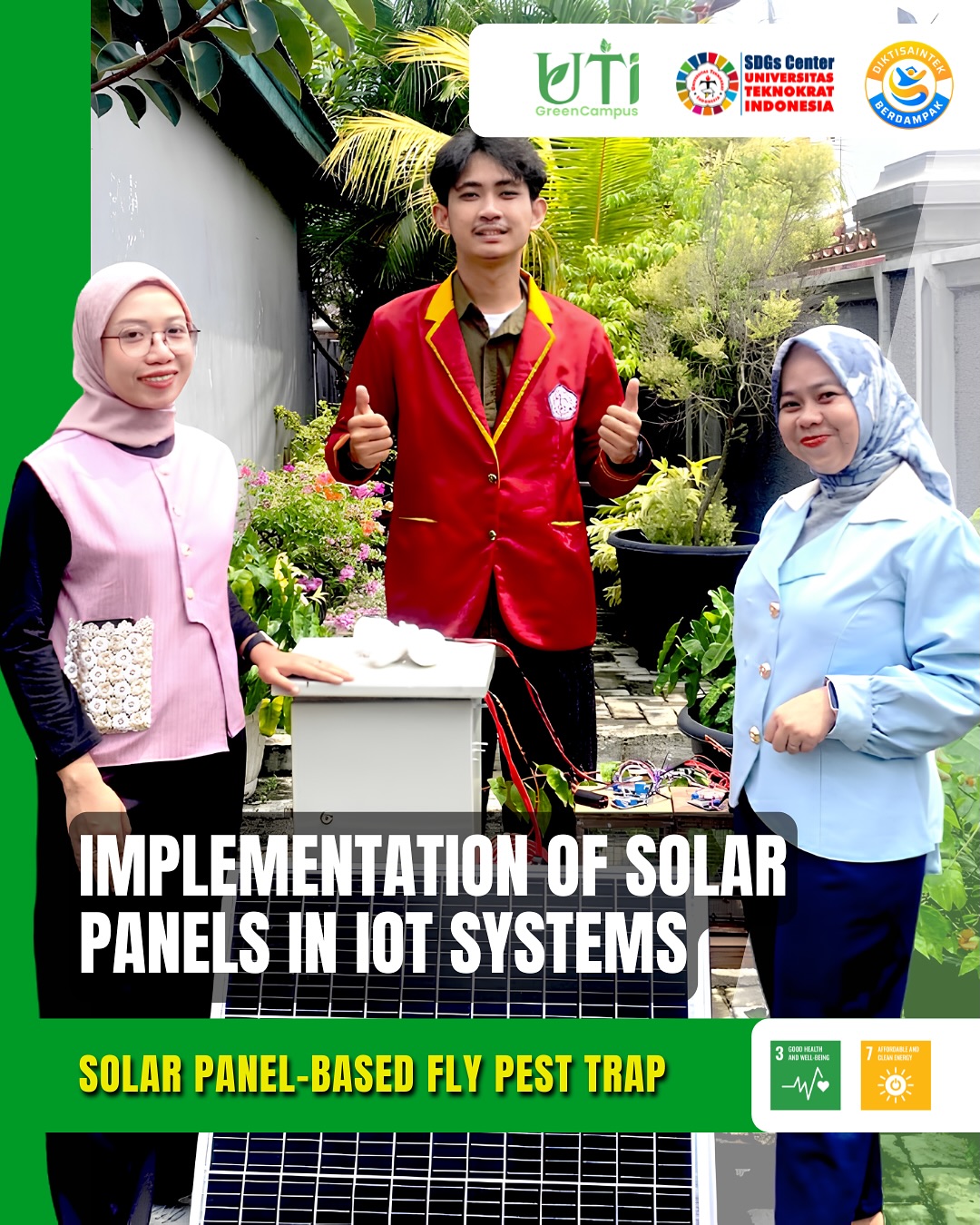
Bandar Lampung – Students from the Electrical Engineering Study Program at Universitas Teknokrat Indonesia (UTI) have once again demonstrated their ability to develop practical technological solutions that directly address community needs. Through a community-based innovation project in Tugu Sari Village, West Lampung, the students successfully designed and implemented a solar-powered fly trap system aimed at helping local sheep farmers reduce pest disturbances and improve livestock productivity.
The innovation was developed in response to challenges faced by sheep farmers, who often struggle with fly infestations around livestock enclosures. Beyond causing discomfort to animals, flies can negatively impact productivity and increase the risk of disease transmission among livestock and surrounding communities.
Recognizing this issue, the Electrical Engineering students designed a sustainable and energy-efficient solution that utilizes renewable energy technology to control fly populations in farming environments. The project highlights the university’s commitment to encouraging students to apply their academic knowledge to solve real-world problems while contributing to sustainable rural development.
“This innovation was inspired by the needs of local farmers who require practical and affordable technology to improve livestock management. Our goal was to create a solution that is effective, environmentally friendly, and easy to implement in rural communities,” explained the student development team.
Harnessing Solar Energy for Sustainable Agriculture
The solar-powered fly trap operates using photovoltaic panels as its primary energy source. The system collects solar energy during the day and powers a combination of ultraviolet lamps and electrified wire mesh designed to attract and eliminate flies automatically.
By utilizing solar power, the device can function independently without relying on conventional electricity sources, making it particularly suitable for agricultural areas where access to electrical infrastructure may be limited. The automatic operation also reduces the need for continuous manual intervention, providing farmers with a practical and efficient pest-control solution.
The integration of renewable energy technology into agricultural applications demonstrates how innovation can improve productivity while minimizing environmental impact.
According to the student team, the technology was specifically designed to be cost-effective, durable, and adaptable to local farming conditions, ensuring that it can provide long-term benefits to livestock owners.
Improving Livestock Health and Community Well-Being
One of the primary objectives of the project is to improve the health and welfare of livestock. Excessive fly populations are known to cause stress in animals, reduce feeding efficiency, and increase the likelihood of disease outbreaks. By controlling pest populations, farmers can create a healthier environment for their sheep, ultimately supporting higher productivity and better livestock performance.
The innovation directly contributes to Sustainable Development Goal (SDG) 3: Good Health and Well-Being, which emphasizes the importance of promoting healthy lives and improving well-being for all. By reducing the risk of disease transmission among animals and minimizing environmental health hazards, the technology supports both livestock health and public health outcomes.
In addition to its agricultural benefits, the project raises awareness about the importance of preventive approaches in maintaining animal welfare and supporting sustainable farming practices.
Advancing Renewable Energy Solutions
The project also aligns strongly with Sustainable Development Goal (SDG) 7: Affordable and Clean Energy through its use of solar power as a renewable and environmentally friendly energy source.
As the global demand for sustainable energy solutions continues to grow, innovations such as the solar-powered fly trap demonstrate how renewable energy technologies can be applied in practical ways to address local challenges. The project showcases the potential of solar energy not only as an alternative power source but also as a driver of innovation in agriculture and rural development.
By reducing dependence on conventional energy systems, the innovation contributes to broader efforts aimed at promoting clean energy adoption and supporting environmentally responsible development.
Bridging Academic Knowledge and Community Needs
The development of the solar-powered fly trap reflects Universitas Teknokrat Indonesia’s commitment to experiential and community-oriented learning. Through projects that engage directly with local communities, students gain valuable opportunities to apply engineering principles, conduct field research, and develop technologies that generate tangible social impact.
This hands-on approach enables students to strengthen their technical competencies while developing problem-solving, communication, and collaboration skills that are essential in their future professional careers.
The project also illustrates how universities can serve as catalysts for innovation by connecting academic expertise with community needs. Through meaningful engagement with local stakeholders, students are encouraged to become active contributors to regional development and societal progress.
Vice Rector Praises Students’ Commitment to Innovation
The Vice Rector of Universitas Teknokrat Indonesia expressed appreciation for the achievement and highlighted the importance of technology-driven solutions that address real challenges faced by communities.
“This innovation demonstrates how our students are utilizing their knowledge and creativity to develop technologies that directly benefit society. The solar-powered fly trap is an excellent example of how engineering education can generate practical solutions that improve productivity, support environmental sustainability, and enhance community welfare,” the Vice Rector stated.
He further emphasized that Universitas Teknokrat Indonesia remains committed to fostering an academic environment that encourages innovation, research, and community engagement.
“We are proud of our Electrical Engineering students for creating a technology that not only addresses local agricultural challenges but also supports global sustainable development goals. This project reflects our vision of producing graduates who are innovative, socially responsible, and capable of contributing to national development through technology,” he added.
A Step Toward Sustainable Rural Development
The implementation of the solar-powered fly trap in Tugu Sari Village serves as a powerful example of how higher education institutions can contribute to sustainable development through innovation and community collaboration. By combining renewable energy technology with practical agricultural applications, the project creates value for local farmers while supporting environmental conservation efforts.
More than just a technological device, the innovation represents a commitment to empowering communities through accessible and sustainable solutions. It demonstrates that student-driven research and innovation can play a meaningful role in addressing local challenges and improving quality of life.
As Universitas Teknokrat Indonesia continues to encourage research, innovation, and community service, projects such as this reinforce the university’s position as a center for technological advancement and societal impact. The success of the solar-powered fly trap highlights the transformative power of education in creating solutions that not only solve problems today but also contribute to a more sustainable future for generations to come.