Innovation Campus

Universitas Teknokrat Indonesia Students Unveil AgroBot Feed, an AI-Powered Smart Collar System Transforming Livestock Farming

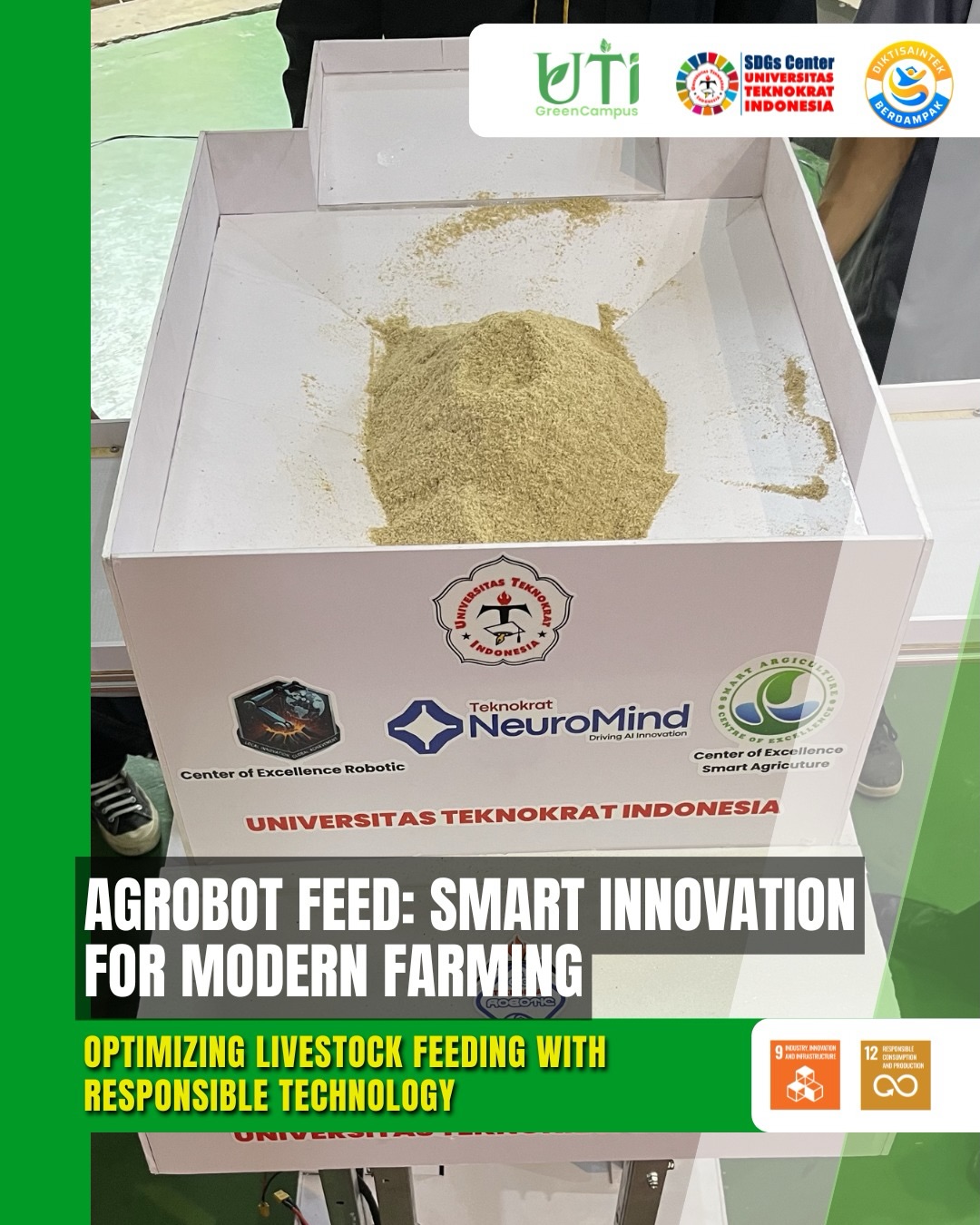
Bandar Lampung – Universitas Teknokrat Indonesia (UTI) continues to strengthen its reputation as a center of innovation and technological excellence through the development of AgroBot Feed Digital Smart Collar System, a groundbreaking agritech innovation created by its students. Designed to automate cattle feeding processes, the smart system combines robotics, artificial intelligence (AI), and digital agriculture technologies to help livestock farmers improve productivity, optimize resource management, and support sustainable farming practices. Read More: Universitas Teknokrat Indonesia Accelerates Green Campus Transformation Through Solar Energy Initiative The innovation was recently showcased as one of the outstanding student projects highlighting how technology can address real-world challenges in the agricultural sector. AgroBot Feed demonstrates the university’s commitment to encouraging students to create practical, future-oriented solutions that contribute directly to community welfare and national development. By integrating intelligent feeding automation into livestock management, the system enables farmers to provide accurate feed portions at predetermined schedules, ensuring consistent nutrition while reducing manual labor and operational inefficiencies. “AgroBot Feed was developed to help farmers manage livestock feeding more effectively and efficiently. Through automation and smart technology, we aim to improve productivity while supporting sustainable agricultural practices,” explained members of the student innovation team. Revolutionizing Livestock Management Through Smart Technology The agricultural sector is increasingly embracing digital transformation to address challenges related to productivity, labor shortages, and resource efficiency. Recognizing these challenges, Universitas Teknokrat Indonesia students designed AgroBot Feed as a technology-driven solution capable of modernizing traditional livestock farming practices. The system utilizes a smart collar mechanism integrated with sensors, automated feeding controls, and artificial intelligence algorithms. These technologies work together to monitor feeding schedules and deliver feed in precise quantities according to livestock needs. By ensuring consistent and controlled feeding, the innovation helps maintain animal health and nutrition while minimizing the risk of overfeeding or feed shortages. The automated system also reduces the workload of farmers, allowing them to focus on other aspects of livestock management. The application of robotics and AI within the livestock sector highlights the growing potential of smart farming technologies to increase efficiency and improve agricultural sustainability. Supporting Industry, Innovation, and Infrastructure The AgroBot Feed Digital Smart Collar System directly contributes to Sustainable Development Goal (SDG) 9: Industry, Innovation, and Infrastructure, which emphasizes the importance of fostering innovation, developing resilient infrastructure, and promoting sustainable industrialization. The innovation demonstrates how emerging technologies can be applied to traditional sectors such as agriculture and livestock farming. By integrating digital systems into farming operations, AgroBot Feed helps bridge the gap between conventional agricultural methods and modern technological advancements. This project also showcases the role of higher education institutions in producing innovative technologies capable of supporting economic growth and industrial transformation. Through research-based learning and technological experimentation, students are encouraged to become innovators who contribute to solving contemporary challenges. The development of AgroBot Feed reflects Universitas Teknokrat Indonesia’s commitment to fostering a culture of innovation where students are empowered to transform ideas into impactful solutions. Read More: Universitas Teknokrat Indonesia Electrical Engineering Students Develop Solar-Powered Fly Trap to Support Sustainable Livestock Farming in West Lampung Promoting Responsible Consumption and Production In addition to advancing technological innovation, AgroBot Feed aligns strongly with Sustainable Development Goal (SDG) 12: Responsible Consumption and Production, particularly through its efficient feed management system. Feed is one of the largest operational costs in livestock farming, and inefficient feeding practices often lead to unnecessary waste. By delivering feed according to predetermined requirements, the system helps farmers optimize resource utilization and minimize feed losses. This approach contributes to more sustainable production systems while improving economic efficiency for farmers. The ability to manage resources more effectively supports environmental sustainability and encourages responsible agricultural practices. The innovation demonstrates that technological advancement can play a significant role in reducing waste and promoting sustainable consumption patterns across the agricultural sector. Bridging Education and Real-World Solutions The AgroBot Feed project exemplifies Universitas Teknokrat Indonesia’s commitment to experiential and project-based learning. Rather than focusing solely on classroom theory, students are encouraged to identify real-world problems and develop practical solutions through research, experimentation, and technological innovation. Through the development process, students gained valuable experience in robotics engineering, artificial intelligence, sensor integration, programming, and agricultural technology applications. This multidisciplinary approach strengthens their technical competencies while enhancing critical thinking, creativity, and problem-solving skills. The project also reflects the university’s vision of producing graduates who are not only academically accomplished but also capable of contributing meaningful innovations that address societal and industrial needs. Vice Rector Praises Students’ Innovative Achievement The Vice Rector of Universitas Teknokrat Indonesia expressed appreciation for the students’ achievement and highlighted the importance of technological innovation in supporting sustainable agricultural development. “AgroBot Feed is a remarkable example of how our students are leveraging advanced technologies such as artificial intelligence and robotics to solve real challenges faced by the agricultural sector. This innovation demonstrates the quality of education at Universitas Teknokrat Indonesia and our commitment to preparing future innovators who can contribute to national development,” the Vice Rector stated. He further emphasized that the university remains committed to supporting student creativity and innovation through research-driven learning environments. “We are proud to see our students developing solutions that have the potential to transform traditional farming practices. AgroBot Feed illustrates how technology can improve efficiency, reduce waste, and create sustainable value for society. This is exactly the kind of innovation needed to support the future of agriculture in Indonesia and beyond,” he added. Building the Future of Smart Agriculture The AgroBot Feed Digital Smart Collar System represents more than a technological prototype; it symbolizes the future of intelligent and sustainable agriculture. By combining artificial intelligence, robotics, and digital monitoring systems, the innovation provides a glimpse into how smart technologies can reshape livestock management and improve food production systems. As global demand for efficient and sustainable agricultural solutions continues to grow, innovations such as AgroBot Feed highlight the crucial role of young innovators in driving technological transformation. The project demonstrates that the future of agriculture lies not only in increasing productivity but also in adopting smarter and more
Universitas Teknokrat Indonesia Accelerates Green Campus Transformation Through Solar Energy Initiative

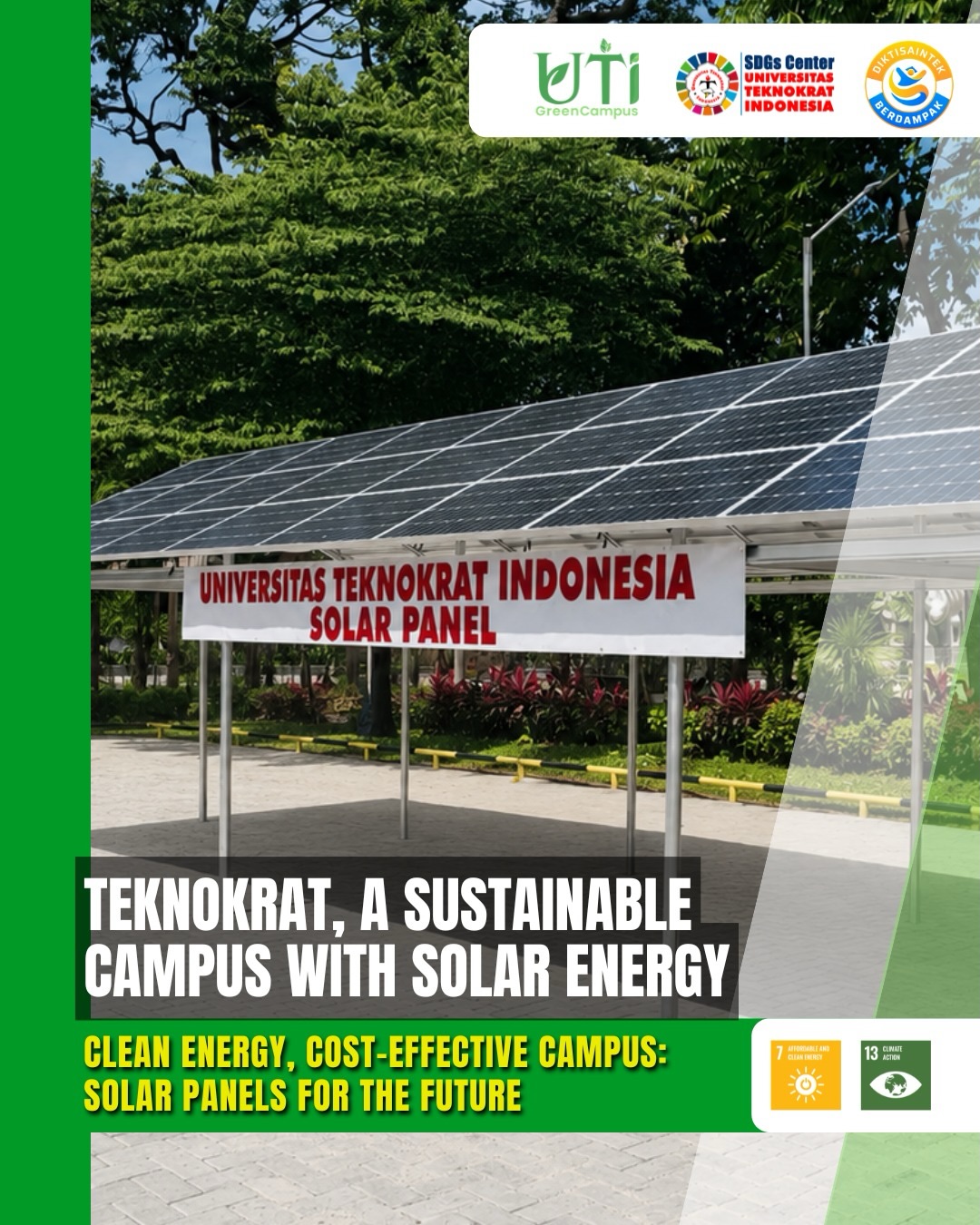
Bandar Lampung – Universitas Teknokrat Indonesia (UTI) continues to strengthen its position as a forward-thinking institution committed to sustainability through the implementation of a comprehensive solar energy initiative across several key campus facilities. The installation of solar panels marks a significant milestone in the university’s Green Campus program, reflecting its dedication to environmental stewardship, energy efficiency, and the adoption of renewable energy technologies. Read More: Universitas Teknokrat Indonesia Promotes Environmental Sustainability Through “Kebun Kita” Application The initiative is designed not only to reduce the university’s dependence on conventional electricity sources but also to serve as a practical demonstration of how clean energy can be integrated into daily campus operations. By utilizing solar power, Universitas Teknokrat Indonesia is creating a more sustainable educational environment while providing measurable data on energy savings and environmental impact. The solar panel system has been strategically installed in several campus facilities to maximize energy production and optimize operational efficiency. Through this initiative, the university is able to monitor electricity generation and consumption, providing valuable insights into the effectiveness of renewable energy utilization in higher education institutions. “The adoption of solar energy is part of our long-term commitment to creating a sustainable campus environment. This initiative demonstrates that educational institutions can play a meaningful role in promoting renewable energy while contributing to environmental conservation,” a university representative explained. Advancing Sustainable Energy on Campus As global concerns regarding energy security and environmental sustainability continue to grow, universities are increasingly expected to become leaders in the transition toward cleaner and more efficient energy systems. Universitas Teknokrat Indonesia has responded to this challenge by integrating renewable energy technologies into its campus infrastructure. The solar panel installation enables the university to harness energy from the sun, a renewable resource that is abundant, environmentally friendly, and sustainable. By converting solar radiation into electricity, the system reduces reliance on fossil-fuel-based energy sources and helps lower operational energy costs. Beyond its practical benefits, the initiative serves as a living laboratory where students can observe and learn about renewable energy technologies in real-world settings. The project provides valuable educational opportunities that complement classroom instruction and strengthen students’ understanding of sustainable development practices. The availability of real-time energy performance data also allows the university community to better understand patterns of energy consumption and encourages more responsible energy use among students, faculty members, and staff. Read More: Universitas Teknokrat Indonesia Electrical Engineering Students Develop Solar-Powered Fly Trap to Support Sustainable Livestock Farming in West Lampung Supporting Affordable and Clean Energy The solar energy program directly contributes to Sustainable Development Goal (SDG) 7: Affordable and Clean Energy, which promotes universal access to reliable, sustainable, and modern energy solutions. Through the implementation of solar power systems, Universitas Teknokrat Indonesia demonstrates how renewable energy can be integrated into institutional operations while supporting national and global efforts to accelerate the transition toward cleaner energy sources. The initiative also highlights the important role of educational institutions in fostering awareness about renewable energy technologies and encouraging the adoption of sustainable energy practices among future generations. By showcasing the practical benefits of solar energy, the university helps inspire students and the broader community to explore innovative approaches to energy management and environmental sustainability. Contributing to Climate Action In addition to supporting clean energy goals, the solar panel initiative aligns closely with Sustainable Development Goal (SDG) 13: Climate Action, which calls for urgent measures to combat climate change and reduce greenhouse gas emissions. Traditional electricity generation methods often rely on fossil fuels that contribute significantly to carbon emissions. By replacing a portion of its energy consumption with solar-generated electricity, Universitas Teknokrat Indonesia actively reduces its carbon footprint and contributes to efforts aimed at mitigating climate change. The initiative reflects the university’s recognition that climate action requires collective responsibility and practical solutions. Through the implementation of renewable energy infrastructure, the institution demonstrates how organizations can take meaningful steps toward environmental sustainability while maintaining operational effectiveness. Furthermore, the project encourages the campus community to adopt environmentally responsible behaviors and become active participants in climate action initiatives. Creating a Living Laboratory for Sustainability Education One of the most valuable aspects of the solar panel program is its educational impact. Rather than serving solely as infrastructure, the installation functions as a real-world learning resource that supports research, innovation, and sustainability education. Students from various academic disciplines have opportunities to study renewable energy systems, analyze energy efficiency data, and explore the broader environmental implications of clean energy adoption. This practical exposure strengthens their understanding of emerging technologies and prepares them to contribute to sustainable development efforts in their future careers. The initiative aligns with Universitas Teknokrat Indonesia’s vision of integrating innovation, technology, and environmental responsibility into the learning experience. By combining academic knowledge with practical applications, the university empowers students to become future leaders in sustainability and technological advancement. Vice Rector Highlights Commitment to Sustainability The Vice Rector of Universitas Teknokrat Indonesia expressed strong support for the solar energy initiative and emphasized its importance in advancing the university’s sustainability agenda. “The solar panel installation is a reflection of our commitment to creating a campus that embraces innovation while prioritizing environmental responsibility. This initiative demonstrates that sustainability is not merely a concept but a practice that can be integrated into everyday campus life,” the Vice Rector stated. He further explained that the university aims to cultivate a culture of environmental awareness among all members of the academic community. “We want our students to witness firsthand how renewable energy technologies can create positive environmental impact. Through projects like this, Universitas Teknokrat Indonesia is preparing future generations to become innovators, researchers, and leaders who are committed to building a more sustainable world,” he added. Building a Sustainable Future Through Innovation The solar energy initiative is part of Universitas Teknokrat Indonesia’s broader strategy to create a sustainable and environmentally responsible campus. By investing in renewable energy infrastructure, the university demonstrates that technological advancement and environmental preservation can go hand in hand. The project also reinforces the institution’s role as an agent of change

Universitas Teknokrat Indonesia Electrical Engineering Students Develop Solar-Powered Fly Trap to Support Sustainable Livestock Farming in West Lampung

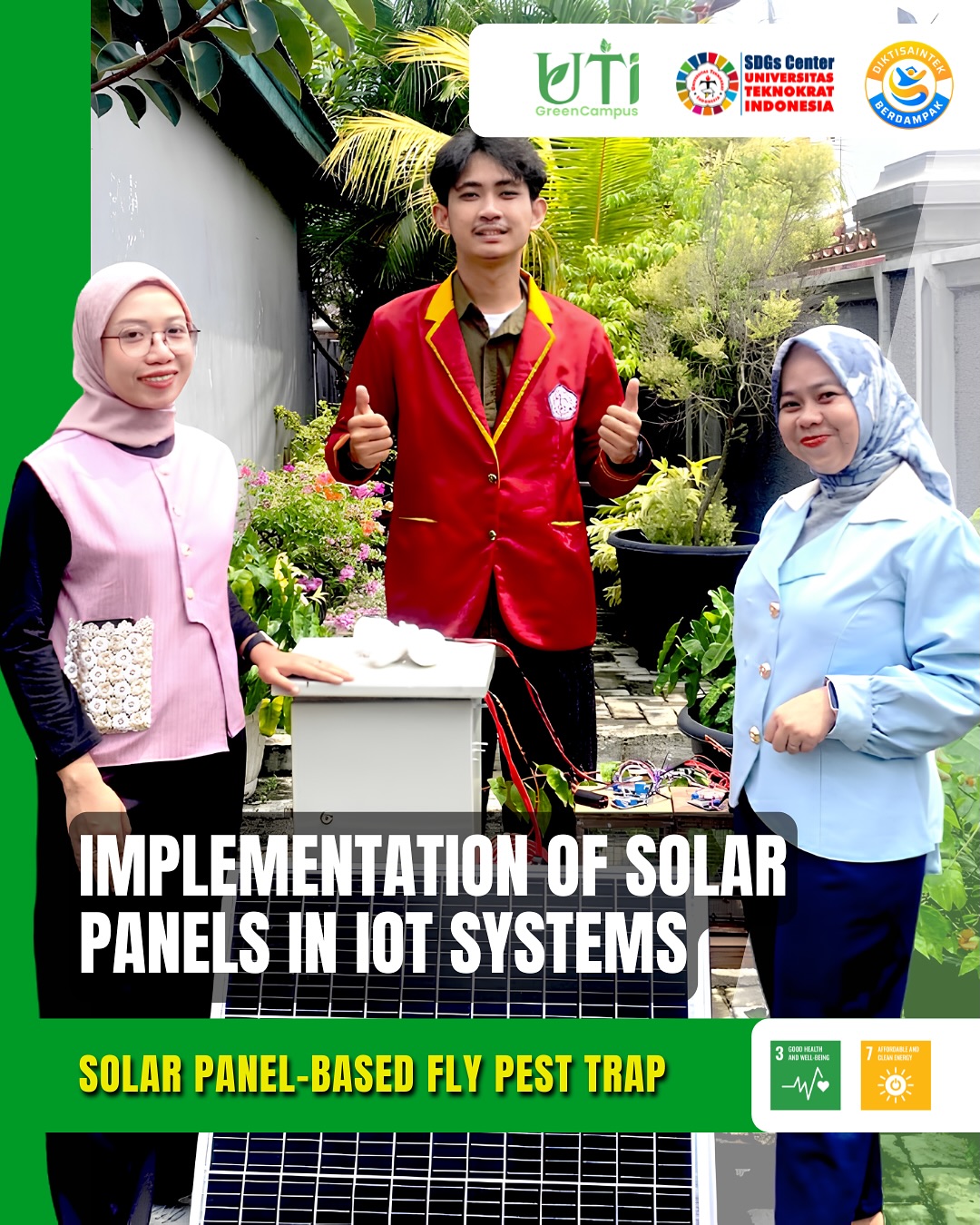
Bandar Lampung – Students from the Electrical Engineering Study Program at Universitas Teknokrat Indonesia (UTI) have once again demonstrated their ability to develop practical technological solutions that directly address community needs. Through a community-based innovation project in Tugu Sari Village, West Lampung, the students successfully designed and implemented a solar-powered fly trap system aimed at helping local sheep farmers reduce pest disturbances and improve livestock productivity. Read More: Universitas Teknokrat Indonesia Civil Engineering Students Transform Waste into Sustainable Infrastructure Through “Tekno Plasting” Innovation The innovation was developed in response to challenges faced by sheep farmers, who often struggle with fly infestations around livestock enclosures. Beyond causing discomfort to animals, flies can negatively impact productivity and increase the risk of disease transmission among livestock and surrounding communities. Recognizing this issue, the Electrical Engineering students designed a sustainable and energy-efficient solution that utilizes renewable energy technology to control fly populations in farming environments. The project highlights the university’s commitment to encouraging students to apply their academic knowledge to solve real-world problems while contributing to sustainable rural development. “This innovation was inspired by the needs of local farmers who require practical and affordable technology to improve livestock management. Our goal was to create a solution that is effective, environmentally friendly, and easy to implement in rural communities,” explained the student development team. Harnessing Solar Energy for Sustainable Agriculture The solar-powered fly trap operates using photovoltaic panels as its primary energy source. The system collects solar energy during the day and powers a combination of ultraviolet lamps and electrified wire mesh designed to attract and eliminate flies automatically. By utilizing solar power, the device can function independently without relying on conventional electricity sources, making it particularly suitable for agricultural areas where access to electrical infrastructure may be limited. The automatic operation also reduces the need for continuous manual intervention, providing farmers with a practical and efficient pest-control solution. The integration of renewable energy technology into agricultural applications demonstrates how innovation can improve productivity while minimizing environmental impact. According to the student team, the technology was specifically designed to be cost-effective, durable, and adaptable to local farming conditions, ensuring that it can provide long-term benefits to livestock owners. Improving Livestock Health and Community Well-Being One of the primary objectives of the project is to improve the health and welfare of livestock. Excessive fly populations are known to cause stress in animals, reduce feeding efficiency, and increase the likelihood of disease outbreaks. By controlling pest populations, farmers can create a healthier environment for their sheep, ultimately supporting higher productivity and better livestock performance. The innovation directly contributes to Sustainable Development Goal (SDG) 3: Good Health and Well-Being, which emphasizes the importance of promoting healthy lives and improving well-being for all. By reducing the risk of disease transmission among animals and minimizing environmental health hazards, the technology supports both livestock health and public health outcomes. In addition to its agricultural benefits, the project raises awareness about the importance of preventive approaches in maintaining animal welfare and supporting sustainable farming practices. Read More: Universitas Teknokrat Indonesia Strengthens Sustainable Campus Vision Through Green Open Spaces That Support Learning and Well-Being Advancing Renewable Energy Solutions The project also aligns strongly with Sustainable Development Goal (SDG) 7: Affordable and Clean Energy through its use of solar power as a renewable and environmentally friendly energy source. As the global demand for sustainable energy solutions continues to grow, innovations such as the solar-powered fly trap demonstrate how renewable energy technologies can be applied in practical ways to address local challenges. The project showcases the potential of solar energy not only as an alternative power source but also as a driver of innovation in agriculture and rural development. By reducing dependence on conventional energy systems, the innovation contributes to broader efforts aimed at promoting clean energy adoption and supporting environmentally responsible development. Bridging Academic Knowledge and Community Needs The development of the solar-powered fly trap reflects Universitas Teknokrat Indonesia’s commitment to experiential and community-oriented learning. Through projects that engage directly with local communities, students gain valuable opportunities to apply engineering principles, conduct field research, and develop technologies that generate tangible social impact. This hands-on approach enables students to strengthen their technical competencies while developing problem-solving, communication, and collaboration skills that are essential in their future professional careers. The project also illustrates how universities can serve as catalysts for innovation by connecting academic expertise with community needs. Through meaningful engagement with local stakeholders, students are encouraged to become active contributors to regional development and societal progress. Vice Rector Praises Students’ Commitment to Innovation The Vice Rector of Universitas Teknokrat Indonesia expressed appreciation for the achievement and highlighted the importance of technology-driven solutions that address real challenges faced by communities. “This innovation demonstrates how our students are utilizing their knowledge and creativity to develop technologies that directly benefit society. The solar-powered fly trap is an excellent example of how engineering education can generate practical solutions that improve productivity, support environmental sustainability, and enhance community welfare,” the Vice Rector stated. He further emphasized that Universitas Teknokrat Indonesia remains committed to fostering an academic environment that encourages innovation, research, and community engagement. “We are proud of our Electrical Engineering students for creating a technology that not only addresses local agricultural challenges but also supports global sustainable development goals. This project reflects our vision of producing graduates who are innovative, socially responsible, and capable of contributing to national development through technology,” he added. A Step Toward Sustainable Rural Development The implementation of the solar-powered fly trap in Tugu Sari Village serves as a powerful example of how higher education institutions can contribute to sustainable development through innovation and community collaboration. By combining renewable energy technology with practical agricultural applications, the project creates value for local farmers while supporting environmental conservation efforts. More than just a technological device, the innovation represents a commitment to empowering communities through accessible and sustainable solutions. It demonstrates that student-driven research and innovation can play a meaningful role in addressing local challenges and improving

Market Mastery Showcase at Academic Expo 2026 Highlights Universitas Teknokrat Indonesia’s Commitment to Entrepreneurship, Innovation, and Sustainable Economic Development

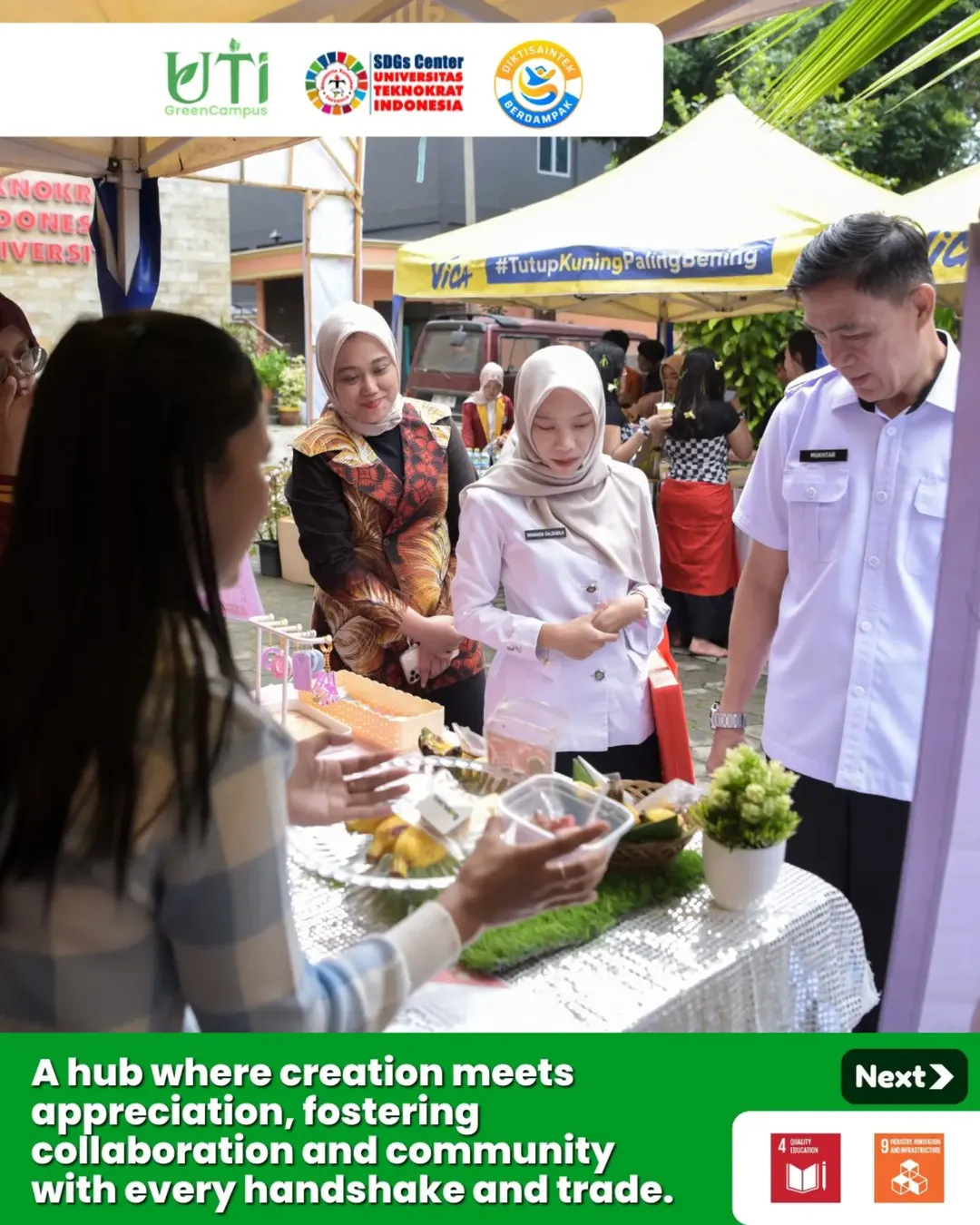
Bandar Lampung – Universitas Teknokrat Indonesia (UTI) continues to demonstrate its commitment to producing innovative, entrepreneurial, and industry-ready graduates through the successful implementation of the Market Mastery Showcase at the Academic Expo 2026. More than a conventional student bazaar, the event served as a dynamic platform where academic theories were transformed into real-world business experiences, enabling students to showcase their creativity, entrepreneurial skills, and innovative products directly to the public. Read More: Universitas Teknokrat Indonesia Students Develop “Nutriscane,” a Smart Nutrition-Tracking Application to Promote Healthier Consumer Choices As one of the highlights of Academic Expo 2026, the Market Mastery Showcase attracted significant attention from visitors, students, academics, industry practitioners, and prospective entrepreneurs. The exhibition featured a diverse range of student-developed products, including culinary creations inspired by local traditions, creative merchandise, digital-based products, and innovative business concepts designed to meet contemporary market demands. The showcase reflects Universitas Teknokrat Indonesia’s educational philosophy of combining academic excellence with practical experience, ensuring that students graduate not only with strong theoretical knowledge but also with the skills necessary to succeed in an increasingly competitive global economy. “The Market Mastery Showcase provides students with an opportunity to experience the realities of entrepreneurship firsthand. Through direct interaction with consumers, students learn how to market products, understand customer preferences, manage business operations, and develop professional communication skills,” said one of the faculty coordinators involved in the event. Transforming Learning into Practical Entrepreneurial Experience The Market Mastery Showcase represents a tangible implementation of experiential learning, where students are encouraged to apply concepts learned in the classroom to real business environments. Participants were responsible for developing business strategies, creating products, designing promotional campaigns, and managing transactions throughout the exhibition. This hands-on approach enables students to strengthen critical competencies such as leadership, teamwork, innovation, financial management, and problem-solving. More importantly, it helps students develop confidence and adaptability—qualities that are essential in today’s rapidly evolving business landscape. By engaging directly with customers and stakeholders, students gain valuable insights into consumer behavior and market dynamics, preparing them to become future entrepreneurs and business leaders capable of contributing to economic growth and innovation. Supporting SDG 4 Through Quality and Experiential Education The success of the Market Mastery Showcase reflects Universitas Teknokrat Indonesia’s commitment to Sustainable Development Goal (SDG) 4: Quality Education, which emphasizes inclusive, relevant, and practical learning opportunities. Rather than limiting education to classroom instruction, the university promotes project-based and experiential learning approaches that empower students to develop real-world competencies. Through activities such as the Market Mastery Showcase, students are encouraged to think critically, act creatively, and transform ideas into marketable products and services. This educational model ensures that graduates possess not only academic knowledge but also the practical expertise and entrepreneurial mindset required to navigate future professional challenges. The event also demonstrates how higher education institutions can bridge the gap between academia and industry by providing students with authentic learning experiences that reflect real market conditions. Read More: Universitas Teknokrat Indonesia Students Develop “Meowgic Pet,” an Innovative Digital Platform for Modern Pet Care Services Driving Innovation and Industry Development Beyond its educational value, the Market Mastery Showcase contributes significantly to Sustainable Development Goal (SDG) 9: Industry, Innovation, and Infrastructure. The wide variety of products presented during the exhibition serves as evidence of the innovative potential emerging from student research and creative exploration. From culinary innovations incorporating local cultural elements to digital-based products and creative souvenirs, each exhibition booth reflected the students’ ability to identify opportunities and develop solutions with commercial potential. These innovations demonstrate how academic projects can evolve into viable business ventures capable of supporting local economic development. The event also serves as a catalyst for the growth of future small and medium-sized enterprises (SMEs) by introducing innovative products to consumers and encouraging students to pursue entrepreneurial pathways after graduation. By fostering a culture of innovation and commercialization, Universitas Teknokrat Indonesia actively contributes to building a sustainable innovation ecosystem that supports industrial growth and technological advancement. Empowering the Creative Economy Through Student Innovation The Market Mastery Showcase highlights the increasingly important role of universities in strengthening the creative economy. Through entrepreneurship-oriented programs, students are encouraged to transform ideas into products that create economic value while addressing market needs. Many of the showcased products demonstrated a strong combination of creativity, cultural relevance, and technological integration, reflecting the university’s commitment to producing graduates who can contribute meaningfully to Indonesia’s evolving economic landscape. The event also provides students with an opportunity to validate their business concepts, receive direct feedback from consumers, and explore opportunities for future product development and commercialization. Vice Rector Applauds Students’ Entrepreneurial Spirit The Vice Rector of Universitas Teknokrat Indonesia expressed appreciation for the enthusiasm and creativity demonstrated by students participating in the Market Mastery Showcase. According to him, the event illustrates the university’s success in creating a learning environment that nurtures innovation and entrepreneurship. “The Market Mastery Showcase is a remarkable example of how education can empower students to become innovators, entrepreneurs, and future leaders. We are proud to witness our students transforming their ideas into products that have real market potential and societal value,” the Vice Rector stated. He further emphasized that entrepreneurship education plays a crucial role in preparing graduates for future opportunities and challenges. “Universitas Teknokrat Indonesia is committed to producing graduates who are not only academically accomplished but also capable of creating jobs, driving innovation, and contributing to national economic development. Events such as this demonstrate the extraordinary potential of our students to become agents of positive change,” he added. Building a Champion Generation for the Future The Market Mastery Showcase embodies Universitas Teknokrat Indonesia’s vision of developing a “Champion Generation”—graduates who combine academic excellence with creativity, innovation, leadership, and entrepreneurial competence. By providing platforms that connect education with real-world application, the university continues to encourage students to explore their potential, challenge conventional thinking, and create solutions that address societal needs. Visitors attending the exhibition were invited not only to explore innovative products but also to support young entrepreneurs who represent the future of Indonesia’s

Universitas Teknokrat Indonesia Students Develop “Nutriscane,” a Smart Nutrition-Tracking Application to Promote Healthier Consumer Choices

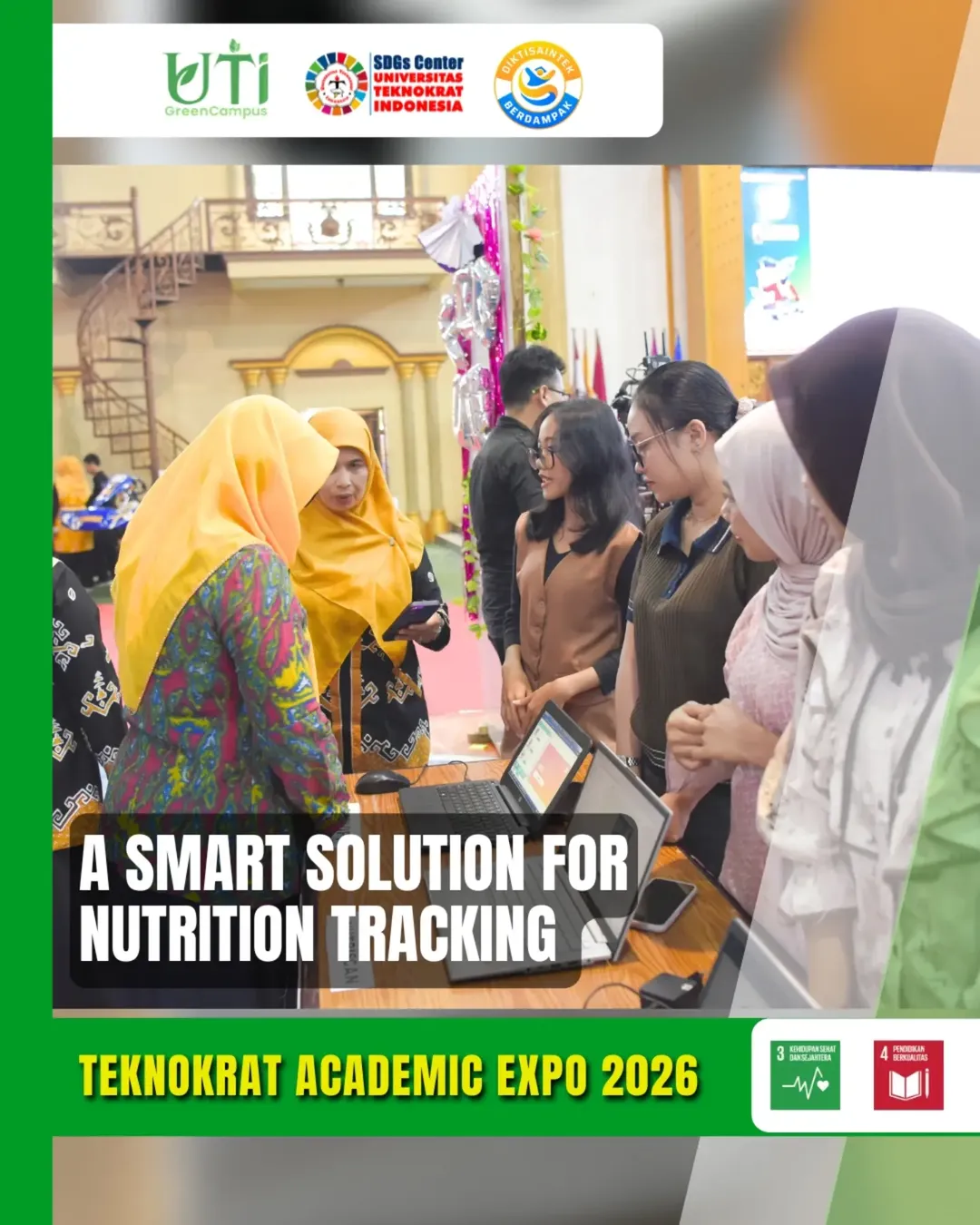
Bandar Lampung – Universitas Teknokrat Indonesia (UTI) continues to demonstrate its commitment to fostering innovation and producing impactful technological solutions through the development of Nutriscane, a smart mobile application designed to help consumers better understand the nutritional content of packaged food products. The innovation was showcased during the university’s Academic Expo, one of the institution’s flagship events highlighting student creativity, research, and entrepreneurship. Read More: Universitas Teknokrat Indonesia Students Develop “Meowgic Pet,” an Innovative Digital Platform for Modern Pet Care Services Developed by talented UTI students, Nutriscane offers a practical barcode-scanning feature that enables users to instantly access nutritional information contained in packaged foods. By simply scanning a product barcode, consumers can obtain detailed information regarding calories, sugar content, fat levels, and other essential nutritional indicators, helping them make more informed dietary decisions. The innovation reflects Universitas Teknokrat Indonesia’s educational philosophy of combining academic excellence with practical problem-solving. Through initiatives such as Nutriscane, students are encouraged to transform classroom knowledge into meaningful solutions that address contemporary societal challenges. Empowering Consumers Through Technology As public awareness of health and nutrition continues to grow, consumers are increasingly seeking accessible tools that can help them understand the nutritional value of the foods they consume. However, interpreting nutritional labels can often be confusing or time-consuming for many people. Recognizing this challenge, the student developers behind Nutriscane created a user-friendly digital platform that simplifies the process of accessing nutritional information. The application enables consumers to quickly evaluate food products and make healthier purchasing decisions based on reliable nutritional data. The innovation is expected to benefit a wide range of users, including families, students, health-conscious individuals, fitness enthusiasts, and anyone seeking to maintain a balanced and healthy lifestyle. “Nutriscane was designed to make nutritional information easier to access and understand. We hope this application can help people become more aware of what they consume and encourage healthier lifestyle choices in their daily lives,” said the student development team during the Academic Expo presentation. Supporting Quality Education Through Innovation The creation of Nutriscane serves as a tangible example of the implementation of Sustainable Development Goal (SDG) 4: Quality Education, which emphasizes the importance of providing relevant, inclusive, and future-oriented learning opportunities. Through project-based learning approaches adopted by Universitas Teknokrat Indonesia, students are encouraged to identify real-world problems and develop innovative solutions that have practical value for society. This educational model equips students not only with technical knowledge but also with critical thinking, collaboration, communication, and entrepreneurial skills. The Academic Expo serves as a platform where students can showcase these competencies while receiving valuable feedback from academics, industry practitioners, and the wider community. As a result, students gain practical experience that strengthens their readiness to enter an increasingly competitive workforce. The success of Nutriscane highlights how quality education can inspire creativity and empower students to become innovators capable of contributing to social and technological progress. Promoting Health and Well-Being Through Digital Solutions Beyond its educational significance, Nutriscane directly supports Sustainable Development Goal (SDG) 3: Good Health and Well-Being. The application addresses the growing need for accessible health information by providing consumers with tools to monitor nutritional intake more effectively. In recent years, health experts have increasingly emphasized the importance of understanding nutritional content as a key factor in preventing diet-related illnesses and promoting overall well-being. By making nutritional information more transparent and accessible, Nutriscane helps consumers make better-informed decisions that can positively impact their long-term health. The application represents a proactive approach to health education, leveraging technology to encourage preventive healthcare practices rather than reactive measures. Through simple and intuitive digital interactions, Nutriscane promotes healthier habits and greater awareness of nutritional choices among the public. A Reflection of the University’s Innovation Ecosystem The development of Nutriscane also demonstrates the strength of Universitas Teknokrat Indonesia’s innovation ecosystem. The university actively encourages interdisciplinary collaboration, technological experimentation, and entrepreneurial thinking among its students. By providing opportunities for students to develop real-world projects, UTI continues to cultivate graduates who are capable of adapting to technological change and creating solutions that generate meaningful social impact. The Academic Expo itself has become an important platform for showcasing these achievements, bringing together innovative ideas from various academic disciplines and highlighting the university’s role in advancing knowledge, technology, and community development. Vice Rector Praises Student Achievement The Vice Rector of Universitas Teknokrat Indonesia expressed appreciation for the students’ accomplishment and emphasized the importance of educational innovation in addressing contemporary societal needs. “Nutriscane is an excellent example of how our students are transforming knowledge into practical solutions that directly benefit society. This innovation reflects the creativity, technical competence, and social awareness that Universitas Teknokrat Indonesia strives to cultivate in every student,” the Vice Rector stated. He further noted that the university remains committed to supporting projects that combine technology with social impact. “We are proud to see our students developing innovations that contribute not only to technological advancement but also to public well-being. Nutriscane demonstrates how education and innovation can work hand in hand to address important challenges in modern society. We hope this achievement inspires other students to continue creating solutions that improve people’s lives,” he added. Driving Sustainable Development Through Student Innovation The emergence of Nutriscane reinforces the importance of collaboration between education, technology, and public health in achieving sustainable development goals. The application demonstrates how student innovation can extend beyond academic requirements and evolve into practical tools that support healthier communities. By empowering consumers with accessible nutritional information, Nutriscane contributes to the development of a more informed and health-conscious society. At the same time, the project highlights the role of universities as drivers of innovation and social transformation. As Universitas Teknokrat Indonesia continues to nurture future innovators, projects such as Nutriscane serve as powerful examples of how higher education can generate meaningful contributions to national development. More than just a student project, Nutriscane represents a tangible step toward building a healthier, smarter, and more sustainable future through the responsible use of technology. The success of Nutriscane at the Academic Expo stands as a

Universitas Teknokrat Indonesia Students Develop “Meowgic Pet,” an Innovative Digital Platform for Modern Pet Care Services

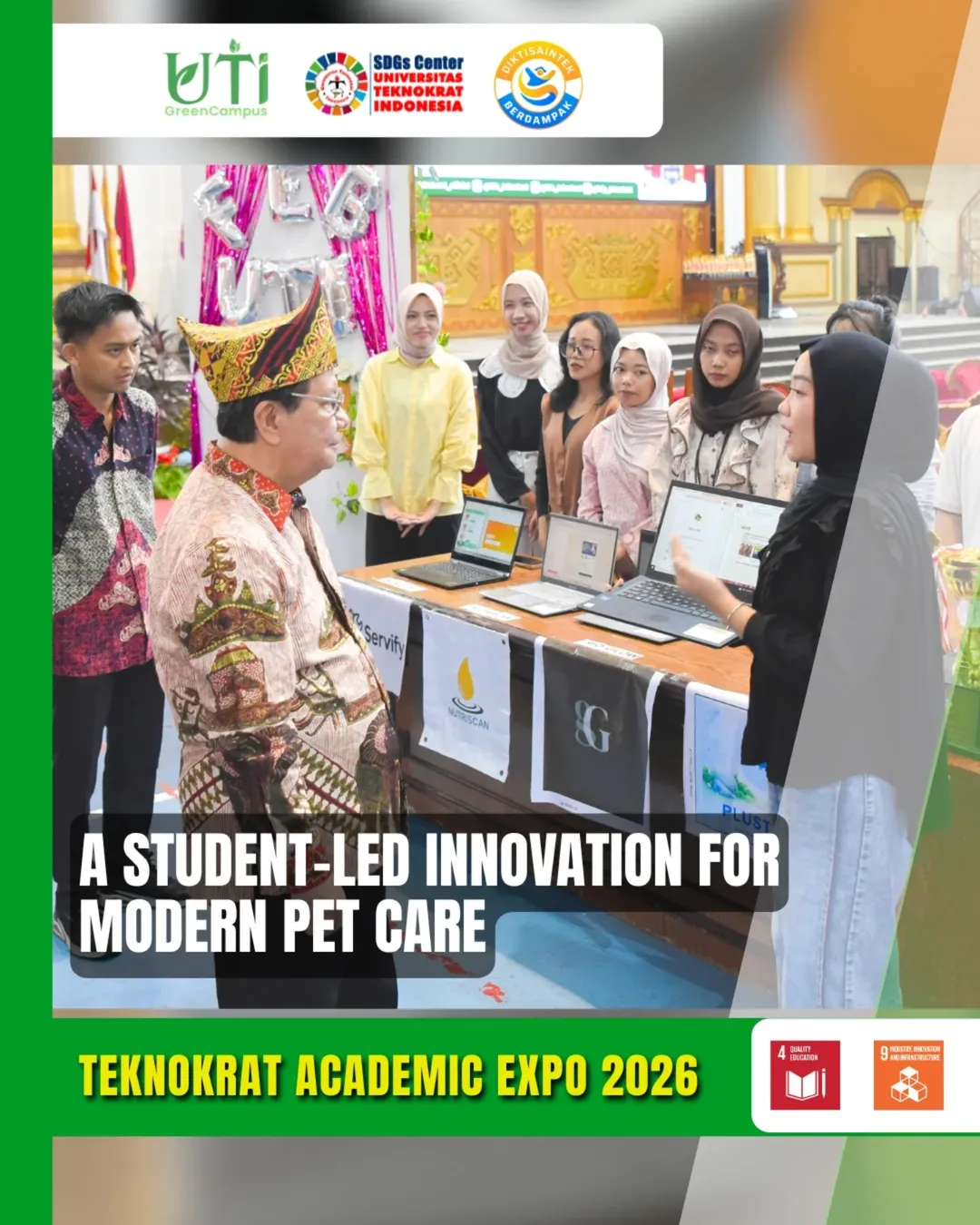
Bandar Lampung – Universitas Teknokrat Indonesia (UTI) continues to strengthen its reputation as a leading institution in innovation-driven education through the presentation of Meowgic Pet, a digital service application designed to simplify access to pet care services. Showcased during the university’s Academic Expo, the innovation highlights how students are transforming academic knowledge into practical technological solutions that address real-world needs. Read More: “Kebun Kita” Wins First Place in Technopreneurship Category at Academic Expo, Showcasing Universitas Teknokrat Indonesia’s Commitment to Sustainable Innovation The development of Meowgic Pet reflects Universitas Teknokrat Indonesia’s commitment to creating an educational environment where students are encouraged not only to master theoretical concepts but also to apply their knowledge in innovative and impactful ways. The project demonstrates the university’s dedication to producing graduates who are capable of responding to contemporary challenges through creativity, technology, and entrepreneurship. Designed as an integrated digital platform, Meowgic Pet connects pet owners with a range of essential services, including pet shop products, grooming services, and veterinary consultations. Through a user-friendly interface and centralized service system, the application aims to provide convenience and efficiency for pet owners seeking reliable and accessible pet care solutions. A Smart Solution for the Growing Pet Care Industry The rapid growth of pet ownership has increased demand for accessible and efficient pet care services. However, many pet owners still face challenges in finding trusted providers and managing various pet-related needs through separate platforms. Recognizing this gap, students at Universitas Teknokrat Indonesia developed Meowgic Pet as a comprehensive digital ecosystem that brings multiple services together in one convenient application. By integrating information, transactions, and consultations into a single platform, the innovation simplifies the user experience while improving access to quality pet care. The platform represents a forward-thinking response to changing consumer behavior in the digital era, where convenience, connectivity, and efficiency are increasingly valued. “Meowgic Pet was created to provide a practical solution for pet owners who need quick and reliable access to pet care services. We wanted to build a platform that not only simplifies daily needs but also contributes to the digital transformation of the service industry,” explained the student development team during the Academic Expo. Demonstrating the Impact of Quality Education The success of Meowgic Pet serves as a tangible example of the implementation of Sustainable Development Goal (SDG) 4: Quality Education, which emphasizes inclusive, equitable, and relevant learning opportunities. Through project-based learning approaches promoted by Universitas Teknokrat Indonesia, students are encouraged to develop innovative solutions while strengthening their technical competencies, problem-solving skills, and entrepreneurial mindset. Rather than focusing solely on classroom theory, students are challenged to identify real societal issues and create products capable of generating meaningful impact. This educational model helps bridge the gap between academia and industry by ensuring that graduates possess practical skills that align with current market demands. The Academic Expo itself serves as a showcase of student creativity and innovation, providing a platform for learners to present their projects, receive feedback, and gain valuable experience in communicating their ideas to wider audiences. Advancing Industry, Innovation, and Infrastructure Beyond its educational value, Meowgic Pet strongly supports SDG 9: Industry, Innovation, and Infrastructure by contributing to the modernization of the pet care and service sectors through digital technology. As digital transformation continues to reshape industries worldwide, innovative platforms such as Meowgic Pet play an important role in building technological ecosystems that improve efficiency and accessibility. By integrating various services into a single digital infrastructure, the application demonstrates how technology can simplify processes and enhance user experiences. The project also reflects the growing importance of innovation in supporting economic development. Student-led technological solutions have the potential not only to address current challenges but also to create new business opportunities and stimulate entrepreneurship in emerging sectors. Through initiatives such as Meowgic Pet, Universitas Teknokrat Indonesia actively supports the commercialization of student innovations and encourages the development of technology-based enterprises capable of contributing to regional and national economic growth. From Academic Project to Real-World Innovation What distinguishes Meowgic Pet from many student projects is its practical relevance and potential for widespread implementation. The application addresses a growing market need while offering a scalable solution that could be expanded and refined for broader commercial use. Its intuitive design and integrated service features make it a promising example of how university-based innovation can evolve beyond academic requirements and become a valuable tool for society. Industry observers increasingly recognize that universities play a critical role in fostering innovation ecosystems by empowering students to develop products that combine technological sophistication with practical usability. Meowgic Pet exemplifies this approach by translating academic knowledge into a functional platform with tangible benefits. Vice Rector Applauds Student Innovation The Vice Rector of Universitas Teknokrat Indonesia expressed appreciation for the students’ achievement and highlighted the importance of innovation-oriented education in preparing graduates for future opportunities. “The development of Meowgic Pet demonstrates the remarkable creativity, technical capability, and entrepreneurial spirit of our students. This innovation reflects the quality of education at Universitas Teknokrat Indonesia, where students are encouraged to transform ideas into solutions that directly benefit society,” the Vice Rector stated. He further emphasized that the university remains committed to fostering a culture of innovation that empowers students to contribute meaningfully to technological advancement and sustainable development. “Projects such as Meowgic Pet show how education and technology can work together to address real-world challenges. We are proud to support students who are creating innovative digital solutions with strong potential to improve everyday life and contribute to the digital economy,” he added. Strengthening Sustainable Development Through Innovation The emergence of Meowgic Pet reinforces the importance of collaboration between education, technology, and entrepreneurship in achieving sustainable development goals. The project demonstrates how universities can serve as incubators for innovation by providing students with opportunities to experiment, create, and develop impactful solutions. In addition to supporting SDG 4 and SDG 9, the innovation contributes to broader efforts aimed at fostering digital transformation, strengthening technological infrastructure, and promoting inclusive access to services. As Universitas Teknokrat Indonesia continues to

“Kebun Kita” Wins First Place in Technopreneurship Category at Academic Expo, Showcasing Universitas Teknokrat Indonesia’s Commitment to Sustainable Innovation

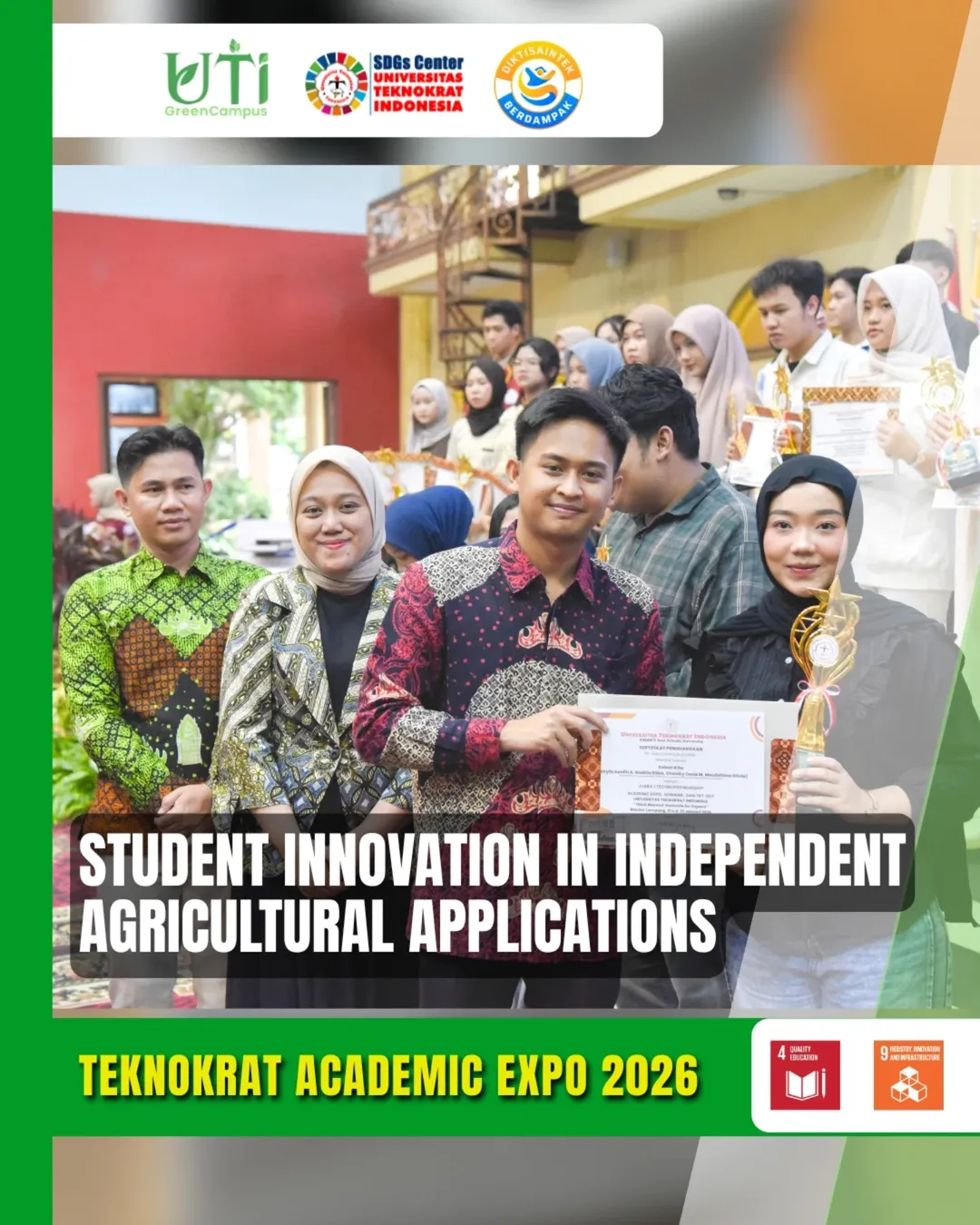
Bandar Lampung – Universitas Teknokrat Indonesia (UTI) has once again demonstrated its commitment to fostering innovation, entrepreneurship, and sustainable development through the success of Kebun Kita, an innovative urban farming kit that earned First Place in the Technopreneurship Category at the Academic Expo. Read More: Universitas Teknokrat Indonesia English Literature Students Launch “Whisper from Desa Payungi” Anthology at UTI EXPO 2025/2026 The award-winning innovation emerged as one of the most outstanding projects presented during the university’s annual academic exhibition, attracting attention for its practical approach to addressing one of the growing challenges faced by urban communities: limited access to land for cultivation and food production. Developed by students through the university’s technopreneurship-based learning program, Kebun Kita integrates smart sensor technology and digital applications to help users monitor and manage plant growth efficiently. The system enables individuals and families living in urban environments to cultivate plants in limited spaces while utilizing technology to ensure optimal growing conditions. The innovation demonstrates how technology can transform traditional agricultural practices into more accessible, efficient, and sustainable solutions for modern society. “Kebun Kita was designed to empower communities to grow plants more effectively despite space limitations. Through the integration of smart monitoring systems and user-friendly digital applications, we hope to encourage more people to adopt sustainable urban farming practices,” explained the student development team during the exhibition. Addressing Urban Challenges Through Smart Agriculture As urbanization continues to increase, access to agricultural land has become a significant concern in many cities. Limited space often prevents households from engaging in farming activities, reducing opportunities for self-sufficiency and sustainable food production. Recognizing this challenge, the student innovators behind Kebun Kita developed a solution that combines technology and agriculture into a practical, easy-to-use system. By utilizing sensors that monitor plant conditions such as moisture and environmental factors, the kit provides users with real-time information that helps improve plant care and cultivation outcomes. The project illustrates how technological innovation can support greener lifestyles while promoting environmental awareness among urban residents. More importantly, Kebun Kita reflects a growing trend toward smart agriculture, where digital tools and data-driven decision-making are increasingly used to enhance productivity, efficiency, and sustainability in food production systems. Strengthening Entrepreneurial Skills Through Practice-Based Learning The success of Kebun Kita also highlights the effectiveness of Universitas Teknokrat Indonesia’s educational approach, particularly through its Technopreneurship curriculum. The university emphasizes experiential learning methods that encourage students not only to acquire theoretical knowledge but also to develop innovative products capable of addressing real societal needs. Through project-based assignments and entrepreneurial training, students are challenged to identify market opportunities, conduct research, develop business models, and create products with commercialization potential. The achievement serves as a strong example of how higher education institutions can cultivate entrepreneurial mindsets while simultaneously strengthening students’ technical competencies and problem-solving abilities. “The Technopreneurship program encourages students to think beyond the classroom. They are trained to understand industry needs, identify opportunities, and transform ideas into solutions that create social and economic value,” said one of the project mentors. Supporting Sustainable Development Goals The Kebun Kita innovation represents a concrete implementation of the United Nations Sustainable Development Goals (SDGs), particularly SDG 4: Quality Education and SDG 9: Industry, Innovation, and Infrastructure. Through hands-on learning experiences, students gain valuable knowledge and practical skills that prepare them for future careers in technology, entrepreneurship, and innovation. The project demonstrates how quality education can equip students with the competencies needed to compete in an increasingly dynamic global economy. At the same time, Kebun Kita contributes to the advancement of SDG 9 by promoting technological innovation within the household agriculture sector. The integration of smart monitoring systems and digital applications helps modernize small-scale farming practices and supports the development of sustainable technological infrastructure that benefits communities directly. Beyond these goals, the project also contributes to SDG 11: Sustainable Cities and Communities by encouraging urban agriculture and fostering greener living environments. By enabling residents to grow plants within limited spaces, Kebun Kita promotes environmental sustainability while enhancing community resilience. A Pathway Toward Research Commercialization One of the key strengths of Kebun Kita lies in its potential for commercialization. Unlike many academic projects that remain within university settings, this innovation has been designed with practical application and market relevance in mind. The project demonstrates Universitas Teknokrat Indonesia’s commitment to encouraging the transformation of student research into viable products and business ventures. By supporting innovation-driven entrepreneurship, the university seeks to create opportunities for students to become future business leaders, innovators, and job creators. The commercialization of student innovations is increasingly recognized as an important strategy for strengthening regional economic development and enhancing the impact of academic research on society. Vice Rector Praises Student Achievement The Vice Rector of Universitas Teknokrat Indonesia expressed appreciation for the students’ accomplishment and emphasized the importance of innovation-driven education in preparing graduates for future challenges. “The success of Kebun Kita is a remarkable achievement that reflects the creativity, dedication, and entrepreneurial spirit of our students. This innovation demonstrates how academic knowledge can be transformed into practical solutions that directly benefit society,” the Vice Rector stated. He further highlighted that the project aligns with the university’s mission to produce graduates who are innovative, adaptable, and capable of contributing to sustainable development. “We are proud to see our students creating technology-based solutions that address real-world challenges. Kebun Kita exemplifies the spirit of innovation and entrepreneurship that Universitas Teknokrat Indonesia continues to cultivate. We hope this achievement inspires more students to develop impactful innovations that support community welfare and economic growth,” he added. Academic Expo as a Showcase of Innovation Excellence The Academic Expo continues to serve as one of Universitas Teknokrat Indonesia’s premier platforms for showcasing student achievements across various disciplines. The event brings together innovative projects, research outcomes, entrepreneurial initiatives, and technological advancements that demonstrate the university’s commitment to academic excellence and societal impact. The recognition earned by Kebun Kita reinforces the university’s reputation as a center of innovation and entrepreneurship, where students are encouraged to transform ideas into meaningful solutions that contribute to

Scroll to top