
Internet of Things

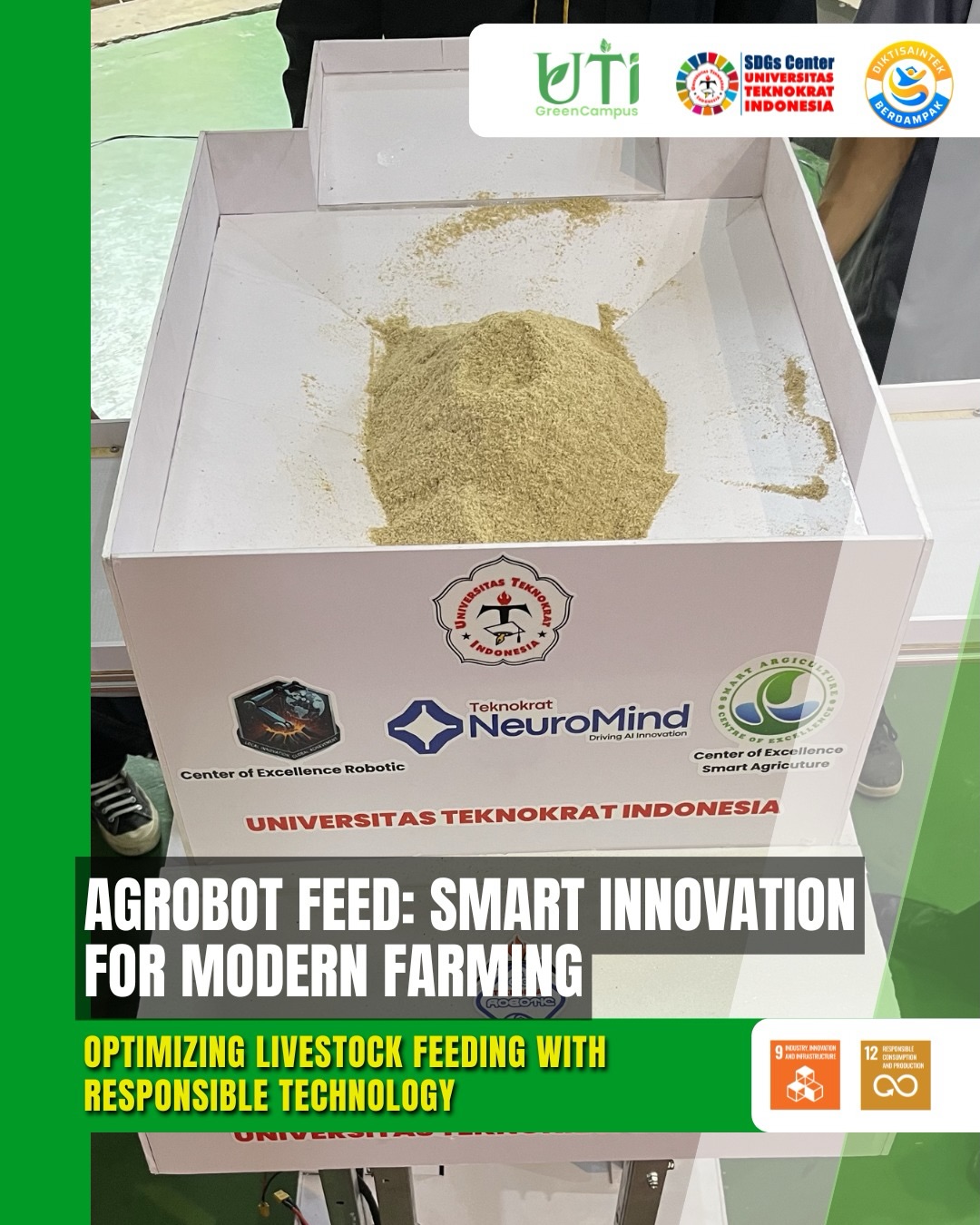
Universitas Teknokrat Indonesia Students Unveil AgroBot Feed, an AI-Powered Smart Collar System Transforming Livestock Farming

Bandar Lampung – Universitas Teknokrat Indonesia (UTI) continues to strengthen its reputation as a center of innovation and technological excellence through the development of AgroBot Feed Digital Smart Collar System, a groundbreaking agritech innovation created by its students. Designed to automate cattle feeding processes, the smart system combines robotics, artificial intelligence (AI), and digital agriculture technologies to help livestock farmers improve productivity, optimize resource management, and support sustainable farming practices. Read More: Universitas Teknokrat Indonesia Accelerates Green Campus Transformation Through Solar Energy Initiative The innovation was recently showcased as one of the outstanding student projects highlighting how technology can address real-world challenges in the agricultural sector. AgroBot Feed demonstrates the university’s commitment to encouraging students to create practical, future-oriented solutions that contribute directly to community welfare and national development. By integrating intelligent feeding automation into livestock management, the system enables farmers to provide accurate feed portions at predetermined schedules, ensuring consistent nutrition while reducing manual labor and operational inefficiencies. “AgroBot Feed was developed to help farmers manage livestock feeding more effectively and efficiently. Through automation and smart technology, we aim to improve productivity while supporting sustainable agricultural practices,” explained members of the student innovation team. Revolutionizing Livestock Management Through Smart Technology The agricultural sector is increasingly embracing digital transformation to address challenges related to productivity, labor shortages, and resource efficiency. Recognizing these challenges, Universitas Teknokrat Indonesia students designed AgroBot Feed as a technology-driven solution capable of modernizing traditional livestock farming practices. The system utilizes a smart collar mechanism integrated with sensors, automated feeding controls, and artificial intelligence algorithms. These technologies work together to monitor feeding schedules and deliver feed in precise quantities according to livestock needs. By ensuring consistent and controlled feeding, the innovation helps maintain animal health and nutrition while minimizing the risk of overfeeding or feed shortages. The automated system also reduces the workload of farmers, allowing them to focus on other aspects of livestock management. The application of robotics and AI within the livestock sector highlights the growing potential of smart farming technologies to increase efficiency and improve agricultural sustainability. Supporting Industry, Innovation, and Infrastructure The AgroBot Feed Digital Smart Collar System directly contributes to Sustainable Development Goal (SDG) 9: Industry, Innovation, and Infrastructure, which emphasizes the importance of fostering innovation, developing resilient infrastructure, and promoting sustainable industrialization. The innovation demonstrates how emerging technologies can be applied to traditional sectors such as agriculture and livestock farming. By integrating digital systems into farming operations, AgroBot Feed helps bridge the gap between conventional agricultural methods and modern technological advancements. This project also showcases the role of higher education institutions in producing innovative technologies capable of supporting economic growth and industrial transformation. Through research-based learning and technological experimentation, students are encouraged to become innovators who contribute to solving contemporary challenges. The development of AgroBot Feed reflects Universitas Teknokrat Indonesia’s commitment to fostering a culture of innovation where students are empowered to transform ideas into impactful solutions. Read More: Universitas Teknokrat Indonesia Electrical Engineering Students Develop Solar-Powered Fly Trap to Support Sustainable Livestock Farming in West Lampung Promoting Responsible Consumption and Production In addition to advancing technological innovation, AgroBot Feed aligns strongly with Sustainable Development Goal (SDG) 12: Responsible Consumption and Production, particularly through its efficient feed management system. Feed is one of the largest operational costs in livestock farming, and inefficient feeding practices often lead to unnecessary waste. By delivering feed according to predetermined requirements, the system helps farmers optimize resource utilization and minimize feed losses. This approach contributes to more sustainable production systems while improving economic efficiency for farmers. The ability to manage resources more effectively supports environmental sustainability and encourages responsible agricultural practices. The innovation demonstrates that technological advancement can play a significant role in reducing waste and promoting sustainable consumption patterns across the agricultural sector. Bridging Education and Real-World Solutions The AgroBot Feed project exemplifies Universitas Teknokrat Indonesia’s commitment to experiential and project-based learning. Rather than focusing solely on classroom theory, students are encouraged to identify real-world problems and develop practical solutions through research, experimentation, and technological innovation. Through the development process, students gained valuable experience in robotics engineering, artificial intelligence, sensor integration, programming, and agricultural technology applications. This multidisciplinary approach strengthens their technical competencies while enhancing critical thinking, creativity, and problem-solving skills. The project also reflects the university’s vision of producing graduates who are not only academically accomplished but also capable of contributing meaningful innovations that address societal and industrial needs. Vice Rector Praises Students’ Innovative Achievement The Vice Rector of Universitas Teknokrat Indonesia expressed appreciation for the students’ achievement and highlighted the importance of technological innovation in supporting sustainable agricultural development. “AgroBot Feed is a remarkable example of how our students are leveraging advanced technologies such as artificial intelligence and robotics to solve real challenges faced by the agricultural sector. This innovation demonstrates the quality of education at Universitas Teknokrat Indonesia and our commitment to preparing future innovators who can contribute to national development,” the Vice Rector stated. He further emphasized that the university remains committed to supporting student creativity and innovation through research-driven learning environments. “We are proud to see our students developing solutions that have the potential to transform traditional farming practices. AgroBot Feed illustrates how technology can improve efficiency, reduce waste, and create sustainable value for society. This is exactly the kind of innovation needed to support the future of agriculture in Indonesia and beyond,” he added. Building the Future of Smart Agriculture The AgroBot Feed Digital Smart Collar System represents more than a technological prototype; it symbolizes the future of intelligent and sustainable agriculture. By combining artificial intelligence, robotics, and digital monitoring systems, the innovation provides a glimpse into how smart technologies can reshape livestock management and improve food production systems. As global demand for efficient and sustainable agricultural solutions continues to grow, innovations such as AgroBot Feed highlight the crucial role of young innovators in driving technological transformation. The project demonstrates that the future of agriculture lies not only in increasing productivity but also in adopting smarter and more
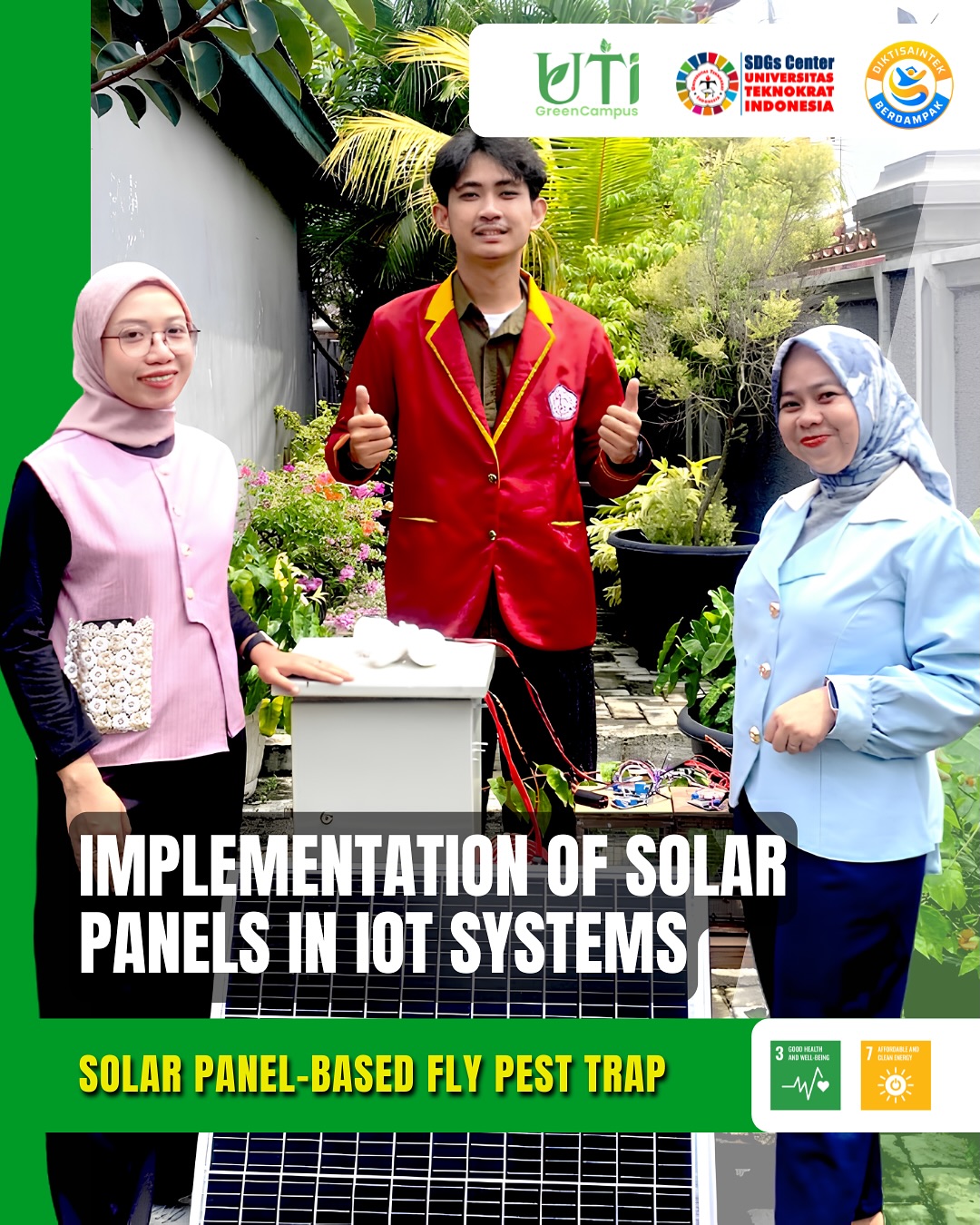
Universitas Teknokrat Indonesia Electrical Engineering Students Develop Solar-Powered Fly Trap to Support Sustainable Livestock Farming in West Lampung

Bandar Lampung – Students from the Electrical Engineering Study Program at Universitas Teknokrat Indonesia (UTI) have once again demonstrated their ability to develop practical technological solutions that directly address community needs. Through a community-based innovation project in Tugu Sari Village, West Lampung, the students successfully designed and implemented a solar-powered fly trap system aimed at helping local sheep farmers reduce pest disturbances and improve livestock productivity. Read More: Universitas Teknokrat Indonesia Civil Engineering Students Transform Waste into Sustainable Infrastructure Through “Tekno Plasting” Innovation The innovation was developed in response to challenges faced by sheep farmers, who often struggle with fly infestations around livestock enclosures. Beyond causing discomfort to animals, flies can negatively impact productivity and increase the risk of disease transmission among livestock and surrounding communities. Recognizing this issue, the Electrical Engineering students designed a sustainable and energy-efficient solution that utilizes renewable energy technology to control fly populations in farming environments. The project highlights the university’s commitment to encouraging students to apply their academic knowledge to solve real-world problems while contributing to sustainable rural development. “This innovation was inspired by the needs of local farmers who require practical and affordable technology to improve livestock management. Our goal was to create a solution that is effective, environmentally friendly, and easy to implement in rural communities,” explained the student development team. Harnessing Solar Energy for Sustainable Agriculture The solar-powered fly trap operates using photovoltaic panels as its primary energy source. The system collects solar energy during the day and powers a combination of ultraviolet lamps and electrified wire mesh designed to attract and eliminate flies automatically. By utilizing solar power, the device can function independently without relying on conventional electricity sources, making it particularly suitable for agricultural areas where access to electrical infrastructure may be limited. The automatic operation also reduces the need for continuous manual intervention, providing farmers with a practical and efficient pest-control solution. The integration of renewable energy technology into agricultural applications demonstrates how innovation can improve productivity while minimizing environmental impact. According to the student team, the technology was specifically designed to be cost-effective, durable, and adaptable to local farming conditions, ensuring that it can provide long-term benefits to livestock owners. Improving Livestock Health and Community Well-Being One of the primary objectives of the project is to improve the health and welfare of livestock. Excessive fly populations are known to cause stress in animals, reduce feeding efficiency, and increase the likelihood of disease outbreaks. By controlling pest populations, farmers can create a healthier environment for their sheep, ultimately supporting higher productivity and better livestock performance. The innovation directly contributes to Sustainable Development Goal (SDG) 3: Good Health and Well-Being, which emphasizes the importance of promoting healthy lives and improving well-being for all. By reducing the risk of disease transmission among animals and minimizing environmental health hazards, the technology supports both livestock health and public health outcomes. In addition to its agricultural benefits, the project raises awareness about the importance of preventive approaches in maintaining animal welfare and supporting sustainable farming practices. Read More: Universitas Teknokrat Indonesia Strengthens Sustainable Campus Vision Through Green Open Spaces That Support Learning and Well-Being Advancing Renewable Energy Solutions The project also aligns strongly with Sustainable Development Goal (SDG) 7: Affordable and Clean Energy through its use of solar power as a renewable and environmentally friendly energy source. As the global demand for sustainable energy solutions continues to grow, innovations such as the solar-powered fly trap demonstrate how renewable energy technologies can be applied in practical ways to address local challenges. The project showcases the potential of solar energy not only as an alternative power source but also as a driver of innovation in agriculture and rural development. By reducing dependence on conventional energy systems, the innovation contributes to broader efforts aimed at promoting clean energy adoption and supporting environmentally responsible development. Bridging Academic Knowledge and Community Needs The development of the solar-powered fly trap reflects Universitas Teknokrat Indonesia’s commitment to experiential and community-oriented learning. Through projects that engage directly with local communities, students gain valuable opportunities to apply engineering principles, conduct field research, and develop technologies that generate tangible social impact. This hands-on approach enables students to strengthen their technical competencies while developing problem-solving, communication, and collaboration skills that are essential in their future professional careers. The project also illustrates how universities can serve as catalysts for innovation by connecting academic expertise with community needs. Through meaningful engagement with local stakeholders, students are encouraged to become active contributors to regional development and societal progress. Vice Rector Praises Students’ Commitment to Innovation The Vice Rector of Universitas Teknokrat Indonesia expressed appreciation for the achievement and highlighted the importance of technology-driven solutions that address real challenges faced by communities. “This innovation demonstrates how our students are utilizing their knowledge and creativity to develop technologies that directly benefit society. The solar-powered fly trap is an excellent example of how engineering education can generate practical solutions that improve productivity, support environmental sustainability, and enhance community welfare,” the Vice Rector stated. He further emphasized that Universitas Teknokrat Indonesia remains committed to fostering an academic environment that encourages innovation, research, and community engagement. “We are proud of our Electrical Engineering students for creating a technology that not only addresses local agricultural challenges but also supports global sustainable development goals. This project reflects our vision of producing graduates who are innovative, socially responsible, and capable of contributing to national development through technology,” he added. A Step Toward Sustainable Rural Development The implementation of the solar-powered fly trap in Tugu Sari Village serves as a powerful example of how higher education institutions can contribute to sustainable development through innovation and community collaboration. By combining renewable energy technology with practical agricultural applications, the project creates value for local farmers while supporting environmental conservation efforts. More than just a technological device, the innovation represents a commitment to empowering communities through accessible and sustainable solutions. It demonstrates that student-driven research and innovation can play a meaningful role in addressing local challenges and improving

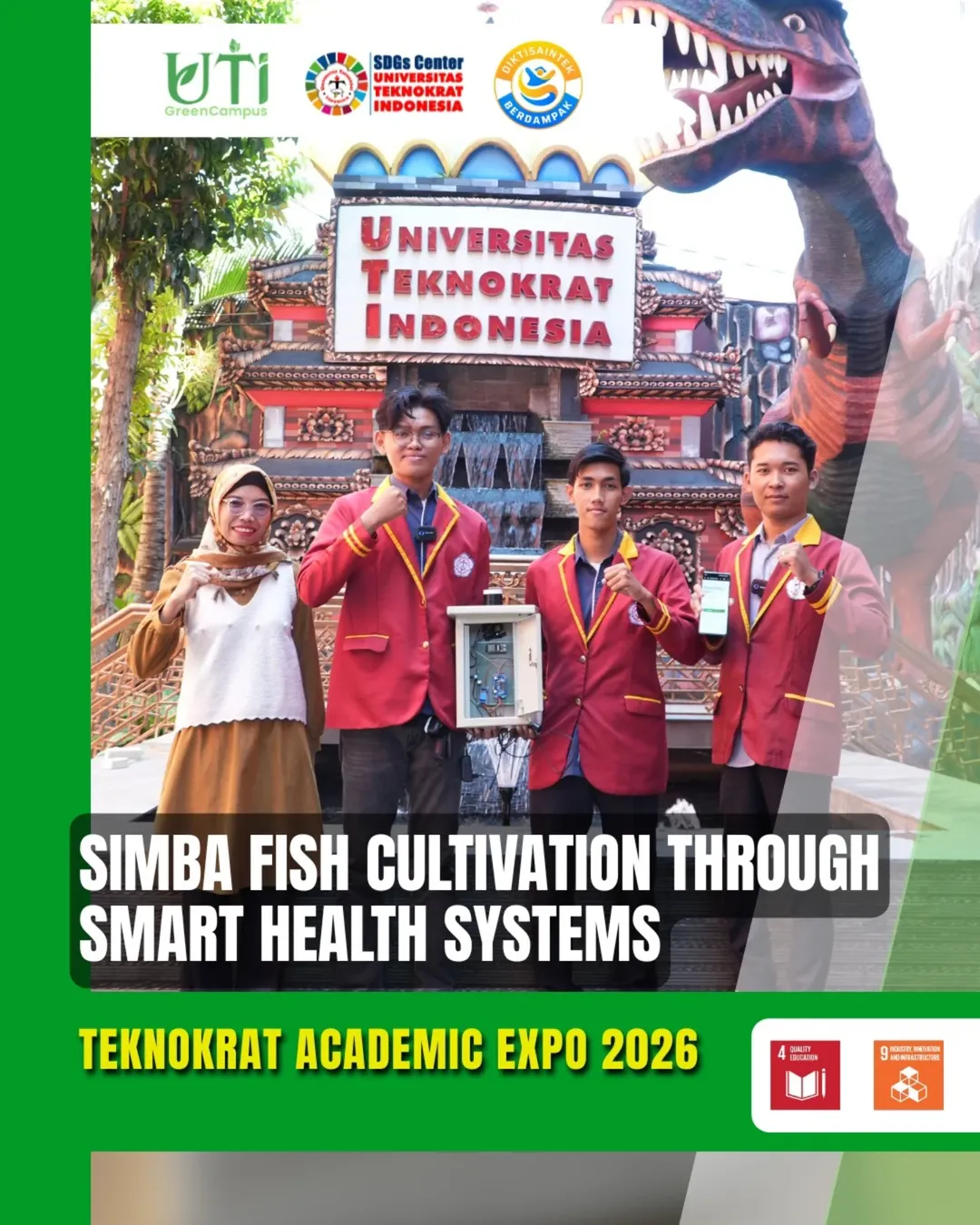
Universitas Teknokrat Indonesia Students Develop IoT-Based Fish Health Monitoring System to Advance Sustainable Aquaculture

Bandar Lampung – Students of Universitas Teknokrat Indonesia (UTI) have once again demonstrated their innovation and technological excellence through the development of the Simba Smart Health System, an Internet of Things (IoT)-based fish health monitoring system designed to support sustainable and efficient aquaculture practices. The project was showcased during the Academic Expo 2026, highlighting the university’s commitment to fostering impactful innovations that address real-world challenges. Read More: AgroBot Feed Innovation by Universitas Teknokrat Indonesia Students Advances Smart Livestock Technology The Simba Smart Health System was developed through a collaborative effort between students from the Computer Engineering and Information Technology programs. By integrating advanced hardware technologies with intelligent data processing systems, the innovation enables real-time monitoring of water quality conditions while also detecting potential threats from predators that could endanger fish populations. This interdisciplinary collaboration reflects the growing importance of combining expertise from multiple fields to create practical solutions for industry and society. The system utilizes smart sensors and digital monitoring technologies to collect and analyze environmental data continuously, allowing fish farmers to make faster and more accurate decisions in managing aquaculture operations. According to the student development team, the primary objective of the Simba Smart Health System is to help improve productivity, reduce losses caused by environmental factors, and promote more efficient fish farming practices through digital transformation. “Through the Simba Smart Health System, we aim to provide a practical technological solution that helps fish farmers monitor critical conditions in real time. We believe technology can play a significant role in improving productivity and supporting sustainable aquaculture development,” the student team explained. The innovation represents a concrete example of how higher education institutions can bridge academic knowledge with practical applications. More than just an exhibition project, the system demonstrates the potential of student-led research and innovation to contribute directly to local economic development and community welfare. Strengthening Innovation Through Project-Based Learning The development of the Simba Smart Health System also reflects Universitas Teknokrat Indonesia’s educational approach, which emphasizes project-based learning, innovation, and industry-relevant competencies. Through hands-on experiences, students are encouraged to develop solutions that respond to contemporary challenges while enhancing their technical and professional skills. The project serves as a tangible implementation of Sustainable Development Goal (SDG) 4: Quality Education, which promotes inclusive and equitable quality education while fostering lifelong learning opportunities. By engaging students in collaborative research and innovation projects, the university equips future graduates with practical competencies, critical thinking abilities, and problem-solving skills required in the rapidly evolving digital era. Supporting the Modernization of Indonesia’s Fisheries Sector Beyond education, the Simba Smart Health System contributes to the advancement of SDG 9: Industry, Innovation, and Infrastructure. The application of IoT technology in aquaculture represents an important step toward modernizing traditional fish farming methods and strengthening the technological infrastructure of Indonesia’s fisheries sector. By integrating smart sensors, automated monitoring, and digital data management, the system provides a more scientific and data-driven approach to fish farming. Such innovations have the potential to increase operational efficiency, reduce risks, and improve overall production quality. Experts have increasingly emphasized the importance of digital transformation in agriculture and fisheries as a strategy to enhance competitiveness and sustainability. Through innovations such as the Simba Smart Health System, Universitas Teknokrat Indonesia contributes to accelerating technology adoption at the grassroots level and supporting the development of a more resilient fisheries industry. University Leadership Applauds Student Achievement Vice Rector of Universitas Teknokrat Indonesia expressed appreciation for the students’ achievement and their commitment to creating solutions that generate meaningful social impact. “The Simba Smart Health System demonstrates the creativity, technical competence, and collaborative spirit of our students. This innovation proves that higher education is not only about acquiring knowledge but also about creating solutions that address real challenges faced by society. We are proud to see our students contributing to technological advancement and sustainable development through innovation,” said the Vice Rector of Universitas Teknokrat Indonesia. The Vice Rector further emphasized that the university remains committed to nurturing an innovation ecosystem that encourages interdisciplinary collaboration, research excellence, and technology commercialization for the benefit of the wider community. Building a Sustainable Innovation Ecosystem The Academic Expo 2026 serves as a platform for students to showcase their creativity, research outcomes, and technological innovations while connecting academic achievements with societal needs. Through events such as this, Universitas Teknokrat Indonesia continues to strengthen its position as a center for innovation, entrepreneurship, and technological development in Indonesia. The Simba Smart Health System stands as a testament to how student innovation can contribute not only to academic excellence but also to economic empowerment and sustainable development. By supporting the digitalization of aquaculture, the project has the potential to improve fish farmers’ productivity, strengthen local economies, and enhance community welfare. As technological advancement continues to shape the future, Universitas Teknokrat Indonesia remains dedicated to producing graduates who are not only highly skilled but also capable of driving positive change through innovation. The success of the Simba Smart Health System reinforces the university’s vision of becoming a catalyst for sustainable technological development and national progress. Supporting the Sustainable Development Goals (SDGs) The Simba Smart Health System directly contributes to several United Nations Sustainable Development Goals. In addition to supporting SDG 4 (Quality Education) and SDG 9 (Industry, Innovation, and Infrastructure), the project also aligns with SDG 8 (Decent Work and Economic Growth) by helping improve productivity within the fisheries sector and supporting economic opportunities for local communities. Furthermore, the technology promotes more responsible resource management, contributing to long-term environmental and economic sustainability. Through innovations that combine education, technology, and social impact, Universitas Teknokrat Indonesia continues to demonstrate its commitment to advancing sustainable development at both local and national levels. Read More: Universitas Teknokrat Indonesia Academic Expo Showcases “Nutriscane” Innovation Supporting SDGs #KampusTerbaikdiLampung#KampusFavoritdiLampung#KampusUnggulandiLampung#kampushijaulampung#kampuslampungberkelanjutan

Scroll to top