
Transportation

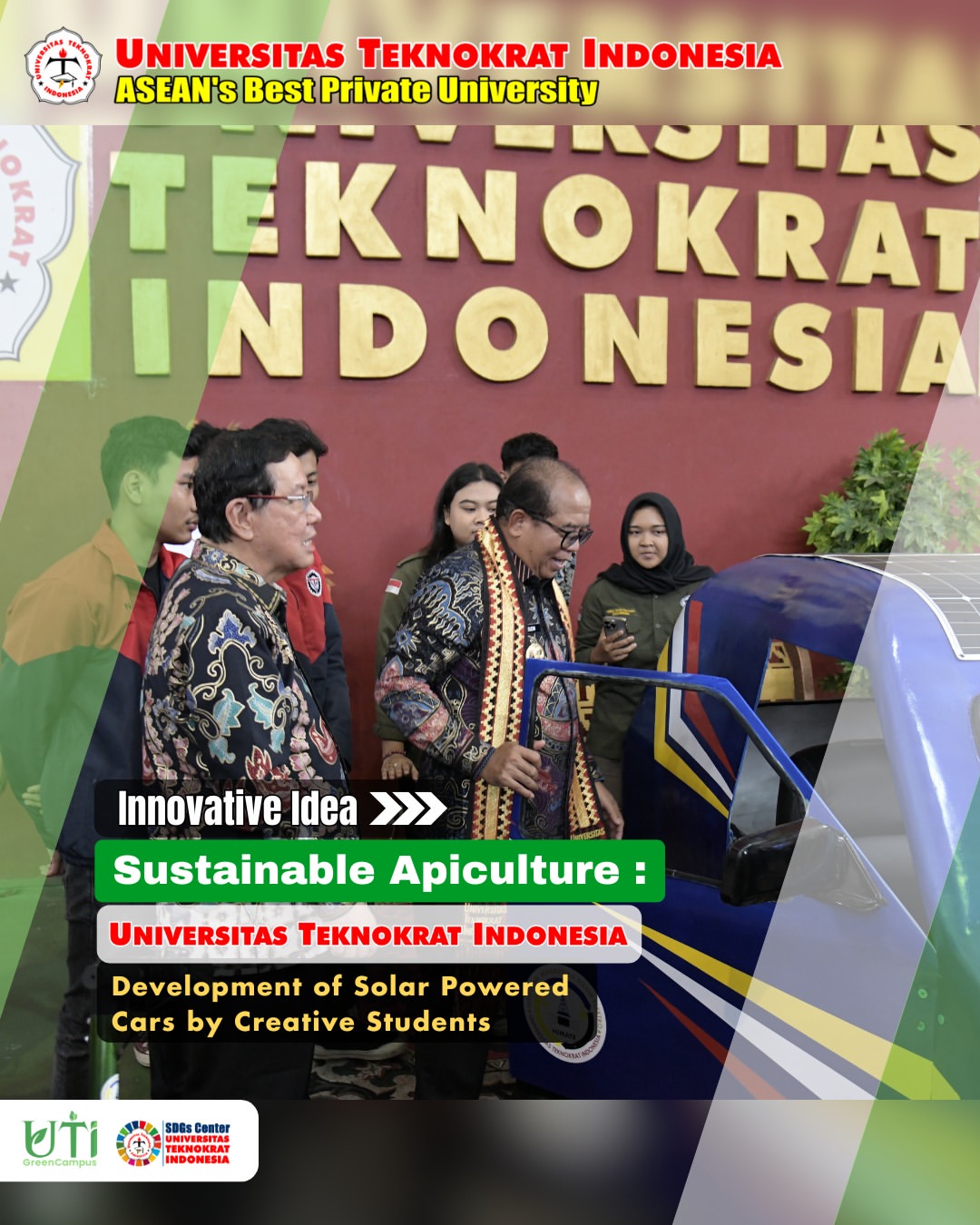
Development of solar powered cars by creative student

Students from Universitas Teknokrat Indonesia have once again demonstrated their creativity and commitment to the environment by creating a solar-powered car that is eco-friendly! This innovation is proof that the younger generation of Indonesia is ready to contribute to positive change in the automotive and renewable energy sectors. By harnessing solar energy, this car not only reduces carbon emissions but also offers a sustainable transportation solution for the future. This outstanding achievement was directly appreciated by the Acting Governor of Lampung, Dr. Drs. Samsudin, S.H., M.H., M.Pd., who expressed his pride and support for the work of Universitas Teknokrat Indonesia’s students. He emphasized that innovations like this are a real example of how technology can be applied to address global challenges, such as climate change and dependence on fossil fuels. With this recognition, it is hoped that this project will continue to develop and inspire more young people to create innovative solutions for the planet’s sustainability. Universitas Teknokrat Indonesia remains committed to nurturing an innovative generation that is not only academically brilliant but also cares about the future of the world. The development of the solar-powered car was supported by dedicated faculty members and equipped with resources from the university’s engineering and environmental science departments. The project not only serves as a practical learning experience for students but also showcases the university’s commitment to fostering research and innovation in renewable energy technologies. Moving forward, the student team plans to refine the car’s design and performance, aiming to compete in national and international competitions focused on green technology. The university is also exploring partnerships with local industries and government agencies to promote the commercialization and wider adoption of solar-powered vehicles in Indonesia. By pioneering such forward-thinking projects, Universitas Teknokrat Indonesia is setting a strong example for educational institutions nationwide. This initiative highlights the vital role of young innovators in driving sustainable development and reducing the environmental impact of transportation, paving the way toward a cleaner and greener future.

University-Industry Collaboration: The Key to a Sustainable Energy Future

The transition to clean and sustainable energy is an urgent global issue. In the effort to achieve this goal, collaboration between universities and industry plays a crucial role. Academic expertise in research and development of renewable energy technologies, combined with the resources and networks of industry, leads to significant innovations in the energy sector. Why is Collaboration Important? Examples of Successful Collaboration Challenges and Solutions Possible Solutions: University-industry collaboration is key to accelerating the transition to sustainable energy. By complementing each other’s strengths and addressing existing challenges, both parties can create innovations that will transform the energy sector in the future. Sumber : https://www.ui.ac.id/inovasi-energi-bersama-kembangkan-teknologi-dan-keahlian-untuk-masa-depan-berkelanjutan/

Battery Technology for Public Transportation: Towards a Greener Future

The development of battery technology in recent decades has paved the way for a revolution in the transportation sector. One of the sectors most impacted by this is public transportation. The use of batteries as an energy source in buses, trains, and other electric vehicles offers several significant advantages, from reducing greenhouse gas emissions to lowering operational costs. Why Batteries for Public Transportation? Battery Technologies in Use Several types of batteries are commonly used in public transportation, including: Challenges and Solutions Despite the numerous benefits, the use of batteries in public transportation still faces some challenges, such as: To address these challenges, various solutions have been developed, including: Examples of Implementation Worldwide Many cities around the world have successfully implemented battery-powered public transportation systems. Some examples include: Battery technology has created significant opportunities to transform public transportation into a more sustainable and environmentally friendly system. Although challenges remain, the future of public transportation looks bright, with an increasing number of cities transitioning to battery-powered electric vehicles. Sumber : https://www.sciencedirect.com/science/article/pii/S2352484722005716

Solar-Powered Trains in Developing Countries: An Eco-Friendly Transportation Solution

In an era where environmental concerns are growing, the shift to renewable energy sources has become increasingly urgent. One sector with significant potential for adopting renewable energy is transportation. Trains, as an efficient mode of mass transit, can be pioneers in the use of clean energy. One interesting innovation is solar-powered trains, which offer an environmentally friendly transportation solution, especially for developing countries. The Potential of Solar-Powered Trains in Developing Countries Developing countries often experience high levels of sunlight throughout the year. This abundant solar energy makes it an attractive source of power. Solar-powered trains offer several advantages for developing countries, including: Challenges and Solutions Despite their great potential, the development of solar-powered trains in developing countries faces several challenges, such as: To address these challenges, several solutions can be implemented: Global Examples of Implementation Several countries have already launched solar-powered train projects. For example, India has rolled out pilot projects for solar-powered trains in several regions. Other countries such as China and Japan are also actively involved in research and development of solar-powered train technology. Solar-powered trains present an exciting solution to transportation challenges in developing countries. With abundant solar energy potential and the right policy support, solar-powered trains could become the backbone of sustainable transportation systems in the future. Sumber : Analisis Biaya-Manfaat: Lakukan analisis biaya-manfaat dari pengembangan kereta api bertenaga surya untuk menunjukkan keuntungan jangka panjangnya.

Reclaiming Former Mining Lands: Transforming into Solar Energy Fields

Mining activities, while significantly contributing to the economy, often leave behind degraded and non-productive land. However, instead of being an environmental burden, these lands can be transformed into valuable assets through innovative and sustainable methods, such as constructing solar power plants (PLTS). Why Are Former Mining Lands Ideal for Solar Power Plants? Reclamation and PLTS Development Process The process of transforming former mining lands into solar energy fields involves several stages: Benefits of Reclaiming Former Mining Lands into Solar Power Plants Successful Case Studies Several countries have successfully implemented this concept with very positive results. For instance, in Australia, many former coal mining lands have been converted into large-scale PLTS. Similar projects have been carried out in parts of Europe and the United States. Challenges and Solutions While there is great potential, developing PLTS on former mining lands also faces some challenges: Reclaiming former mining lands as solar energy fields is a compelling solution to address environmental and energy challenges. With thorough planning and support from various stakeholders, this concept could become a critical milestone in the transition toward clean and sustainable energy. Sumber : https://industri.kontan.co.id/news/menilik-rencana-pemerintah-ubah-lahan-bekas-tambang-jadi-ladang-energi-terbarukan?page=all

Flexible Solar Panels: The Future of Electric Vehicle Charging

The electric vehicle (EV) revolution has brought new momentum to the automotive industry. As the number of electric vehicles grows, the need for efficient and sustainable charging infrastructure becomes increasingly urgent. One innovative solution emerging is the use of flexible solar panels to charge electric vehicles. What Are Flexible Solar Panels? Flexible solar panels are a type of solar panel made from thin, bendable materials, allowing them to be installed on uneven or curved surfaces. Unlike rigid conventional solar panels, flexible panels offer greater installation versatility and convenience. Advantages of Flexible Solar Panels for Electric Vehicles Applications of Flexible Solar Panels for Electric Vehicles Challenges and Technological Advancements While flexible solar panels offer numerous benefits, they still face some challenges, such as: However, ongoing advancements in technology aim to address these challenges. Promising developments include: Flexible solar panels offer an exciting solution to meet the demand for clean and sustainable energy in the EV industry. With their many advantages, flexible solar panels have the potential to become a key component in the electric vehicles of the future. Sumber : https://atonergi.com/panel-surya-untuk-mobil-listrik-pengisian-ramah-lingkungan/

Renewable Energy in the Aviation Sector: Towards a Greener Sky

The aviation industry has long been a significant contributor to greenhouse gas emissions, particularly carbon dioxide (CO2). However, with growing awareness of the importance of environmental sustainability, efforts to reduce the environmental impact of aviation are continuously underway. One promising solution is the use of renewable energy in the aviation sector. Unique Challenges of the Aviation Sector The aviation sector faces unique challenges in its transition to renewable energy. Aircraft require very high energy density to remain airborne. In addition, supporting infrastructure such as airports also needs to adapt to the use of renewable energy. Types of Renewable Energy for Aviation Several types of renewable energy have the potential to be used in the aviation sector, including: Benefits of Using Renewable Energy in Aviation Barriers and Solutions Potential Solutions: The transition to more sustainable aviation is a must. The use of renewable energy offers a promising solution to reduce the environmental impact of the aviation sector. Although many challenges remain, with strong commitment and cooperation, a greener future for aviation is within reach. Sumber : ICAO: International Civil Aviation Organization. Publikasi mengenai lingkungan dan keberlanjutan penerbangan.

Emission Reduction Policies for the Transportation Sector: Towards Sustainable Transportation

The transportation sector is one of the largest contributors to greenhouse gas emissions worldwide. Emissions from motor vehicles, both private and public, significantly contribute to climate change and air pollution. To address this issue, various countries around the world have implemented emission reduction policies specific to the transportation sector. Challenges in the Transportation Sector Emission Reduction Policies for the Transportation Sector To tackle the above challenges, various policies have been implemented, including: Policy Examples in Several Countries Opportunities and Future Challenges Implementing emission reduction policies in the transportation sector still faces various challenges, such as high costs, public resistance, and infrastructure limitations. However, there are also significant opportunities to develop the electric vehicle industry, create new jobs, and improve the quality of life. Reducing emissions in the transportation sector is an essential step in combating climate change. By implementing comprehensive and sustainable policies, we can achieve a cleaner and healthier future. Source: Ministry of Transportation of the Republic of Indonesia: [Add link to the relevant Ministry of Transportation website on transportation policies]

Renewable Energy in the Context of Electric Mobility: Toward a Greener Future

Climate change and the limitations of fossil resources have driven the world to seek cleaner and more sustainable energy alternatives. One sector that has undergone significant transformation is the transportation sector. Electric mobility, powered by renewable energy, has emerged as a promising solution to reduce greenhouse gas emissions and improve air quality. What is Electric Mobility? Electric mobility refers to the use of electric vehicles powered by batteries. Electric vehicles no longer rely on fossil fuels, thus reducing the exhaust emissions that are the primary cause of air pollution and climate change. The Role of Renewable Energy in Electric Mobility Renewable energy, such as solar, wind, and hydroelectric power, plays a crucial role in supporting electric mobility. Here are some reasons why: Challenges and Opportunities Although electric mobility offers many benefits, there are still several challenges that need to be addressed, such as: However, alongside these challenges, there are numerous opportunities: Electric mobility powered by renewable energy represents the future of cleaner and more sustainable transportation. By continuing to develop technology, improve infrastructure, and raise public awareness, we can achieve a transition to a more environmentally friendly transportation system. Source : https://metiires.or.id/pengembangan-mobilitas-et/bergerak-menuju-masa-depan-berkelanjutan-pentingnya-mobilitas-dengan-energi-terbarukan/

Universitas Teknokrat Inodnesia Built a New Green Spaces and Adequate Parking Area

Universitas Teknokrat Indonesia, the best private university in Sumbagsel, has a new, spacious and adequate parking lot. The existence of the new land is located behind buildings C and D Universitas Teknokrat Indonesia. There are several advantages of this new UTI parking lot when compared to other parking lots. First, apart from being spacious, its location under dense trees makes this area so cool even in the sun. Second, the area is large. Making this parking lot able to accommodate a large number of motorcycles and cars. And third, is the path to the parking lot that can be used for ‘jogging’ or sports in the early morning with a shady natural atmosphere. The total parking area owned by the Universitas Teknokrat Indonesia reaches 3276.95 m2. There are 3 parking areas located in Building Area A, ICT Building Area and Public Works Area (marked in red line). For the parking area of Building A, it reaches 1049.95 m2. Parking area in the ICT building with details of 1,402 m2, and Public Works Parking with an area of 825 m2. With a total campus area of Universitas Teknokrat Indonesia reaches 16380 m2, it has 3 main buildings, namely Building A and Building B and the Rectorate Building. Details of Building A’s own area is 1981 m2 for the total land area with a building area of 2371 m2 and Building B with an area of 345 m2.

Scroll to top