Transportation

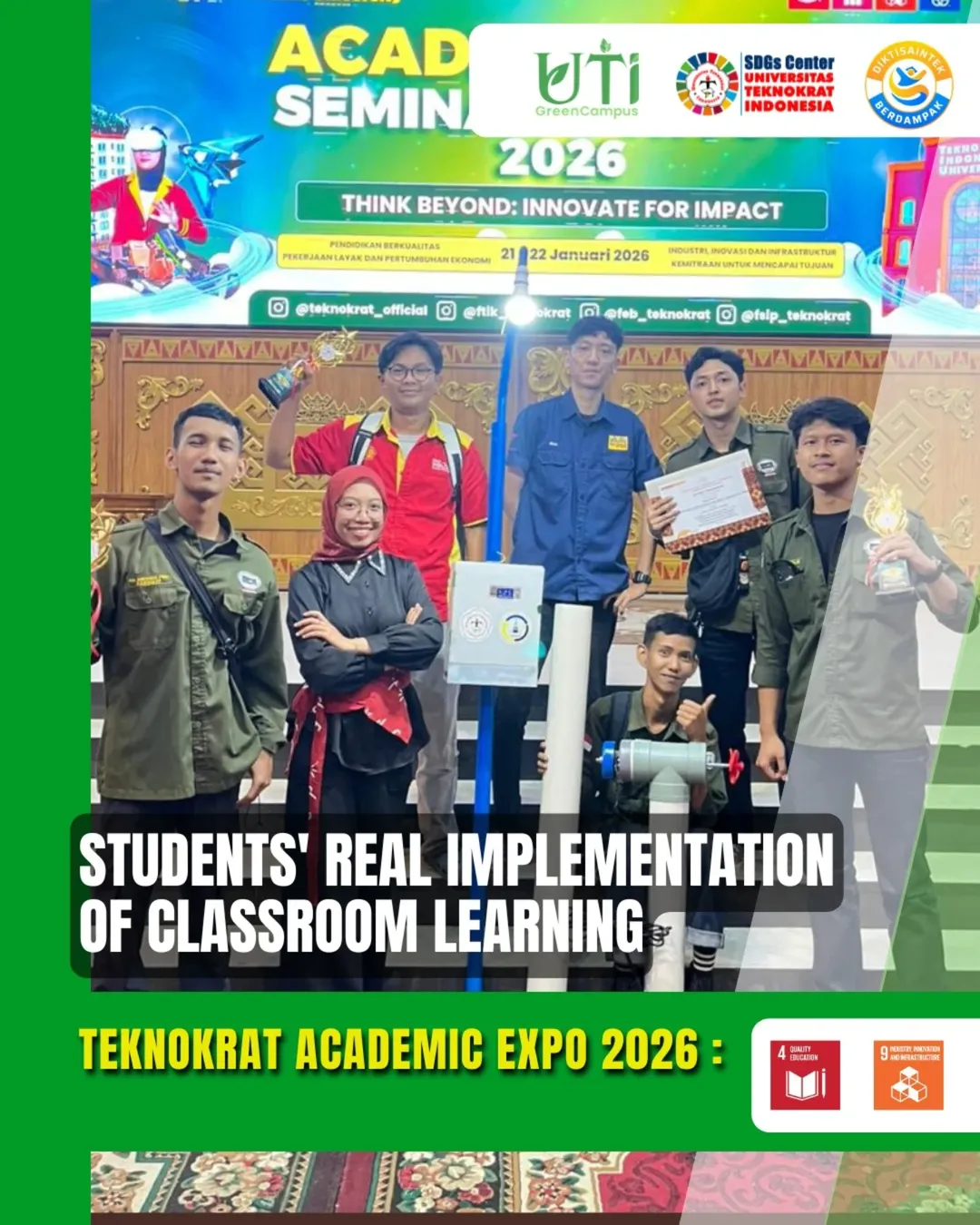
Civil Engineering Students of Universitas Teknokrat Indonesia Showcase Dam Scale Model at Academic Expo 2026

Bandar Lampung – Civil Engineering students from Universitas Teknokrat Indonesia (UTI) once again demonstrated their academic excellence and engineering capabilities at the Academic Expo 2026 by presenting a detailed dam scale model. The project represents the successful integration of theoretical knowledge and practical application gained through the Advanced Water Structures course. Baca Juga: River Clean Up Activities by students of Universitas Teknokrat Indonesia The scale model, designed as a concrete gravity dam, features essential structural components, including a spillway and diversion channels. This project reflects the students’ ability to translate classroom concepts into tangible engineering solutions, highlighting both technical competence and creativity in civil engineering design. The model serves not only as an exhibition piece but also as a practical learning outcome. Through this hands-on project, students gained deeper insights into hydrology, structural stability, and water flow management. They learned how dam systems function in real-world conditions, including their critical roles in flood control, irrigation systems, and hydroelectric power generation. “This project allowed us to directly apply the theories we studied in class into a realistic engineering model. We were able to better understand structural stability, water flow mechanisms, and the importance of each dam component,” said one of the participating Civil Engineering students during the exhibition. Academic Expo is an annual event organized by Universitas Teknokrat Indonesia to showcase student innovation, academic achievements, and creative works. The event provides a platform for students to present their projects to the academic community and the public, while also enhancing their communication, presentation, and problem-solving skills. In addition to its academic value, the dam scale model also serves as an educational tool for visitors. It helps increase public awareness about the importance of water infrastructure in supporting sustainable development and improving quality of life. Infrastructure such as dams plays a vital role in water resource management, agricultural productivity, and renewable energy production. A lecturer of the Advanced Water Structures course emphasized that the project is designed to encourage students to think critically, creatively, and practically. According to the lecturer, the ability to design and visualize infrastructure systems is an essential competency for future civil engineers. “Students are expected not only to understand engineering theory but also to apply it through design and visualization. This project reflects our commitment to preparing graduates who are ready to contribute professionally to infrastructure development,” the lecturer stated. The participation of Civil Engineering students in Academic Expo 2026 demonstrates Universitas Teknokrat Indonesia’s strong commitment to producing competent, innovative, and competitive graduates. The university continues to uphold its “Sang Juara” (Champion) spirit by encouraging students to create meaningful innovations that address real-world construction and infrastructure challenges. Through initiatives like this, Universitas Teknokrat Indonesia aims to empower students to become future engineers who are capable of contributing to sustainable national infrastructure development and advancing the engineering profession. Baca Juga: Maintaining the campus as a comfortable and beautiful learning environtment Support for SDGS:

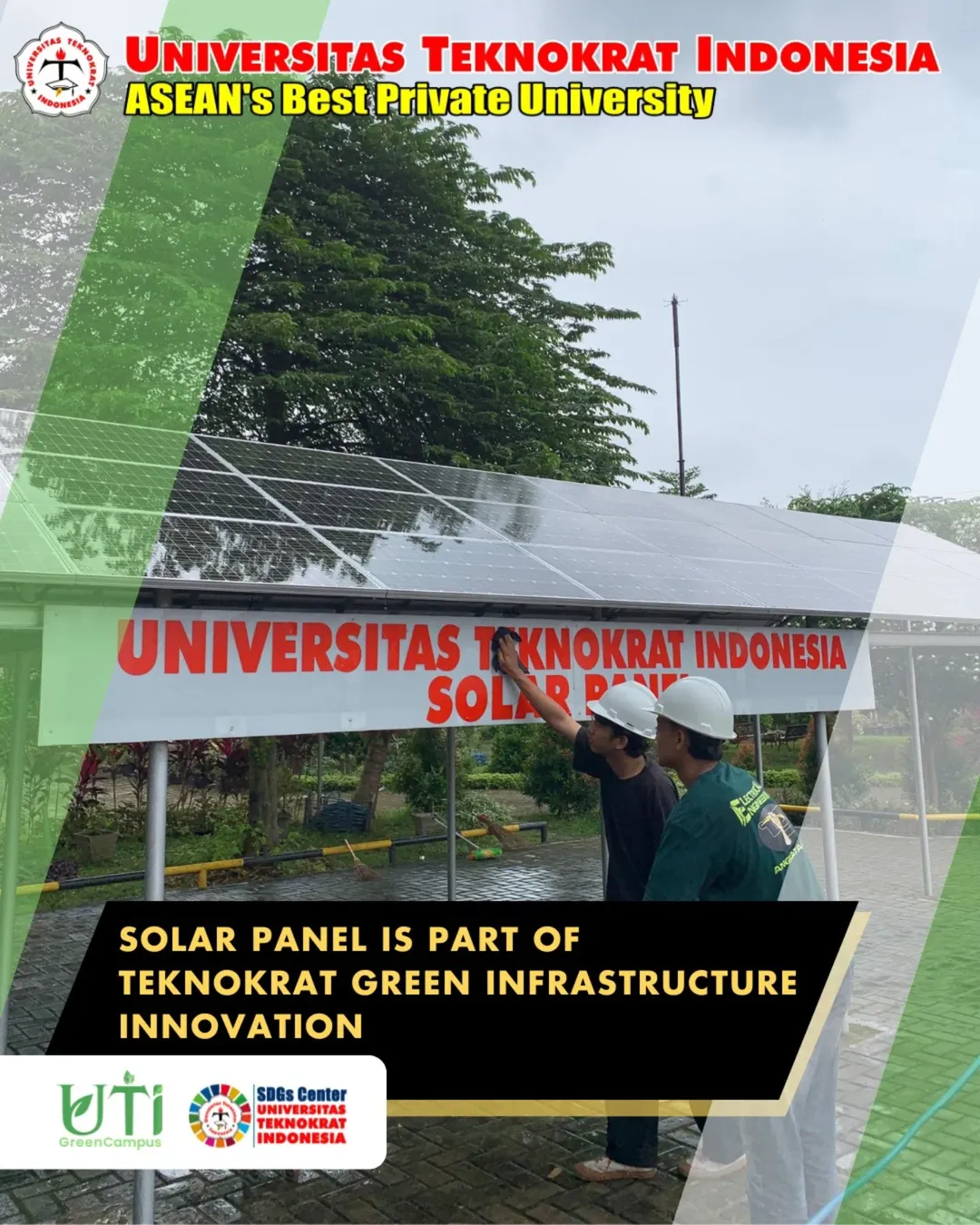
Solar Panel is Part of Teknokrat Green Infrastructure Innovation

At the Universitas Teknokrat Indonesia, the utilization of solar panels as an alternative energy source plays a crucial role in supporting environmental sustainability and reducing energy costs. By harnessing abundant sunlight, solar panels generate electricity to meet the energy needs of various campus facilities, such as classrooms, laboratories, and common areas. This initiative not only reduces dependence on fossil energy sources but also contributes to the reduction of carbon emissions that harm the environment. The use of solar panels is also part of Universitas Teknokrat Indonesia’s commitment to implementing environmentally friendly technologies and creating a greener campus. Furthermore, this technology provides an opportunity for students to directly learn about the application of renewable energy in everyday life, supporting research and innovation in the field of renewable energy, and raising awareness about the importance of clean energy for the future. With the installation of solar panels, Universitas Teknokrat Indonesia not only serves as an educational institution but also as an example of efforts to create a more sustainable environment. This step demonstrates that, with the right use of technology, a campus can reduce operational costs while making a positive impact on the surrounding community and the planet as a whole. This initiative serves as an inspiration for other institutions to adopt renewable energy in support of more sustainable development. This solar energy initiative has been made possible through strong institutional commitment and collaboration with energy experts and government agencies. Universitas Teknokrat Indonesia continues to explore opportunities for expanding its renewable energy infrastructure, including plans to install more solar panels and introduce energy-efficient systems across campus buildings. These developments are aligned with national and global goals for climate action and sustainable development. Moreover, the presence of solar technology on campus has encouraged the integration of sustainability topics into various academic programs. Students from engineering, environmental science, and information technology departments are increasingly involved in related research, innovation projects, and community outreach programs. By turning the campus into a living laboratory, Universitas Teknokrat Indonesia empowers students not only to understand the science behind renewable energy but also to become active contributors in advancing sustainable practices in society.

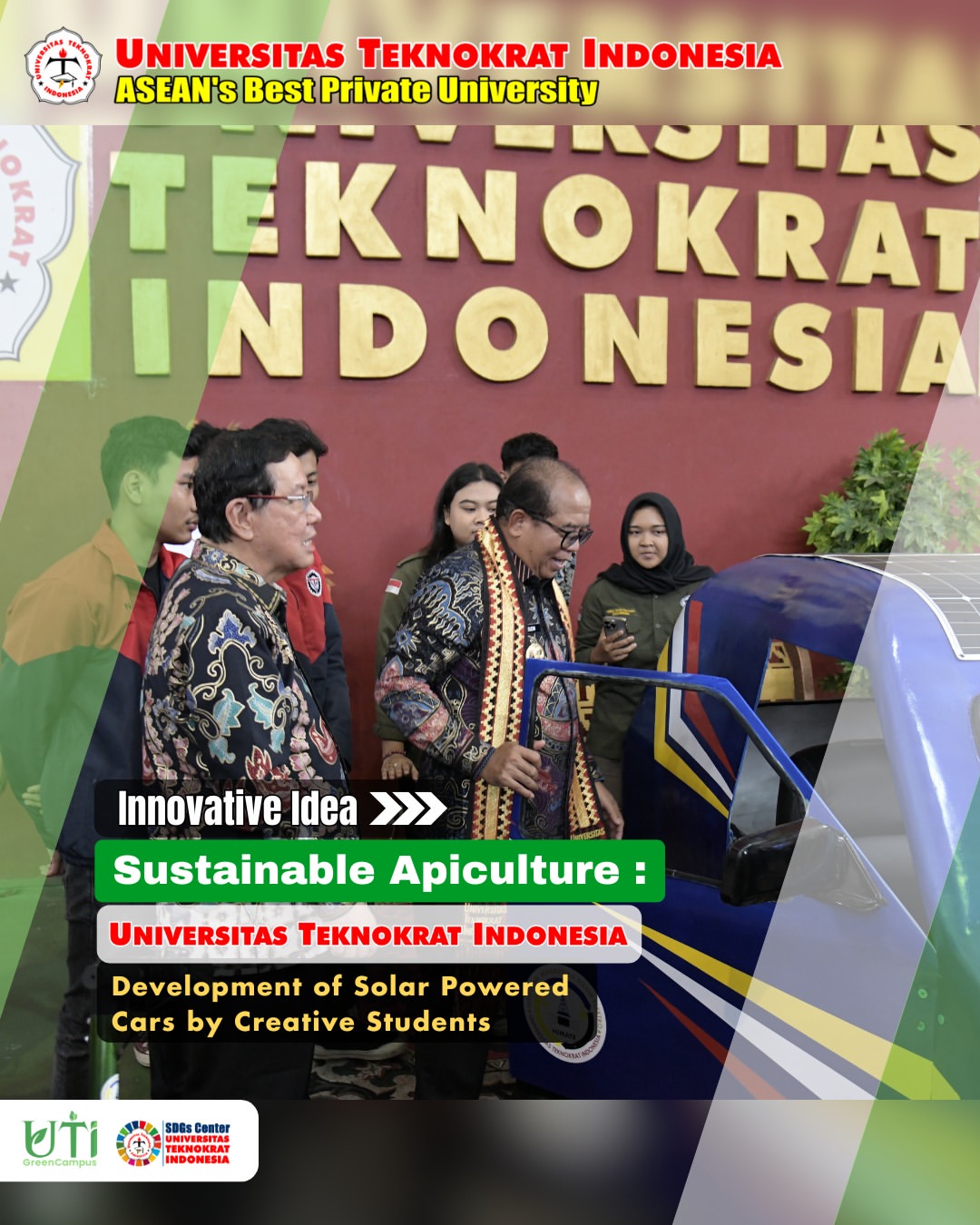
Development of solar powered cars by creative student

Students from Universitas Teknokrat Indonesia have once again demonstrated their creativity and commitment to the environment by creating a solar-powered car that is eco-friendly! This innovation is proof that the younger generation of Indonesia is ready to contribute to positive change in the automotive and renewable energy sectors. By harnessing solar energy, this car not only reduces carbon emissions but also offers a sustainable transportation solution for the future. This outstanding achievement was directly appreciated by the Acting Governor of Lampung, Dr. Drs. Samsudin, S.H., M.H., M.Pd., who expressed his pride and support for the work of Universitas Teknokrat Indonesia’s students. He emphasized that innovations like this are a real example of how technology can be applied to address global challenges, such as climate change and dependence on fossil fuels. With this recognition, it is hoped that this project will continue to develop and inspire more young people to create innovative solutions for the planet’s sustainability. Universitas Teknokrat Indonesia remains committed to nurturing an innovative generation that is not only academically brilliant but also cares about the future of the world. The development of the solar-powered car was supported by dedicated faculty members and equipped with resources from the university’s engineering and environmental science departments. The project not only serves as a practical learning experience for students but also showcases the university’s commitment to fostering research and innovation in renewable energy technologies. Moving forward, the student team plans to refine the car’s design and performance, aiming to compete in national and international competitions focused on green technology. The university is also exploring partnerships with local industries and government agencies to promote the commercialization and wider adoption of solar-powered vehicles in Indonesia. By pioneering such forward-thinking projects, Universitas Teknokrat Indonesia is setting a strong example for educational institutions nationwide. This initiative highlights the vital role of young innovators in driving sustainable development and reducing the environmental impact of transportation, paving the way toward a cleaner and greener future.

Reclaiming Former Mining Lands: Transforming into Solar Energy Fields

Mining activities, while significantly contributing to the economy, often leave behind degraded and non-productive land. However, instead of being an environmental burden, these lands can be transformed into valuable assets through innovative and sustainable methods, such as constructing solar power plants (PLTS). Why Are Former Mining Lands Ideal for Solar Power Plants? Reclamation and PLTS Development Process The process of transforming former mining lands into solar energy fields involves several stages: Benefits of Reclaiming Former Mining Lands into Solar Power Plants Successful Case Studies Several countries have successfully implemented this concept with very positive results. For instance, in Australia, many former coal mining lands have been converted into large-scale PLTS. Similar projects have been carried out in parts of Europe and the United States. Challenges and Solutions While there is great potential, developing PLTS on former mining lands also faces some challenges: Reclaiming former mining lands as solar energy fields is a compelling solution to address environmental and energy challenges. With thorough planning and support from various stakeholders, this concept could become a critical milestone in the transition toward clean and sustainable energy. Sumber : https://industri.kontan.co.id/news/menilik-rencana-pemerintah-ubah-lahan-bekas-tambang-jadi-ladang-energi-terbarukan?page=all

Flexible Solar Panels: The Future of Electric Vehicle Charging

The electric vehicle (EV) revolution has brought new momentum to the automotive industry. As the number of electric vehicles grows, the need for efficient and sustainable charging infrastructure becomes increasingly urgent. One innovative solution emerging is the use of flexible solar panels to charge electric vehicles. What Are Flexible Solar Panels? Flexible solar panels are a type of solar panel made from thin, bendable materials, allowing them to be installed on uneven or curved surfaces. Unlike rigid conventional solar panels, flexible panels offer greater installation versatility and convenience. Advantages of Flexible Solar Panels for Electric Vehicles Applications of Flexible Solar Panels for Electric Vehicles Challenges and Technological Advancements While flexible solar panels offer numerous benefits, they still face some challenges, such as: However, ongoing advancements in technology aim to address these challenges. Promising developments include: Flexible solar panels offer an exciting solution to meet the demand for clean and sustainable energy in the EV industry. With their many advantages, flexible solar panels have the potential to become a key component in the electric vehicles of the future. Sumber : https://atonergi.com/panel-surya-untuk-mobil-listrik-pengisian-ramah-lingkungan/

Renewable Energy in the Aviation Sector: Towards a Greener Sky

The aviation industry has long been a significant contributor to greenhouse gas emissions, particularly carbon dioxide (CO2). However, with growing awareness of the importance of environmental sustainability, efforts to reduce the environmental impact of aviation are continuously underway. One promising solution is the use of renewable energy in the aviation sector. Unique Challenges of the Aviation Sector The aviation sector faces unique challenges in its transition to renewable energy. Aircraft require very high energy density to remain airborne. In addition, supporting infrastructure such as airports also needs to adapt to the use of renewable energy. Types of Renewable Energy for Aviation Several types of renewable energy have the potential to be used in the aviation sector, including: Benefits of Using Renewable Energy in Aviation Barriers and Solutions Potential Solutions: The transition to more sustainable aviation is a must. The use of renewable energy offers a promising solution to reduce the environmental impact of the aviation sector. Although many challenges remain, with strong commitment and cooperation, a greener future for aviation is within reach. Sumber : ICAO: International Civil Aviation Organization. Publikasi mengenai lingkungan dan keberlanjutan penerbangan.

Emission Reduction Policies for the Transportation Sector: Towards Sustainable Transportation

The transportation sector is one of the largest contributors to greenhouse gas emissions worldwide. Emissions from motor vehicles, both private and public, significantly contribute to climate change and air pollution. To address this issue, various countries around the world have implemented emission reduction policies specific to the transportation sector. Challenges in the Transportation Sector Emission Reduction Policies for the Transportation Sector To tackle the above challenges, various policies have been implemented, including: Policy Examples in Several Countries Opportunities and Future Challenges Implementing emission reduction policies in the transportation sector still faces various challenges, such as high costs, public resistance, and infrastructure limitations. However, there are also significant opportunities to develop the electric vehicle industry, create new jobs, and improve the quality of life. Reducing emissions in the transportation sector is an essential step in combating climate change. By implementing comprehensive and sustainable policies, we can achieve a cleaner and healthier future. Source: Ministry of Transportation of the Republic of Indonesia: [Add link to the relevant Ministry of Transportation website on transportation policies]

Renewable Energy in the Context of Electric Mobility: Toward a Greener Future

Climate change and the limitations of fossil resources have driven the world to seek cleaner and more sustainable energy alternatives. One sector that has undergone significant transformation is the transportation sector. Electric mobility, powered by renewable energy, has emerged as a promising solution to reduce greenhouse gas emissions and improve air quality. What is Electric Mobility? Electric mobility refers to the use of electric vehicles powered by batteries. Electric vehicles no longer rely on fossil fuels, thus reducing the exhaust emissions that are the primary cause of air pollution and climate change. The Role of Renewable Energy in Electric Mobility Renewable energy, such as solar, wind, and hydroelectric power, plays a crucial role in supporting electric mobility. Here are some reasons why: Challenges and Opportunities Although electric mobility offers many benefits, there are still several challenges that need to be addressed, such as: However, alongside these challenges, there are numerous opportunities: Electric mobility powered by renewable energy represents the future of cleaner and more sustainable transportation. By continuing to develop technology, improve infrastructure, and raise public awareness, we can achieve a transition to a more environmentally friendly transportation system. Source : https://metiires.or.id/pengembangan-mobilitas-et/bergerak-menuju-masa-depan-berkelanjutan-pentingnya-mobilitas-dengan-energi-terbarukan/

Solar Energy: A Bright Future for Energy

Amidst the global energy crisis and growing environmental awareness, solar energy is increasingly in the spotlight. As an abundant renewable energy source, solar power offers a sustainable solution to meet our energy needs. What is Solar Energy? Solar energy is energy obtained from sunlight. This energy is converted into electricity through solar panels containing photovoltaic cells, which directly transform light energy into electrical energy. Benefits of Solar Energy Environmentally friendly: It does not produce greenhouse gas emissions, helping to reduce the impact of climate change. Sustainable: The sun is an inexhaustible energy source, making solar power a highly sustainable energy source. Low operational costs: After the initial investment for installing solar panels, operational costs are very low. Energy independence: By utilizing solar energy, you can reduce dependence on the public power grid. Solar Energy Technology Solar Panels: The main component in solar energy systems that converts sunlight into electricity. Inverter: Converts the direct current (DC) generated by solar panels into alternating current (AC) that can be used by household electrical appliances. Battery: Stores the electricity generated by solar panels for use at night or during cloudy weather. Applications of Solar Energy Solar energy can be applied in various fields, such as: Solar Power Plants: Generates electricity on a large scale to meet the electricity needs of a region. Solar Water Heaters: Uses solar heat to warm water. Solar-Powered Electric Vehicles: Cars, motorcycles, and other vehicles that use solar energy as their power source. Street Lighting: Street lamps powered by solar energy. Challenges and the Future of Solar Energy Although it offers numerous benefits, solar energy development still faces challenges, such as the relatively high initial investment costs and dependence on weather conditions. However, with advancing technology and government support, solar energy is predicted to become a primary energy source in the future. Solar energy is one of the best solutions to address today’s energy issues. By harnessing abundant and environmentally friendly natural resources, solar energy can make a significant contribution toward creating a more sustainable future.

Sustainable Strides: Health Walk and Fun Run Celebrates Green Living and SDGs

Hello Indonesian Golden Generation..In a bid to foster healthy lifestyles and contribute to a sustainable future, the local community came together for an exciting Fun Run and Health Walk event. The event, which was held last weekend, not only encouraged physical well-being but also highlighted the importance of green living and the Sustainable Development Goals (SDGs).Participants of all ages gathered at the starting line, eager to take part in the Fun Run and Health Walk. The event featured various categories, catering to both seasoned runners and families looking to enjoy a leisurely stroll in the fresh air. Beyond promoting green living, the event was a platform to raise awareness about the SDGs.With the success of this year’s Fun Run and Health Walk, organizers are already planning next year’s event, with even more green initiatives and educational opportunities to further the community’s commitment to sustainable living and the SDGs.

Scroll to top