

The Potential of Renewable Energy in the Open Seas: The Future of Clean Energy
The energy crisis and climate change are driving the world to transition to cleaner, more sustainable energy sources. One promising source is renewable energy derived from the open seas. The open ocean has vast energy potential, especially in the form of wind, wave, and ocean thermal energy.
Offshore Wind Energy
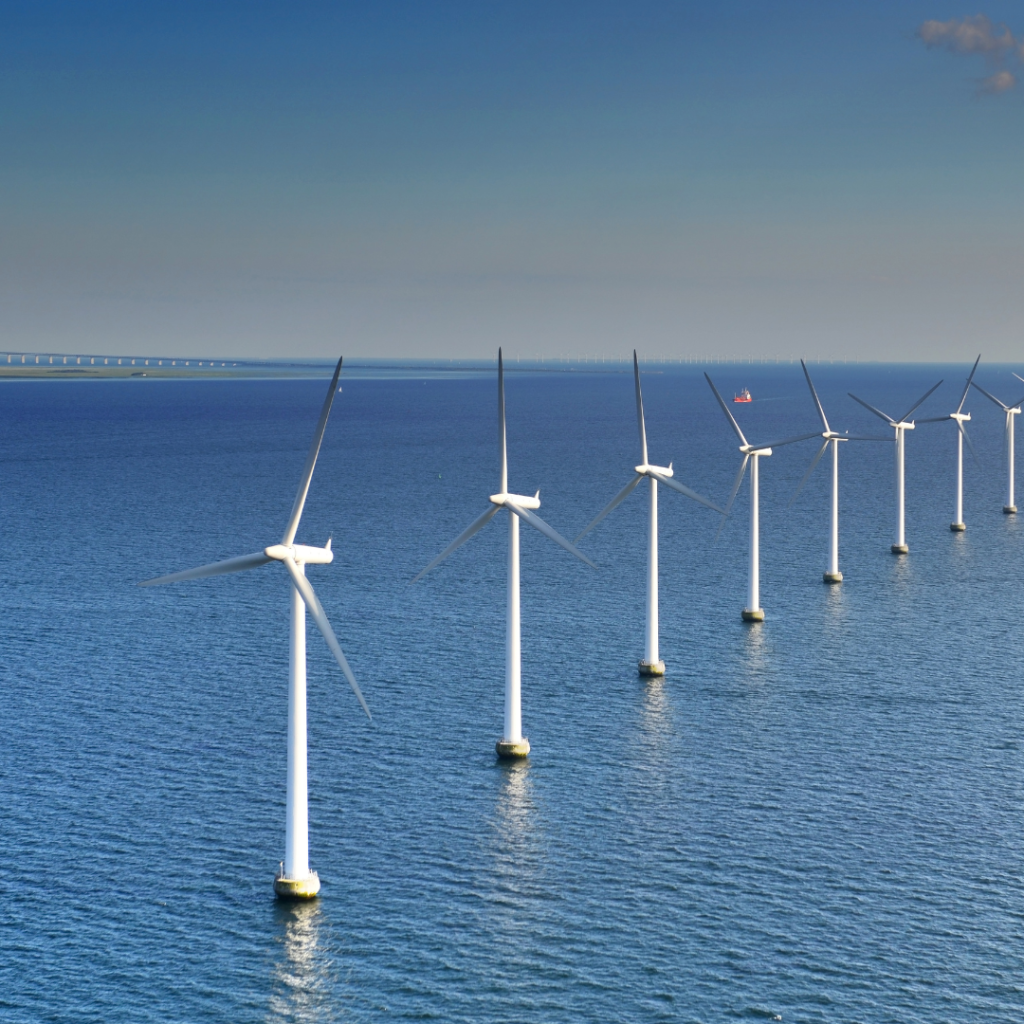
Offshore wind energy has gained significant attention in the development of marine renewable energy. Wind over the ocean is generally more consistent and stronger than on land, allowing offshore wind turbines to generate a larger and more stable supply of electricity. Key advantages of offshore wind energy include:
- High Production Capacity: Offshore wind turbines have a much larger capacity compared to onshore turbines.
- High Efficiency: Ocean winds are more consistent, resulting in a higher capacity factor (the ratio of actual energy produced to the maximum possible energy).
- Minimal Environmental Impact: Offshore wind power plants have a lower environmental impact compared to conventional power plants.
Wave Energy
Wave energy also has significant potential as a renewable resource. Several technologies have been developed to convert wave energy into electricity, such as:
- Buoys: Buoys that move up and down with waves can drive generators to produce electricity.
- Oscillating Water Columns: Underwater structures that use water pressure to drive turbines.
- Linear Energy Converters: Devices that harness the back-and-forth motion of seawater to generate power.
Ocean Thermal Energy
Ocean Thermal Energy Conversion (OTEC) uses the temperature difference between warm surface water and deep cold water to generate electricity. Although OTEC technology is still in development, it has considerable potential, particularly in tropical regions.
Challenges and Opportunities
Despite its vast potential, developing renewable energy in the open seas still faces several challenges:
- High Investment Costs: Building offshore infrastructure requires substantial investment.
- Emerging Technology: The technology is still evolving and has yet to fully mature.
- Environmental Impact: While more eco-friendly than fossil fuels, ocean-based renewable energy can still impact marine ecosystems.
However, with advancing technology and growing awareness of the importance of clean energy, the potential of offshore renewable energy is expanding. Some opportunities that can be leveraged include:
- International Collaboration: Partnerships between countries can accelerate technological development and reduce investment costs.
- Supportive Policy Development: Policies that support renewable energy development can attract investment and accelerate sector growth.
- Technological Innovation: Developing new, more efficient, and affordable technologies will broaden market opportunities.
Renewable energy in the open seas offers a promising solution to meet the world’s growing energy needs. By addressing existing challenges and taking advantage of emerging opportunities, ocean-based renewable energy can become a cornerstone in the transition to a more sustainable future.
Sumber : https://journal.untar.ac.id/index.php/JSSTK/article/view/32060