setting and infrastructure

Building a Sustainable Campus: Enhancing Pedestrian Facilities at Universitas Teknokrat Indonesia

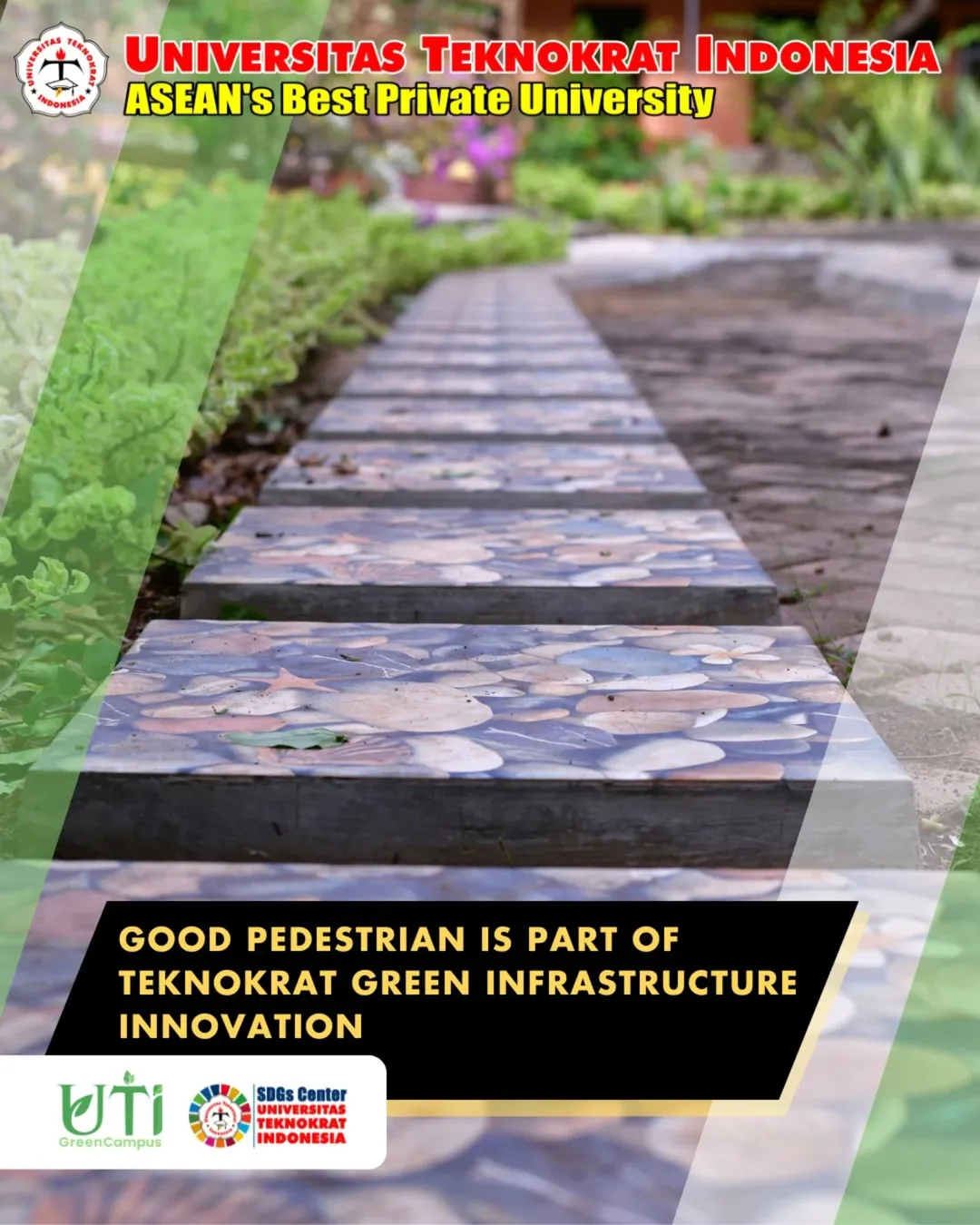
Universitas Teknokrat Indonesia continues to demonstrate its commitment to building a modern and sustainable campus environment. One proof is the construction and improvement of comfortable, safe, and integrated pedestrian facilities. These facilities not only beautify the campus area, but also provide better access for the entire academic community in their daily activities. The improvement of pedestrian facilities is part of the implementation of Sustainable Development Goals (SDGs) point 9: Industry, Innovation, and Infrastructure. Through the development of inclusive and sustainable infrastructure, Universitas Teknokrat Indonesia encourages the creation of public spaces that support mobility, social interaction, and more productive and efficient academic activities. With this step, Teknokrat is not only building a better physical campus, but also instilling the values ​​of innovation and sustainability in everyday life. Campus is not only a place to study, but also a comfortable space to walk, think, and innovate.#SDGs9#[email protected]@teknokrat_official@tekniksipil_teknokrat

Promoting Health and Wellness Through Aerobic Exercise at Universitas Teknokrat Indonesia

Aerobic exercise is not just a physical activity, but also an important key in maintaining endurance. At Universitas Teknokrat Indonesia, this activity is routinely carried out as a form of concern for the health of students and employees. Through energetic movements and refreshing musical rhythms, aerobic exercise can raise spirits and strengthen the body’s immune system. Physical activities such as gymnastics have been proven to increase blood circulation, accelerate metabolism, and optimize the work of body organs. For academics who are busy with activities, aerobic exercise is an effective solution to maintain fitness and reduce stress. The atmosphere full of enthusiasm and togetherness also strengthens the sense of togetherness in the campus environment. Universitas Teknokrat Indonesia continues to encourage a healthy lifestyle among students and employees. With aerobic exercise as one of the Good Health and Welfare programs, it is hoped that all campus residents can be healthier, more productive, and ready to face various challenges, both on and off campus. Because a healthy body is the main foundation for brilliant achievements.#sangjuara#[email protected]

Universitas Teknokrat Indonesia Students Develop Innovative Metaverse to Support Creative Education

Students of Universitas Teknokrat Indonesia (UTI) have once again achieved an outstanding accomplishment! This time, they successfully developed an innovative metaverse that serves as a creative platform and a support tool for innovation-based education. The metaverse is designed to provide an interactive, immersive, and enjoyable learning experience for both students and educators. Through this metaverse platform, students can explore complex concepts in a more engaging and easily understandable way. They can also collaborate with peers from various disciplines to develop innovative projects. This initiative is a tangible example of UTI’s commitment to implementing innovative education that supports 21st-century learning. The metaverse innovation not only showcases the students’ creativity and technological skills but also demonstrates how education can be transformed through advanced digital technologies. By combining visual elements, interactivity, and virtual collaboration, the metaverse opens new opportunities to enhance the quality and effectiveness of learning. Universitas Teknokrat Indonesia continues to encourage research and innovation in technology, creativity, and digital education among its students. Supporting projects like this metaverse is part of the university’s commitment to nurturing adaptive, creative, and digitally-ready young generations. This achievement is a proud milestone for Universitas Teknokrat Indonesia. The student-developed metaverse is not only a symbol of creativity and innovation but also concrete evidence that UTI actively contributes to creating modern educational solutions, paving the way for smart, inclusive, and sustainable learning in the future.

Smart Robot with Verbal Interaction: AI and NLP Integration by Universitas Teknokrat Indonesia Students

Students from the Universitas Teknokrat Indonesia have created an outstanding innovation by developing a smart robot capable of answering questions verbally. By integrating artificial intelligence (AI) and natural language processing (NLP) technologies, this robot can understand and respond to questions asked by users in a more interactive and efficient manner. This is a clear demonstration of the students’ ability to tackle technological challenges and contribute to the development of robotics in Indonesia. This innovation not only showcases creativity but also expertise in integrating advanced technologies to create practical solutions. With the use of voice recognition systems and NLP algorithms, the robot can provide accurate and contextual answers, as if it were directly conversing with the user. This technology has great potential across various sectors, such as education, customer service, and healthcare, to enhance human-machine interaction in a more natural way. The development of this smart robot is a remarkable achievement for the University of Teknokrat Indonesia, which continues to advance technology education and innovation in Indonesia. With projects like this, students not only learn theory but also produce works that can be directly applied in society. This is a small but significant step toward a future where smart robots will become an integral part of our daily lives. @[email protected]@lldiktii2

Building a Greener Future: Innovative Models Using Recycled Materials

Students of Universitas Teknokrat Indonesia have demonstrated creativity and environmental awareness through their work in designing building models using recycled materials. By utilizing items like plastic, cardboard, and leftover wood, they have created models that are not only aesthetically pleasing but also eco-friendly. This proves that materials often considered waste still have great potential for use in high-value construction projects. Through the application of recycled materials, these students have not only learned about design and architecture but have also integrated sustainability principles into every aspect of their work. They have shown that innovation can emerge from limited resources, reducing waste, and contributing to environmental preservation. Their work is a tangible step toward creating a greener world with a greater awareness of waste management. This initiative also highlights the important role that the younger generation plays in creating creative and effective environmental solutions. With this project, the students of Universitas Teknokrat Indonesia have inspired many to be more conscious of environmental issues and demonstrated that art and construction can go hand in hand with sustainability.#uigreenmetric#sangjuara

IoT Hydroponic Research Center : Smart Solution for Sustainable Agriculture

Universitas Teknokrat Indonesia, through its Agrotech startup, is advancing research on IoT-based hydroponics to support the university’s Sustainable Development Goals (SDGs) Center. This research is being led by a team of experts from the university, focusing on hydroponic techniques, environmental conservation policies, and the integration of IoT technology. The goal is to uncover the key factors behind the success of IoT hydroponics systems. Additionally, the team is investigating the life cycle of plants grown in IoT hydroponic systems and exploring best practices for utilizing IoT technology to optimize these systems. Dr. Mahathir Muhammad, SE., MM., Vice Rector of Universitas Teknokrat Indonesia, shared that the IoT Hydroponic Research Center is dedicated to providing a space for faculty and students to conduct research, all while promoting sustainability and producing high-quality food. “We believe IoT hydroponics is a promising technology for sustainable agriculture,” Dr. Mahathir said. “This research will enable us to develop more efficient, productive, and environmentally friendly IoT hydroponics systems.” The research is ongoing, and the team looks forward to sharing their results with the broader community.

Ramadan and SDGS : Building a Better World

How Ramadan Aligns with the Sustainable Development Goals (SDGs) Did you know that Ramadan aligns with the Sustainable Development Goals (SDGs)? Ramadan, a sacred month observed by Muslims around the world, is not just a time for spiritual reflection but also a period that promotes values supporting the SDGs. Here are some ways in which Ramadan contributes to achieving these global goals: By embracing the values of Ramadan, we can all play a part in advancing the SDGs and creating a better, more sustainable future for everyone.

Thin-Film Solar Technology: A Revolution in Energy for Skyscrapers

The development of solar technology is rapidly advancing, with one of the most promising innovations being thin-film solar technology. This technology offers an innovative solution for integrating solar power generation into building designs, particularly in high-rise structures. With its unique advantages, thin-film solar panels have the potential to significantly transform the urban energy landscape. What is Thin-Film Solar Technology? Unlike conventional solar panels made from crystalline silicon, thin-film solar panels use much thinner layers of semiconductor materials. Materials such as cadmium telluride (CdTe), copper indium gallium selenide (CIGS), or perovskite are used to absorb sunlight and convert it into electrical energy. Advantages of Thin-Film Solar Technology for Tall Buildings Applications in High-Rise Buildings Thin-film solar panels can be applied to various parts of tall buildings, including: Challenges and Development Despite its many advantages, thin-film solar technology still faces some challenges, such as: However, with ongoing research and development, it is expected that this technology will become more refined and affordable in the future. Thin-film solar technology offers significant potential to revolutionize the way we build and utilize energy in urban areas. With its flexibility, efficiency, and high aesthetic value, thin-film solar panels can become an ideal solution for integrating solar power generation into high-rise building structures. Source : https://atonergi.com/panel-surya-thin-film-revolusi-energi-matahari-yang-tipis-tapi-dahsyat/

Utilization of Local Natural Resources for Renewable Energy Development: Towards Energy Independence

Indonesia, with its abundant natural resources, has great potential for renewable energy development. One increasingly attractive approach is the utilization of local natural resources. By optimizing the potential available at the regional level, we can reduce dependence on fossil fuels, enhance energy resilience, and contribute to environmental conservation. Potential of Local Natural Resources for Renewable EnergyIndonesia has a diverse range of natural resources that can be converted into clean energy, including: Benefits of Utilizing Local Natural Resources Challenges and SolutionsDespite its great potential, the development of renewable energy based on local natural resources still faces several challenges, such as: To address these challenges, several solutions can be implemented, including: Successful Examples of Local Resource UtilizationSeveral regions in Indonesia have successfully developed renewable energy based on local natural resources, such as: The utilization of local natural resources for renewable energy development is a strategic step toward achieving energy independence and sustainable development in Indonesia. With the support of appropriate policies and technological innovation, we can create a cleaner, more energy-efficient future. Sumber : Kementerian Energi dan Sumber Daya Mineral RI

The Role of Universities in Renewable Energy Research and Development

In an era increasingly aware of the importance of environmental sustainability, renewable energy has become a major focus. The transition from fossil fuels to renewable energy requires continuous innovation and research. This is where the role of universities becomes crucial. As centers of learning and research, universities play a vital role in driving renewable energy research and development. Key Roles of Universities Education and Human Resource Development: Breakthrough Research: Startup Incubation: Policy Advocacy: Challenges and Opportunities Despite their important role, universities also face several challenges in renewable energy development, including: However, these challenges also present opportunities for universities to: Universities play a strategic role in advancing renewable energy research and development. Through education, research, business incubation, and policy advocacy, universities can make significant contributions to the transition to a more sustainable future. Sumber : https://www.kompas.id/baca/humaniora/2023/07/14/perguruan-tinggi-dukung-transformasi-energi-terbarukan

Scroll to top