
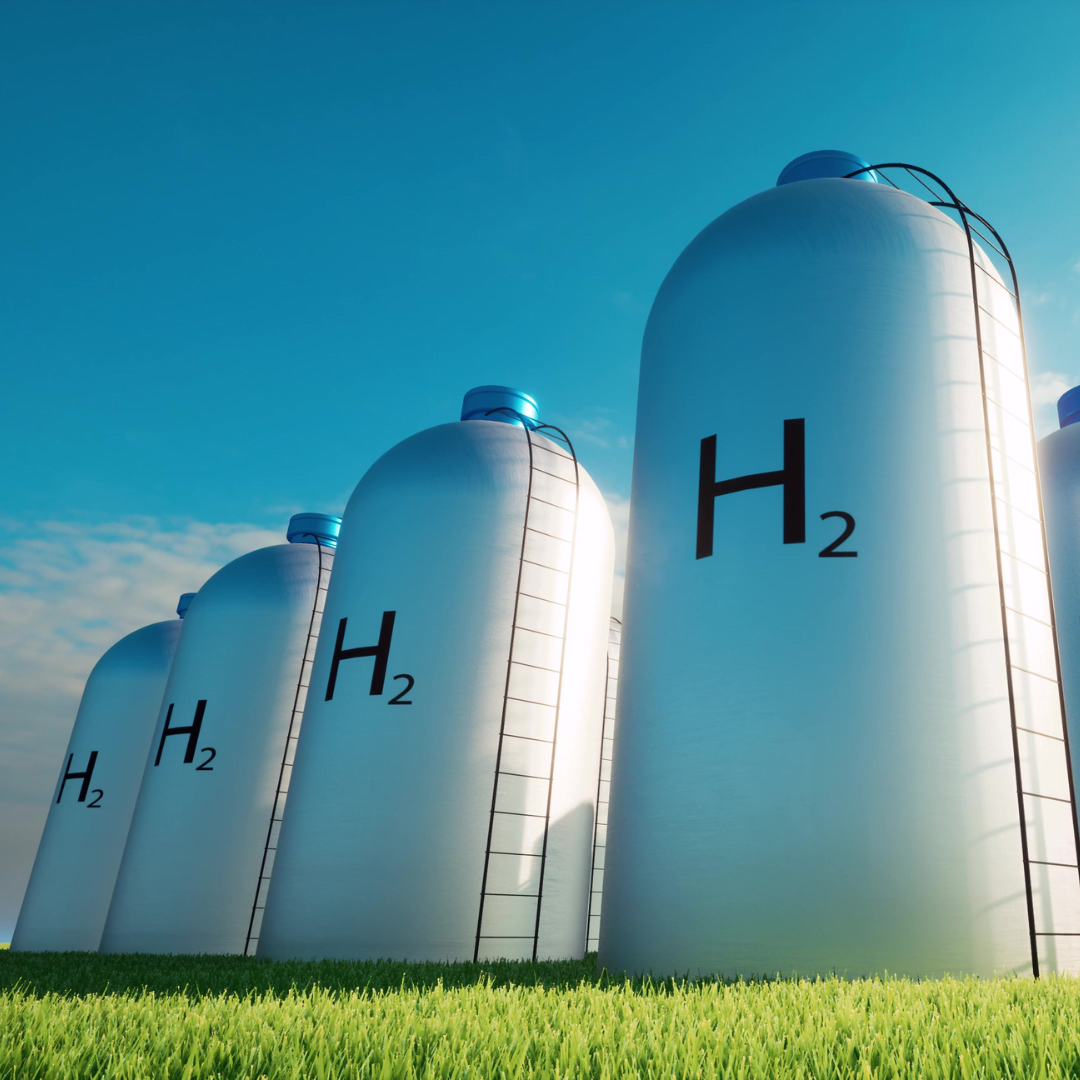
Hydrogen Storage: Key to a Clean Energy Future
Hydrogen, often referred to as the “fuel of the future,” has gained attention as a clean and efficient energy alternative. However, one of the main challenges in utilizing hydrogen lies in storage. How can hydrogen be stored safely, efficiently, and in large quantities? Let’s explore this further.
Why Is Hydrogen Storage Important?
- Production Fluctuations: Renewable energy sources like solar and wind are intermittent. Hydrogen can serve as a storage medium to balance energy supply and demand.
- High Energy Density: Hydrogen has a high energy density per unit mass, making it efficient for transportation and storage.
- Zero Emissions: When burned, hydrogen produces only water as a byproduct, releasing no greenhouse gases.
Hydrogen Storage Methods
There are several common methods for storing hydrogen:
- Storage as a Gas:
- High-Pressure Tanks: Hydrogen is stored in high-pressure tanks, a widely used method, though it requires strong, heavy tanks.
- Cryogenic Storage: Hydrogen is cooled to extremely low temperatures to become a liquid. This method allows storage in a smaller volume but requires good insulation and energy for liquefaction.
- Storage as a Solid:
- Adsorption: Hydrogen is absorbed by porous materials like activated carbon or zeolites, allowing storage in a smaller volume than gas storage.
- Metal Hydrides: Certain metals, such as palladium or magnesium, absorb hydrogen. This method is still under research and development.

Challenges and Recent Advances
Despite its great potential, hydrogen storage faces several challenges:
- Efficiency: Liquefaction and refilling processes require significant energy.
- Cost: The infrastructure costs for hydrogen storage are still relatively high.
- Safety: Hydrogen is highly flammable, necessitating advanced safety systems.
Researchers and industries are continually working to address these challenges. Recent advancements include:
- New Storage Materials: Developing more efficient and safer materials for hydrogen storage.
- Improved Compression Technology: Creating more efficient and energy-saving hydrogen compression technologies.
- Integration with Renewable Energy Systems: Integrating hydrogen storage systems with renewable energy sources for a more flexible and efficient energy system.
Hydrogen storage is a crucial step toward realizing a clean, sustainable energy future. With ongoing technological advancements and research, hydrogen storage will become increasingly efficient, safe, and affordable.
Sumber : https://www.esdm.go.id/id/media-center/arsip-berita/hidrogen-berikan-alternatif-energi-murah-